
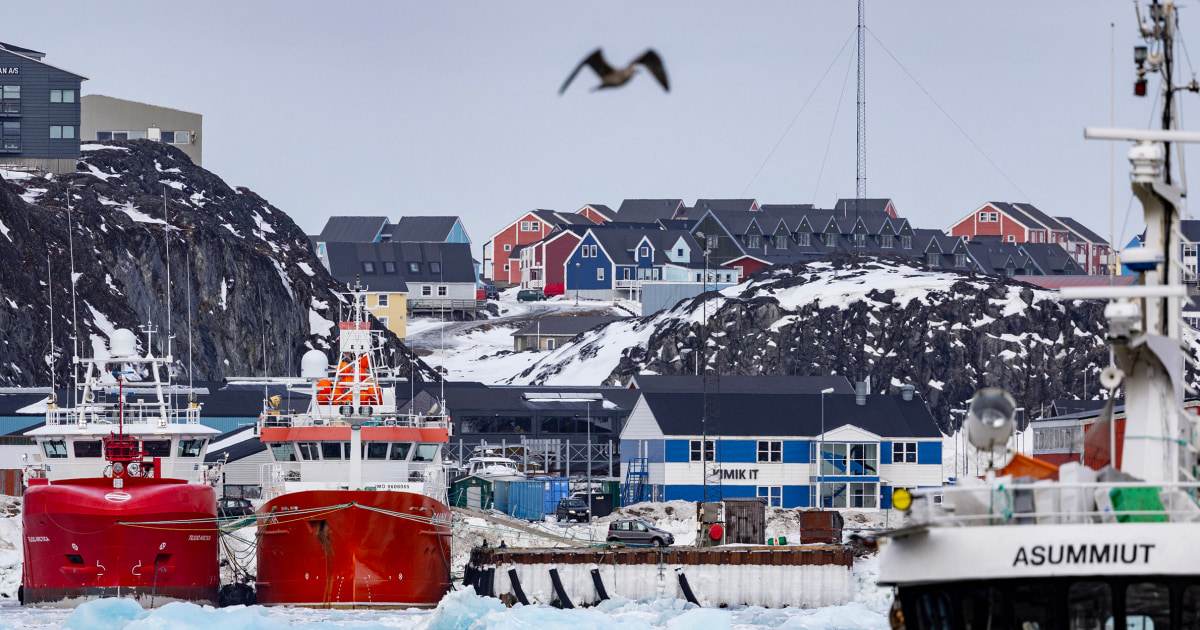
Denmark will join a high-level working group to discuss Greenland’s future after talks at the White House with senior Trump administration officials.
Danish Foreign Minister Lars Lokke Rasmussen told a press conference Wednesday that the closed-door meeting, attended by Vice President JD Vance and Secretary of State Marco Rubio, was a “frank but also constructive” discussion and an opportunity to “challenge the narrative presented by the American president.”
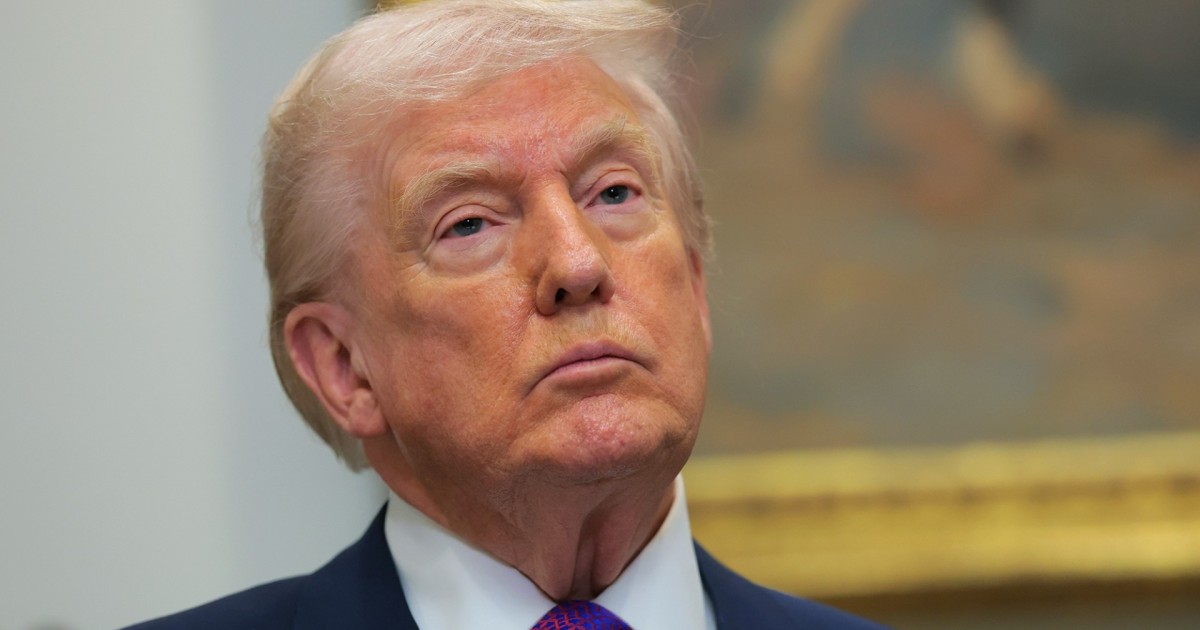
President Donald Trump has shown no sign of cooling his Arctic ambitions, vowing to take control of Greenland “one way or the other,” citing concerns it could be vulnerable to Russia or China. The White House has refused to rule out military action to seize Greenland from Denmark, alarming allies and rattling the NATO alliance.

Rasmussen said a high-level working group would be formed and meet within weeks “to explore if we can find a common way forward” on security while respecting Denmark’s red lines, referring to demands for U.S. ownership of the vast, semi-autonomous territory as “totally unacceptable.”
“Whether that is doable, I don’t know, but I hope it could take down the temperature,” he added.
Greenland’s minister of foreign affairs, Vivian Motzfeldt, said strengthening cooperation “doesn’t mean we want to be owned by the United States,” adding: “We have shown where our limits are.”

Trump doubled down on his threats Wednesday in a post on Truth Social ahead of the meeting, saying Greenland was “vital” for the “Golden Dome” missile defense system that Washington is building and that NATO should be “leading the way” for the U.S. to acquire the territory. “Anything less” than Greenland in U.S. hands “is unacceptable,” he said.
He posted again to suggest that Russia and China could pose a threat to Greenland. “Two dogsleds won’t do it!” Trump wrote, referring disparagingly to its defense capabilities under Denmark.
The U.S. already has a military base on Greenland, which has formed a core part of missile early-warning systems dating back to the Cold War. The base, which houses a tiny number of troops compared to thousands at its peak, was transferred to the U.S. Space Force in 2019, during the first Trump administration.
The Danish Defense Ministry said earlier that it was expanding its “military presence in and around Greenland,” with the presence comprised of “aircraft, vessels and soldiers, including from NATO allies.”
Swedish Prime Minister Ulf Kristersson said that his country had sent troops to Greenland on Wednesday for a Danish-led exercise, Operation Arctic Endurance, at the request of Denmark.

Ahead of the meeting, Greenland Prime Minister Jens-Frederik Nielsen made his stance clear.
“Greenland does not want to be owned by the USA. Greenland does not want to be governed by the USA. Greenland will not be part of the USA. We choose the Greenland we know today, which is part of the Kingdom of Denmark,” he said in a news conference Tuesday with Danish Prime Minister Mette Frederiksen in Copenhagen.
“Now we are faced with a geopolitical crisis, and if we have to choose between the USA and Denmark here and now, we choose Denmark.”

Asked about Nielsen’s remarks, Trump later told reporters: “I don’t know who he is. Don’t know anything about him, but that’s going to be a big problem for him.”
The president has repeatedly floated military action, insisting the mineral-rich island is strategically important for the U.S. despite warnings from European powers that this would implode NATO, the alliance of which both the U.S. and Denmark are members.
If he instead tries to buy Greenland, the U.S. could have to pay as much as $700 billion, according to three people familiar with the cost estimate, though Denmark insists it is not for sale.
A new poll found that just 17% of Americans approve of Trump’s efforts to acquire Greenland. Nearly half of respondents disapproved, according to the Reuters/Ipsos poll released Wednesday, while 35% said they were unsure.

Europeans have been scrambling to prove to Trump that they can address his security concerns and bolster the Arctic’s defense, including a possible NATO operation in the high north.
French President Emmanuel Macron said later that he did not underestimate Trump’s threats, warning “the knock-on effects would be unprecedented” if the sovereignty of a European ally were to be affected.
The European Parliament is also considering putting on hold the European Union’s implementation of the trade deal struck with the U.S. in protest against Trump’s threats.





Leave a Reply