
On a late night in the Philippines, zoologist Terry Gosliner slipped into the waters of a sandy harbor, on the hunt for photos of octopus and other marine creatures. But as he swept his flashlight through the dark waters, something unexpected emerged.
Inching through the beam of light, an alien creature crawled across the surface of the sand, resembling an inch-long cluster of ghostly leaves fringed with silvery filigree and capped with a pair of antennae-like stalks.
“It immediately caught my eye,” said Gosliner, Invertebrate Zoology Curator for the California Academy of Sciences. “I’ve been diving there for 30 years … and this one immediately struck me as different.”

So Gosliner and his colleagues photographed the animal, collected and carefully examined samples and tested its DNA to reveal the strange specimen was a sea slug species dubbed Cyerce Basi, which had never before been documented.
Along with tiny sea slugs, elegant birds and strange, fuzzy flowers, the marine oddity is just one of 72 species of plants, animals and fungi discovered by researchers at the California Academy of Sciences last year. They include creatures from far-flung lands as well as finds closer to home. Each new organism furthers our knowledge while hinting at just how much we have left to understand about the living things that share our planet – and highlighting the importance of conservation in a changing world.
“Describing (a species) is the very first step to being able to conserve it. If you don’t know it’s there, if you don’t know what it is, it’s hard to worry about it,” said Steven Beissinger, a professor emeritus of ecology and conservation biology at UC Berkeley who was not involved in the studies. “These kinds of studies are important — they’re not the end of the story, they’re the start of the story.”

That night dive in the Philippines was particularly fruitful for Gosliner; he and his colleagues found two other species unknown to science on the same dive, he said. “After studying reefs in the Philippines for 30 years, we still find new things on almost every dive,” said Gosliner. “The overwhelming number of species we just don’t know yet.”
Estimates range broadly, but one widely cited study suggests some 8.7 million species of animals, plants and their kin. If that’s close to reality, it would mean we know less than a fifth of species on earth.
While some species may be tucked away in unexplored reefs, others may be hidden in plain sight.

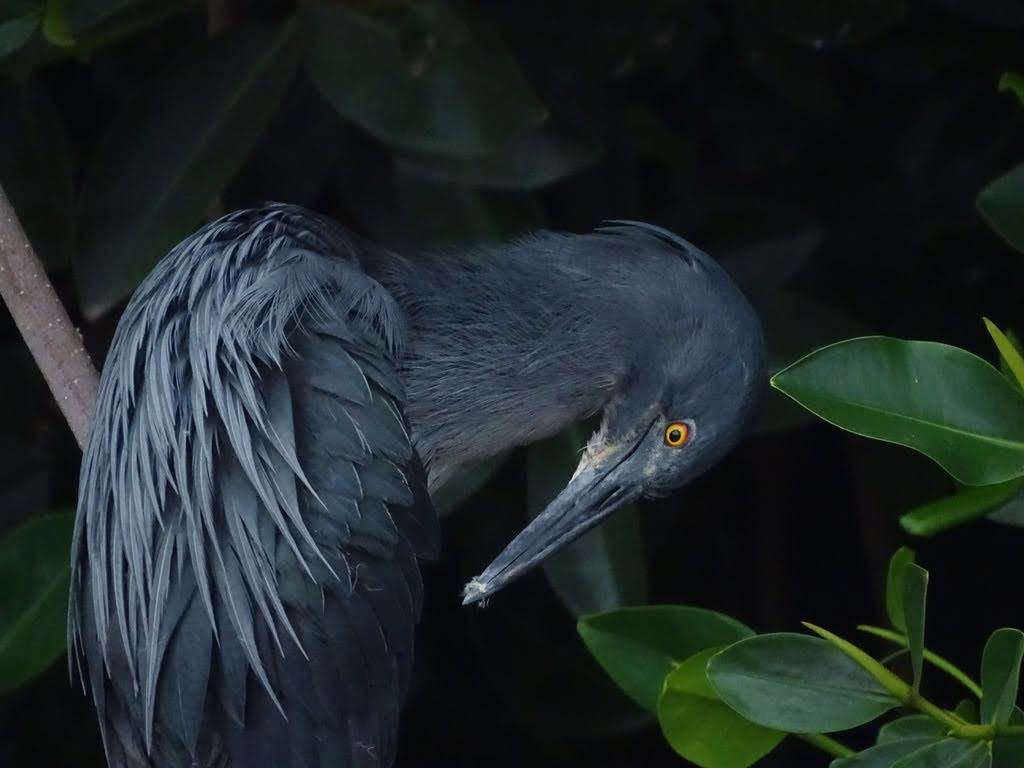
The Galapagos Lava Heron has been known to western science for nearly two centuries, first described by scientists just a few years after Charles Darwin took his famous voyage to the islands.For decades, scientists have wondered whether the animal was its own species or related to birds on nearby South America, so Jack Dumbacher, Ornithology Curator with the California Academy of Sciences, and a team of collaborators sought to settle the mystery using DNA samples from the herons.
While finding a new species in plain sight might seem simple, catching the birds – a relatively common sight in the Galapagos – proved a herculean task. The scientists tried setting up walls of nets, using snares, tossing nets over the birds but “the heron was always way, way too smart and saw it coming,” said Dumbacher.
At one point, they assembled nearly invisible fine mesh nets in the cover of darkness only to have to run around on slick, sharp lava rocks to corral and catch a heron. At another point, a ranger waded through the mud of a mangrove forest and clambered into a mangrove to catch a bird for a blood sample, before doing the same trek in reverse to put it back.
Once the researchers had the samples, however, they were able to compare the lava herons’ DNA to that of other related birds to provethey were a distinct species.
Beissinger, who specializes in conservation biology with a focus on birds, says that finding a new bird species like this is rare. While in a given year thousands of new species of beetle might be discovered, only a handful of new bird species are typically described.

Other species were discovered a bit closer to home. The woolly devil was spotted by a volunteer for Big Bend National Park in Texas, when on a spring hike, Deb Manly stumbled across a small hairy-looking flower with two maroon florets sticking out like devil’s horns. Manly uploaded photos of it to the app iNaturalist, a community-built catalog of species observations, and the strange sighting sparked interest in a group of botanists, including Isaac Lichter Marck, Botany Curator at the California Academy of Sciences. “It snowballed into a plant mystery…The question was ‘where does this weirdo plant fit into the tree of life?’” said Lichter Marck.
While exploring that question, he and a team of scientists found that the plant wasn’t only a new species, but a new genus – meaning it wasn’t very closely related to any other species known to science. “There might be a misconception that new species are only found in remote, pristine places in countries that are far away,” said Lichter Marck. “But the woolly devil is an example of something that’s here in our backyard.”
It’s also an example of how everyday people can help science document the scope of life on earth. In multiple cases – including a colorful Californian sea slug described by Gosliner – new species discovered last year were first sent to scientists by curious hikers or tide poolers.

Lichter Marck says that the help from the greater public is sorely needed. While estimates vary, some studies suggest the planet is losing species at least 100 times faster than the “natural” rate we might expect. Each species that disappears affects its ecosystem – its loss echoing in the creatures that it ate or that preyed upon it and in all the ways it interacted with its habitat.
That loss may soon include the woolly devil – which hasn’t been spotted since 2024.
“We were lucky to find it potentially before it goes extinct. There are lots of other plants that we know are on their way out,” said Lichter Marck. “I think about it as an all-hands-on-deck scenario … We know we’re up against the clock, and more eyes on the ground helps in the project of documenting what is out there.”
All of the scientists interviewed by the Bay Area News Group echoed that urgency. “We’re losing books from the library of life before they’ve been fully cataloged and their significance is understood,” said Beissinger.

Despite the concern, there are some signs of hope. After some of Gosliner’s discoveries of marine species in the Philippines, he has collaborated with local communities and governments to create protected reefs that could serve as a rich bastion of biodiversity for future generations. That model shows how these new species can lead to better outcomes for the environment. “There’s a conservation result to finding this new diversity, and that’s really rewarding,” said Gosliner. “Discovery is really the first step.”





Leave a Reply