
By Miquéla V Thornton and Jessica Nix, Bloomberg
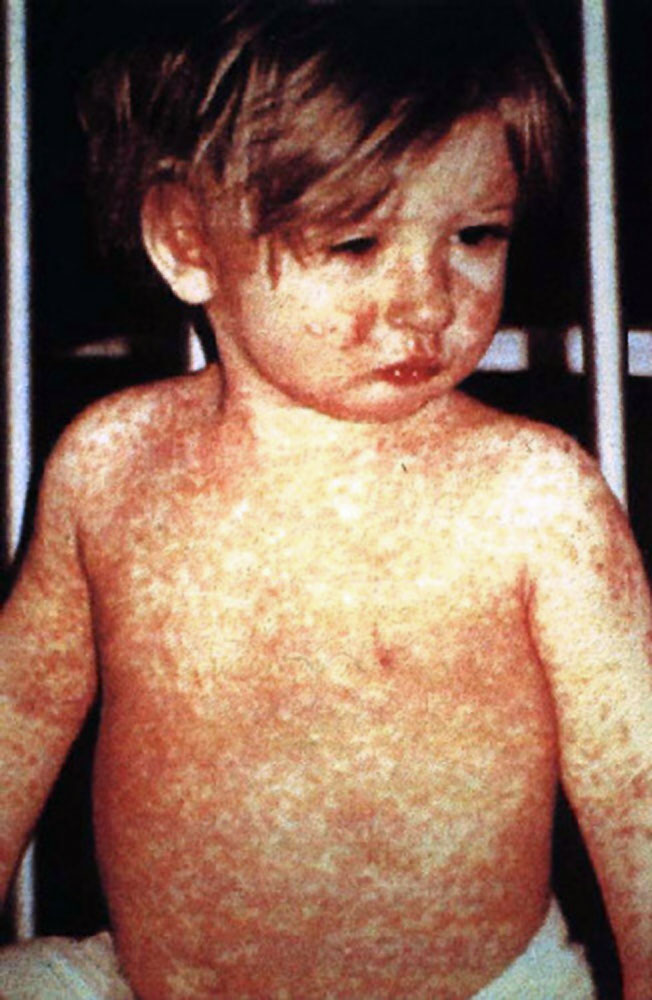
Measles is surging across the US with five new states reporting cases this week, including California, Minnesota and Washington.
Idaho and Kentucky are the other two states with new cases, according to new data from the Centers for Disease Control and Prevention. This follows reports of measles earlier this month in nine states: Arizona, Florida, Georgia, North Carolina, Ohio, Oregon, South Carolina, Utah and Virginia.
RELATED: Bay Area County reports first measles case since 2012

South Carolina, which is the largest outbreak, reported 700 total cases on Friday, up from 54 since Jan. 20, a tally that tracks the number of cases reported since the epidemic began in October. The CDC switched from reporting data on Wednesdays to Fridays this week, which added two days’ worth of data.
Of the 416 cases reported in the US so far this year, 94% were related to existing outbreaks. Three cases came from international visitors. Last year, the US had 2,255 confirmed measles cases — a 34-year high and more than 600% higher than the previous year.
The US is hurdling toward a key deadline regarding its measles elimination status. In April, the Pan American Health Organization’s committee on this topic will meet to determine whether the virus has been circulating in the same chain of transmission for 12 months, which is a key metric for designating the disease’s status. The CDC is working with all 50 states to pull its genomic sequencing data together ahead of the meeting.
Measles elimination status is just a label, but it underscores how a disease that had been eradicated due to mass vaccination and public health campaigns is making a resurgence. The US achieved its measles status in 2000 — a major public health victory.
The states with the highest number of cases have vaccination rates that are lower than the national average. Utah, with 216 total cases in its current outbreak, has a vaccination rate of about 90% — several percentage points lower than the national average. South Carolina is slightly lower than the US average. The CDC recommends 95% for herd immunity.
The majority of new infections this year are among young, unvaccinated children. The measles, mumps and rubella vaccine is 97% effective in preventing disease after two doses.
More stories like this are available on bloomberg.com
©2026 Bloomberg L.P.








Leave a Reply