
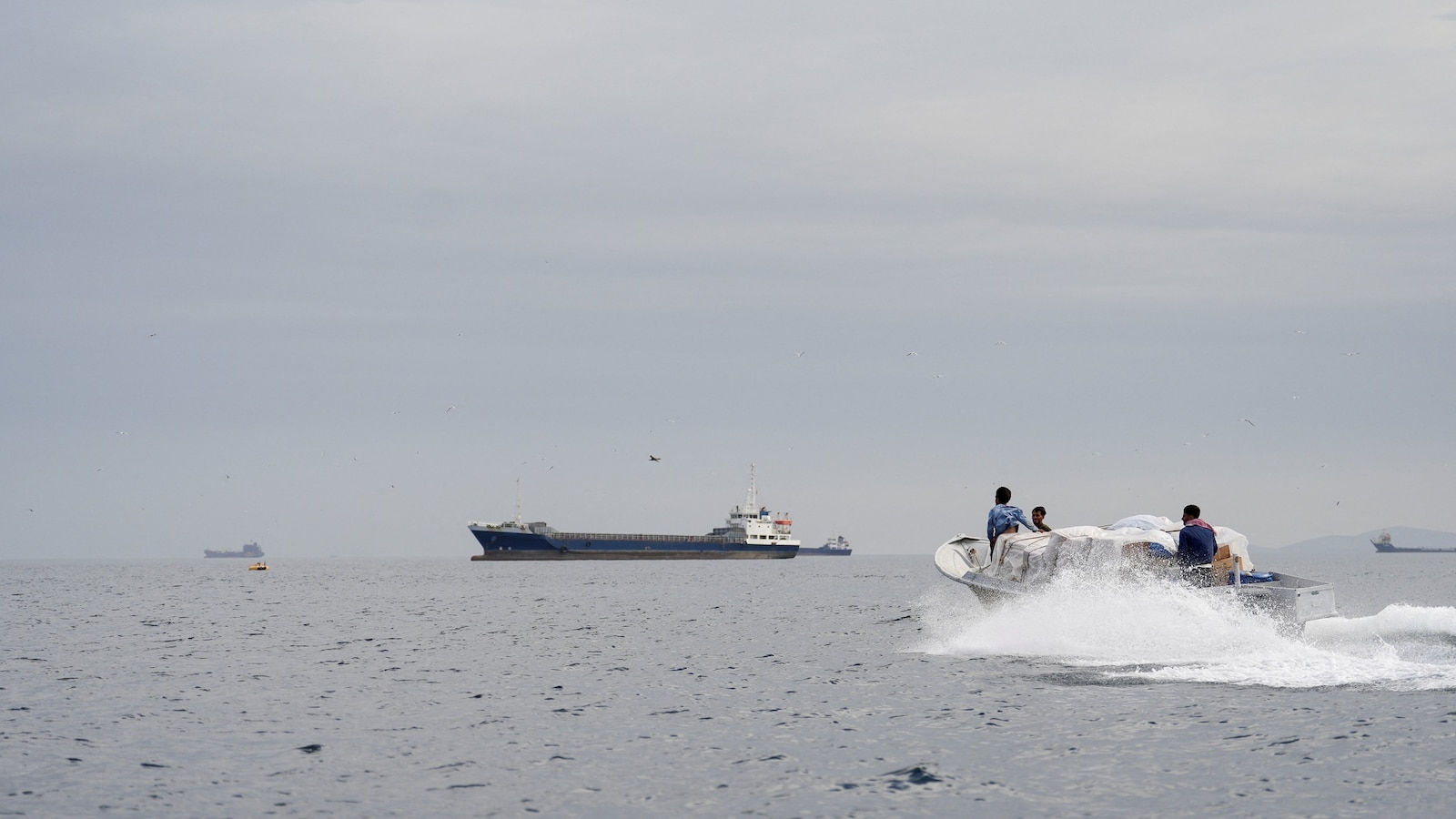
Both the United States and Iran have claimed the critical Strait of Hormuz is now “completely open,” but serious questions remain about if and when commercial shipping traffic will be restored to pre-war levels.
The Persian Gulf waterway typically transits roughly one-fifth of the world’s oil and gas supplies. But hardly any ships have traversed the strait since the war began in late February.
What the US and Iran are saying
On Friday morning, both President Donald Trump and Iranian Foreign Minister Abbas Araghchi announced a deal was reached to allow for the free flow of traffic in the Strait of Hormuz.
The strait was supposed to open at the start of the U.S.-Iran ceasefire 10 days ago, but the Iranians backed off the agreement, demanding that Israel halt its military operations in Lebanon first.
After an agreement between Israel and Lebanon fell into place overnight, Iran’s foreign minister was first to announce a new deal regarding the strait.
“In line with the ceasefire in Lebanon, the passage for all commercial vessels through Strait of Hormuz is declared completely open for the remaining period of ceasefire, on the coordinated route as already announced by Ports and Maritime Organisation of the Islamic Rep. of Iran,” Araghchi wrote on X.
Financial markets reacted to the news quickly and positively. Oil prices in U.S. and global trading dropped about 9%. U.S. oil is now trading at levels not seen since the initial days of the war.
But there are major caveats to what was announced on Friday.

President Donald Trump speaks to the media before boarding Marine One on the South Lawn of the White House, April 16, 2026 in Washington.
Jen Golbeck/AP
First, President Trump said the U.S. naval blockade of ship movements to and from Iranian ports remains in place. That means Iranian oil tankers can’t transit the strait.
On his social media platform, Trump said he won’t lift the blockade until a full nuclear agreement with Iran is reached.
“THE STRAIT OF HORMUZ IS COMPLETELY OPEN AND READY FOR BUSINESS AND FULL PASSAGE, BUT THE NAVAL BLOCKADE WILL REMAIN IN FULL FORCE AND EFFECT AS IT PERTAINS TO IRAN, ONLY, UNTIL SUCH TIME AS OUR TRANSACTION WITH IRAN IS 100% COMPLETE. THIS PROCESS SHOULD GO VERY QUICKLY IN THAT MOST OF THE POINTS ARE ALREADY NEGOTIATED,” Trump posted.
The Strait of Hormuz remains open to ships traveling to and from non-Iranian ports, but the U.S. is closely monitoring Iranian ports and is prepared to keep its blockade in place for as long as needed, Adm. Brad Cooper, the head of U.S. Central Command, told a small group of reporters, including ABC News, on Friday.
“It is open today, a couple [of] ships going out,” Cooper said, referring to the strait.
Hundreds of ships remain stuck
There about 700 ships stuck in the Persian Gulf, according to Matt Smith at Kpler, a maritime data analytics company. About 250 of those are tankers carrying 165 million barrels of crude and products.
Throughout February, before the war, the strait saw between 50 and 100 shipments of crude oil and liquefied natural gas a day, according to the World Trade Organization. In recent weeks only handfuls of ships, if any, are passing on a daily basis.
One seafarer, who asked not to share their identity out of concern for their safety, told ABC News they are stranded on “fully loaded” tanker in the Persian Gulf near the strait.
“Its been almost 50 days since the war started and uncertainty is our biggest fear and not knowing if we are going to get out of this situation alive is our main issue because it doesn’t matter where you are in the gulf there is no safe place here,” they said.
“We feel trapped, we feel like we are in a prison because effectively we cannot leave the only way to leave is through the Strait of Hormuz and that is not possible at the moment,” they added.
Iran’s announcement that the strait is fully open came with its own caveat that ships can only pass through a “coordinated route” set by Iran. That route forces ship to stay closer to Iranian shores.
There is also confusion over whether Iran agreed that the U.S. blockade can remain in place.
Iranian state media said the foreign minister’s post was “published without the necessary and sufficient explanations.” It said Iran has full supervision over the passage of ships and “such passage is considered null and void if the alleged naval blockade continues.”
And despite the foreign minister’s announcement that the strait is “completely open,” Iran’s Islamic Revolutionary Guard Corps said Friday the route is restricted, military vessels will be prohibited and “movements are only permitted with the permission of the IRGC Navy.”

A vessel at the Strait of Hormuz, off the coast of Oman’s Musandam province, April 12, 2026.
Reuters
But already on Friday, U.S. Central Command said a U.S. Navy guided-missile destroyer directed an Iranian merchant vessel to return to port. In total, 19 ships have been turned around during the blockade.
MarineTraffic data shows the first passenger ship to pass though since today’s announcement was an empty cruise ship, the Celestyal Discovery. The Malta-flagged vessel had been docked in Dubai for 47 days.
If traffic is ever to be fully restored, that pace will be determined by the shipping companies themselves and whether they feel the risks have been sufficiently mitigated.
“Any decision to transit the strait will be based on risk assessments and close monitoring of the security situation, with the latest developments also included in the ongoing assessments,” shipping giant Maersk said in a statement today.
Similarly, the International Maritime Organization said today it is “verifying the recent announcement related to the reopening of the Strait of Hormuz,” but did not say whether it was deemed safe enough to transit.
ABC News’ Desiree Adib and Steve Beynon contributed to this report.






Leave a Reply