
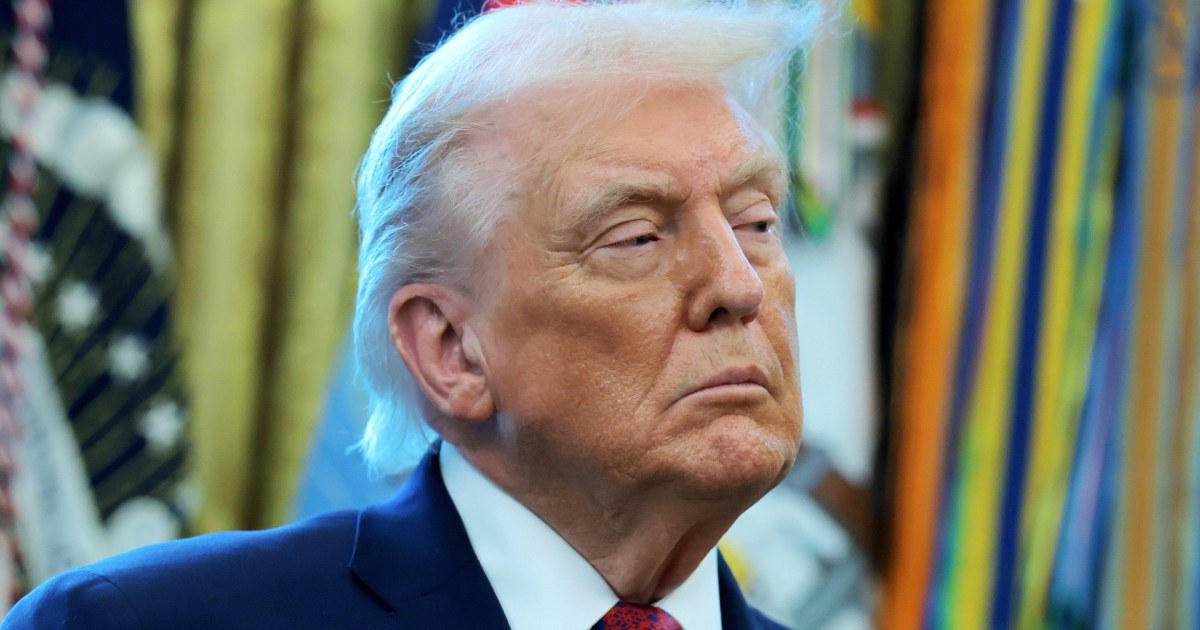
“I suggested a little bit of a ceasefire, and I think he might do that,” President Donald Trump told reporters this week after a conversation with Russian President Vladimir Putin. “There’s so many people being killed, it’s so ridiculous.”
Putin has proposed “little” ceasefires before, but more than four years since its full-scale invasion, he shows little sign that he’s planning on ending the war that has killed nearly half a million people.
The war in Ukraine, and US diplomatic efforts to negotiate a ceasefire, have both been getting far less attention in the US in recent weeks, with the focus firmly on the crisis in the Middle East. It appeared initially that Russia might end up as the unexpected beneficiary of the Iran conflict, with global oil prices spiking, the United States lifting sanctions on some Russian energy exports, and crucial US munitions, including all-important missile interceptors, diverted from Europe to the Middle East.
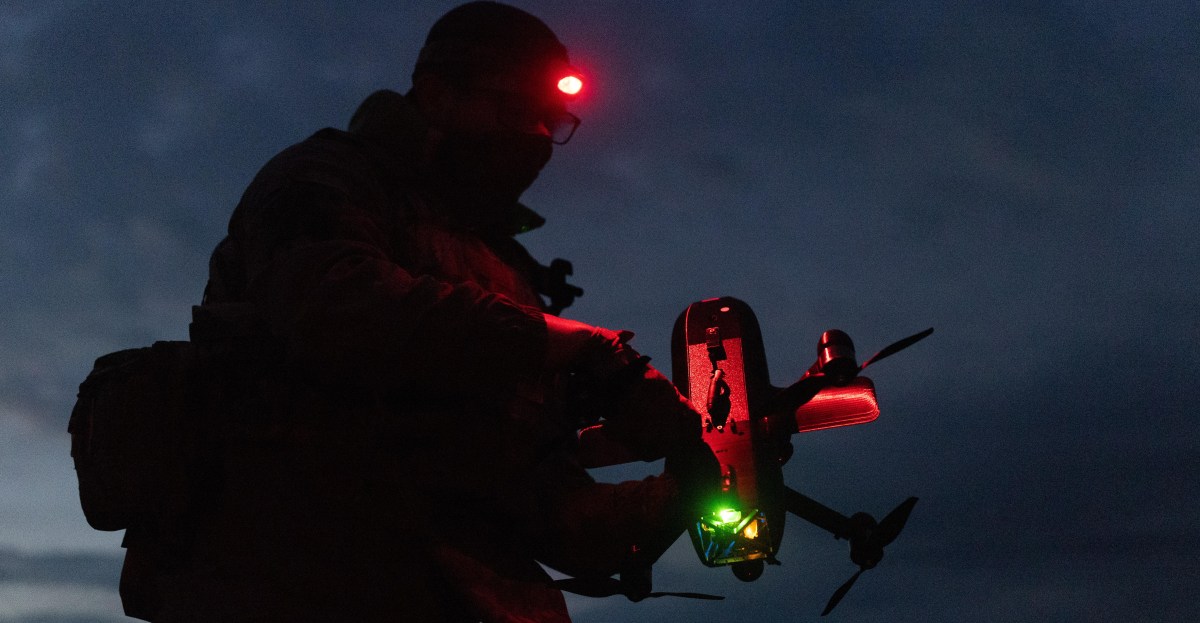
But if Russia is reaping a windfall, you wouldn’t know it from events on the battlefield in recent weeks. The Russians made almost no territorial gains in March, and may have even lost a small amount of territory since mid-March, despite launching a widely anticipated spring-summer offensive. The Institute for the Study of War, a US think tank, assesses that Russia is unlikely to be able to take Ukraine’s “fortress belt,” the heavily fortified Ukrainian-held portion of the eastern Donbas region that has become one of Russia’s central war aims. Ukraine estimated Russia’s casualties at a record 35,351 per month in March, 96 percent of them caused by drones.
Russia continued to bombard Ukrainian cities throughout the cold winter months, but Ukraine has gotten better at defending against these attacks, with its air defense systems taking down a record 33,000 drones in March, according to the Ukrainian government. The Ukrainians have become more effective at launching long-range strikes deep into Russia as well. Lately, their attacks have focused on preventing Russia from reaping an energy windfall from the Iran war: In late March, Reuters estimated that 40 percent of Russia’s oil export capacity had been taken offline by Ukrainian strikes on pipelines, ports, and refineries.
Though Ukraine still relies on the fickle US government for key systems — like Patriot interceptors as well as targeting intelligence — European countries are now providing most of the country’s military aid, and Ukraine’s indigenous capacities are growing as well. In fact, the expertise Ukraine has acquired in producing drones and coordinating multilayered air defense allowed President Volodymyr Zelenskyy to ink a series of lucrative defense deals in recent weeks with several countries in the Persian Gulf and Europe. As Trump might put it, after years of heavy dependence on foreign defense aid, Ukraine now has “cards” of its own to play.
Certainly after years of slow but relentless Russian advance, which gave ammunition to critics of Ukraine aid who argued the country’s defeat was inevitable, there’s some more confidence from Ukrainian leaders and their supporters these days. Foreign Minister Andrii Sybiha recently argued that because of its advances in drones and air defense, Ukraine’s frontline position is now the “strongest” it’s been in a year. Mick Ryan, a retired Australian general and prominent military commentator, recently argued that “The strategic scales are beginning to tip in Ukraine’s favor.”
It’s probably too soon to say Ukraine is winning the war, but at the very least, it doesn’t appear to be losing.
Drone swarms and stalemate
According to estimates by the Center for Strategic and International Studies, Russian forces have advanced an average of 15 to 70 meters per day since 2024, slower than almost any military offensive in the past century, and those gains come at a steep cost. Ukrainian figures suggest that more than 300 Russian troops are now killed or injured for every kilometer captured.
“The Russians have sustained enormous casualties — they’re losing quite a few soldiers and quite a bit of equipment, and the Ukraine line is not really in danger of breaking,” said Franz-Stefan Gady, an Austrian military analyst who frequently visits the front lines, who adds that “the Russian strategy remains ‘attrition, attrition, attrition.’”
“The advances we’re seeing aren’t what will change the future of the war.”
— Olga Oliker, director for European Security at Crisis Group
Looking at the war in terms of territory held can be misleading. Much of the “front line” in Ukraine is now a sparsely populated no-man’s land, dominated by drones. The manpower and recruiting problems on both sides, along with the fact that drone surveillance has taken away the element of surprise, has made it extremely difficult to mount large-scale attacks. (For humans at least: Zelenskyy recently claimed that for the first time a Russian enemy position had been entirely captured by robotic systems and drones, without any human soldiers.)
It’s possible this trend could change in the coming months: Winter tends to favor defense because the lack of foliage makes it hard to hide, and infrared sensors work better when the ground is colder. But for the moment, neither side appears able to make major advances, and when they do — such as when Russia seized the town of Pokrovsk after months of heavy fighting in December — they’re unable to translate it into much strategic momentum.
“The advances we’re seeing aren’t what will change the future of the war,” said Olga Oliker, director for European Security at Crisis Group. “Both sides are still fighting in the expectation that the other will break politically.”
In what is probably a sign that not all is going according to plan, the Kremlin recently announced that it is dramatically scaling back this year’s May 9 “Victory Day” parade, the annual commemoration of victory over Nazi Germany that doubles as a chance to display Russia’s military might. For the first time in decades, there will be no military hardware on display at the parade this year — perhaps a sign that the tanks that usually rumble through Red Square are needed on the front lines, or that there are concerns about Ukrainian strikes. The Russian government has also been throttling the country’s internet service, perhaps a sign of insecurity, prompting a rare wave of publicly voiced discontent. Putin himself has been in even greater isolation than normal due to fears of assassination.
But public opposition to the “special military operation” itself is still rare, and despite the economic headwinds, there remains little sign that Putin believes the war is unwinnable or that he’s inclined to wind it down.
On the Ukrainian side, recruiting and manpower remain concerns, as they have been since early in the war. The government recently faced an outcry and promised reforms after photos circulated showing emaciated troops on the front lines who had been on rotation and under fire for months. But fears that Russia would eventually roll over Ukraine simply by virtue of its larger population have faded.
“I think everything is proving more resilient than people anticipated,” said Jeffrey Edmonds, a former Pentagon staffer, now a senior analyst at the Center for Naval Analyses. “The Russian economy is proving more resilient; Ukrainian critical infrastructure, although it’s really taken a shot of the face, has proved more resilient; and I think that the front lines have proved more solid than people anticipated.”
Coupled with that resilience, US-led efforts to mediate a ceasefire have effectively been put on hold as US envoy Steve Witkoff and other senior US diplomats have been focused on Iran. Ukrainian leaders still publicly support calls for a ceasefire, but hopes are fading that new talks could actually deliver one.
For the moment, fears that Ukraine’s slow, grinding defeat was inevitable seem to have been premature: It’s in a better position today that many would have anticipated, even a few months ago. But it’s also increasingly hard to see how this uniquely deadly and destructive war will end.





Leave a Reply