
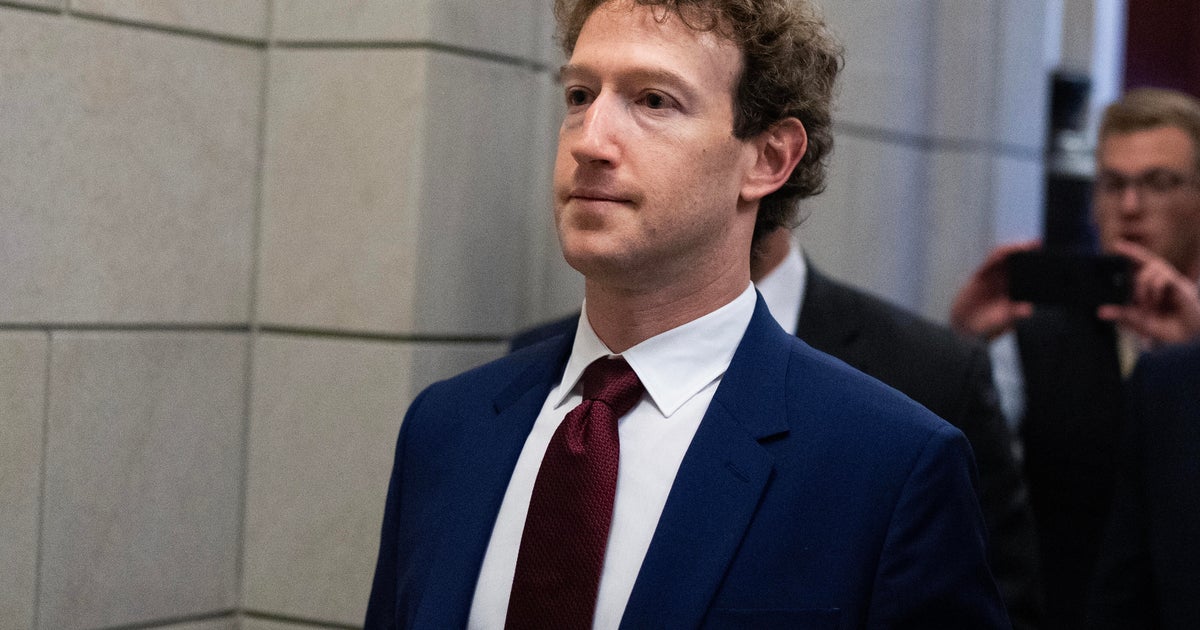
A group of publishers and bestselling novelist Scott Turow are suing Meta and its founder, Mark Zuckerberg, alleging that the tech giant used copyrighted material to train Meta’s artificial intelligence technology.
The class-action lawsuit, filed in a federal court in New York, was brought by Turow and publishers Cengage, Elsevier, Hachette, Macmillan and McGraw-Hill. The plaintiffs allege that Meta scraped millions of copyrighted works from across the internet —including from “notorious pirate sites”— and used the content to train Llama, Meta’s suite of AI models, without permission.
Meta also removed copyright management information from the works to hide the fact that it was training its AI on stolen materials, the lawsuit alleges.
Suit blames Mark Zuckerberg
Like other chatbots, Llama generates text outputs in response to user prompts. The complaint claims that the AI tool is reproducing versions of original works from novels, journal articles and textbooks, and in some cases recreating verbatim copies. Llama also mirrors certain authors’ personal style in its responses, according to the lawsuit.
The plaintiffs say Meta’s actions are robbing authors and publishers of revenue they would otherwise receive.
The suit assigns blame to Zuckerberg, claiming he “personally authorized and actively encouraged the infringement” by sidestepping normal licensing procedures.
“As a result of Zuckerberg’s day-to-day involvement in Meta’s AI development, including his authorization for Meta AI to torrent pirate collections to train Llama, Zuckerberg’s net worth recently climbed to over $200 billion,” the lawsuit says.
A Meta spokesperson told CBS News in an email that the company plans to “fight this lawsuit aggressively.”
“AI is powering transformative innovations, productivity and creativity for individuals and companies, and courts have rightly found that training AI on copyrighted material can qualify as fair use,” the spokesperson said in an email.
The plaintiffs in Tuesday’s suit said they are seeking damages.
“Verbatim copying” alleged
The literary world has previously clashed with AI companies over copyright issues. In a case last year, Anthropic, maker of the AI chatbot Claude, agreed to settle with hundreds of thousands of authors for $1.5 billion, the largest payout for copyright infringement in history, according to The New York Times.
Michael Goodyear, a professor at New York Law School, told CBS News in an email that the strongest copyright infringement cases are the ones in which plaintiffs can demonstrate that the information AI chatbots generate is nearly identical to the original works.
However, the argument in Tuesday’s suit differs in that it focuses on the training of Meta’s AI system, not its output, he explained.
The lawsuit “alleges verbatim copying of several paragraphs from a calculus textbook. It also alleges several substitute paragraphs,” Goodyear said. “However, it only uses this evidence to support its allegations that the training is infringement, not that the outputs are.”







Leave a Reply