
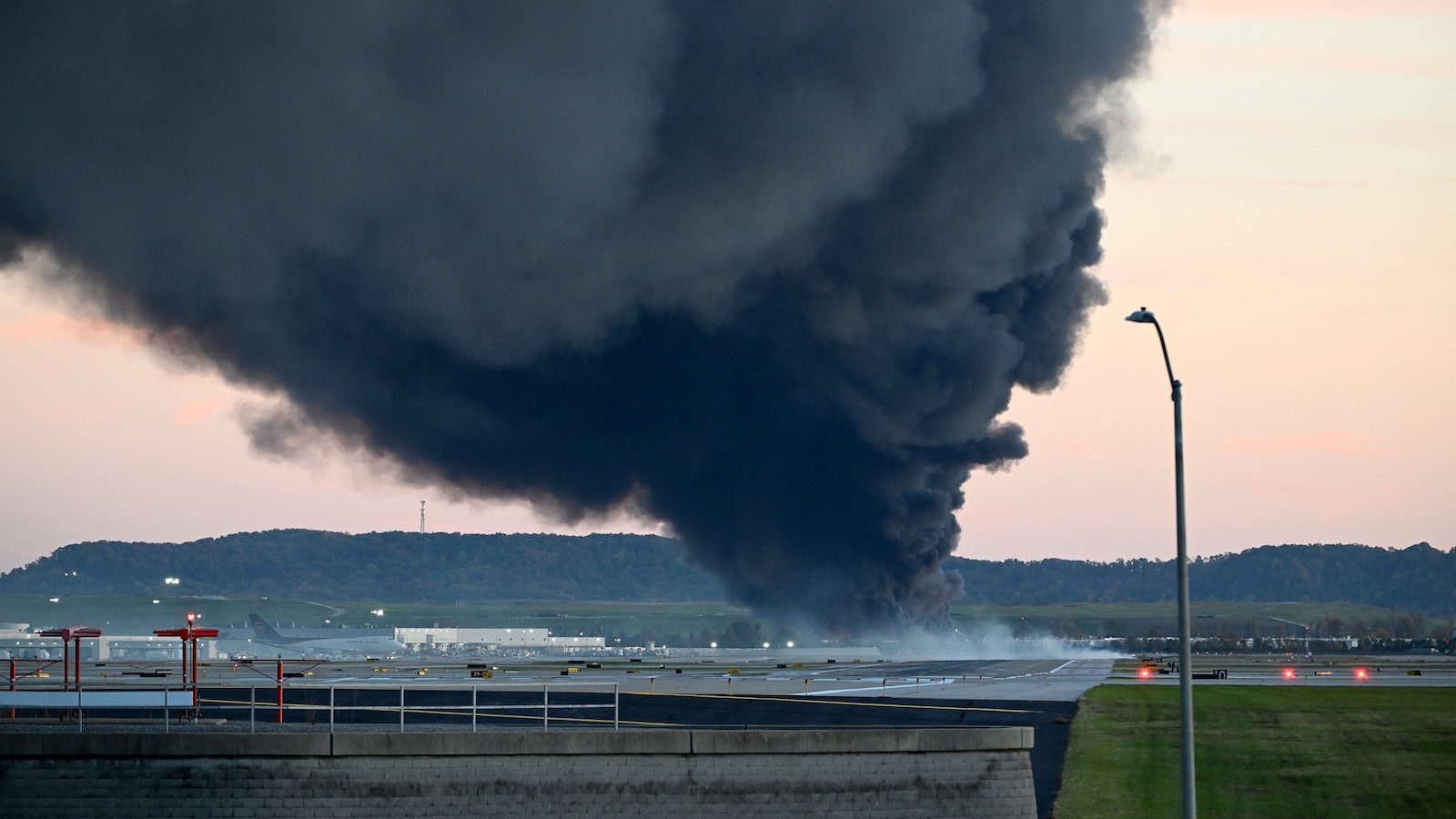
A slew of new civil lawsuits allege UPS and its partners failed their responsibility to make sure a plane they put in the air was safe to fly — and that negligence led to the fiery, fatal plane crash in Louisville, Kentucky, last year that claimed the lives of 15 people.
The complaints allege the plane was faulty, the risks were known and yet it left the ground on a nonstop trip to Honolulu on Nov. 4, 2025 anyway.
The lawsuits — 15 in total — were filed in Jefferson Circuit Court on behalf of more than 100 survivors and victims of the crash as well as impacted businesses.
The lawsuits, which include several wrongful death claims, name a lengthy list of defendants, including UPS, Boeing, GE, Allianz insurance and the company that performed maintenance and repair on the plane.
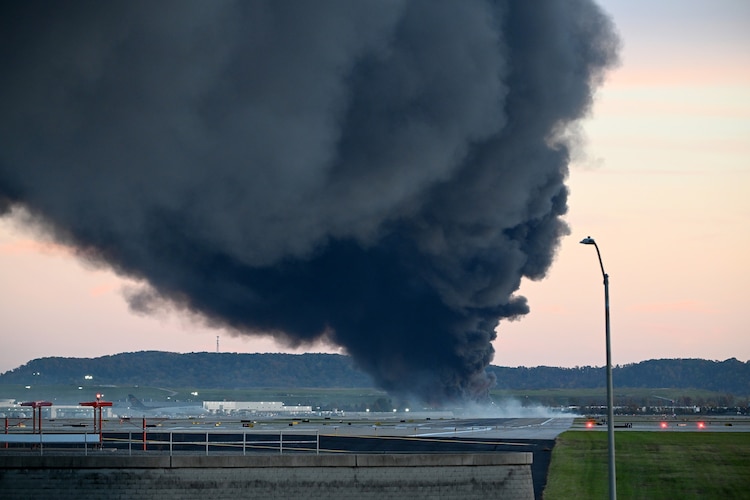
In this Nov. 4, 2025, file photo, fire and smoke mark where a UPS cargo plane crashed near Louisville Muhammad Ali International Airport in Louisville, Kentucky.
Stephen Cohen/Getty Images, FILE
Also named as a defendant: the estate of one of the plane’s pilots — Capt. Richard Wartenburg, who perished in the crash — who the lawsuits claim was “directly responsible for determining whether” the plane “was in a condition for safe flight.”
The lawsuits claim the defendants let a “catastrophic failure” occur.
In a statement, UPS said in a statement, “We remain deeply saddened by Flight 2976. Our focus continues to be on supporting those affected and working closely with the National Transportation Safety Board as the investigation continues.”
In a statement, Boeing said: “We extend our deepest condolences to the families and friends of those who lost their lives in this accident.”
‘Huge ball of fire coming straight for us’
The new allegations come just on the heels of the crash’s six-month anniversary.
The UPS jet — a McDonnell Douglas MD-11 — lost its left engine and pylon shortly after taking off from Louisville Muhammad Ali International Airport last November, crashing just seconds into the flight, according to the National Transportation Safety Board.
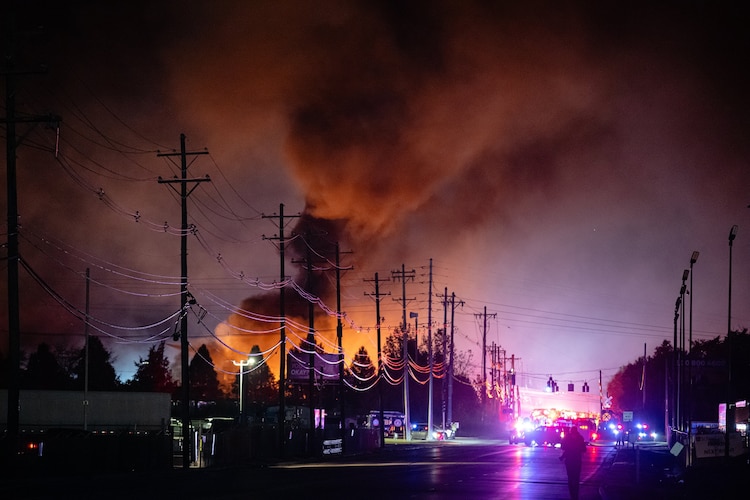
In this Nov. 4, 2025, file photo, plumes of smoke rise from the area of a UPS cargo plane crash at Louisville Muhammad Ali International Airport, in Louisville, Ky.
Jon Cherry/AP, FILE
Exploding in a fireball, it slammed into an area scrapyard, Grade A Recycling.
“I wake up every day and have to kind of relive it and bring myself back to reality,” said Ashley Muse, who was there that day, and is a plaintiff in one of the suits.
“All you could see was a huge ball of fire coming straight for us, and everyone started screaming and running, and within seconds, it hit us, the whole building shook like we were in an earthquake,” Muse told ABC News in an exclusive interview.
Muse said she was saved by a colleague who later died. Her colleague Adam Bowman, who is a plaintiff in one of the suits, also jumped into action — saying he pulled one victim out of the inferno, who later passed away from his injuries.
“I turned my head, all I saw was a massive fireball,” Bowman said. “It started getting really hot, and thinking, I love my job, but I don’t want to die here.”
The lawsuit alleges the defendants, including UPS, the pilot, Boeing and others “negligently allowed” the aircraft “to be dispatched in an unsafe and an unairworthy condition resulting in the departure of the left pylon and engine from the wing causing the crash.”
They “accepted the risk of an MD-11 crash by continuing to utilize the aircraft type without more frequent and rigorous inspections of the pylon assemblies,” the filings said.
“People made decisions, corporations made decisions, to continue to operate these planes,” said attorney Masten Childers III, who is representing the plaintiffs.
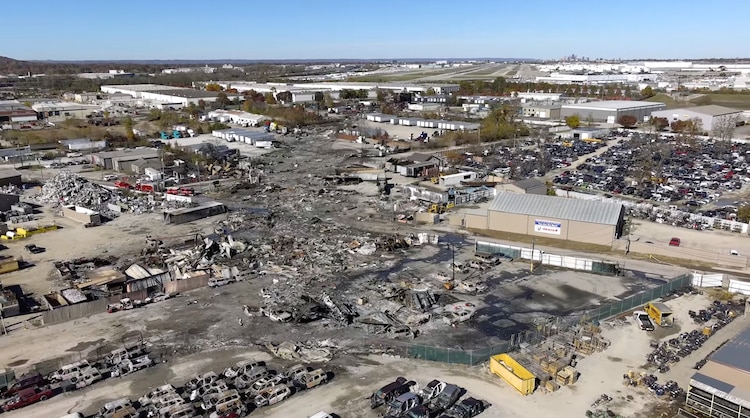
This Nov. 6, 2025, file photo provided by the National Transportation Safety Board shows UPS plane crash scene in Louisville, Ky.
NTSB via AP, FILE
Childers said in this case, UPS and the other defendants “took those risks, and those risks came to a head on Nov. 4 … when this plane fell out of the air on top of our clients.”
“More could have and should have been done to ensure that those problems were remedied so things like what happened on the 4th didnt happen,” Childers said.
‘It happened out of the blue’
One of those deaths was 3-year-old Kimberly Asa, who was with her grandfather Louisnes Fedon at Grade A Recycling on the day of the crash.
Left behind — Kimberly’s mother, and Louisnes’ daughter.
“My dad was a really good person. My daughter, she was also a very bubbly person. I expected to watch her grow. I expected to always be able to run to my dad. So, the biggest thing is how it happened out of the blue,” Sherline Fedon said. “It’s not something that you hear about — when I finally saw a plane had hit, I don’t think anybody would have ever thought that it was their family. That’s something that you see on the news, and never think that you would be a part of it, or someone that you love to be a part of that. So I think what sticks with me the most is how random, and unheard of, it feels to me.”
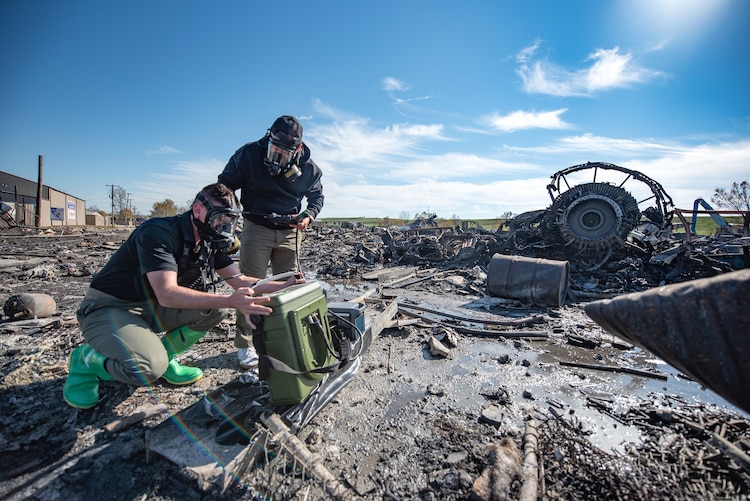
In this photo provided by U.S. Air National Guard, members of the Kentucky National Guard’s 41st Civil Support Team use a portable gas chromatograph mass spectrometer at the site of a Nov. 5, 2025, fatal airplane crash in Louisville, Ky.
Phil Speck/U.S. Air National Guard via AP, FILE
Kimberly “survived the initial impact” and “attempted to flee to safety from the explosion of nearly 220,000 pounds of jet fuel, seeking shelter from the smothering smoke and intense flames under a partially collapsed structure,” the documents alleging their wrongful deaths stated.
Their autopsies indicated that their deaths were not quick, according to the lawsuits.
Kimberly “suffered from excessive smoke inhalation resulting in soot in her airway, charring of all of her body surfaces and heat related fractures to her skull, left ribs and both arms,” according to the filings. Her cause of death was determined to be “smoke inhalation and thermal injuries resulting from the crash, explosion and subsequent fire” of the plane.
Her grandfather Louisnes also “survived the initial impact” and tried to flee with Kimberly, according to the filing. His “autopsy indicates that he suffered baking of his brain and right lung from the exposure to extreme temperature.” His cause of death was determined as “carbon monoxide intoxication, smoke inhalation and thermal injuries” from the crash and fire.
‘Known structural defects’
After the crash, federal investigators focused on metal fatigue cracks around the engine of the UPS plane that crashed on Nov. 4.
The lawsuits now home in on those cracks — alleging that overstress fracture and failure of the pylon assembly “significantly contributed to the crash.”
The lawsuits allege there were “known structural defects” with the MD-11F fleet of aircraft, citing a 2011 “service letter” issued by Boeing.
That letter informed operators of the MD-11 aircraft, including UPS, of the risk of bearing race failures, according to the lawsuits, which allege that despite that Boeing “did not alter the inspection interval for MD-11 spherical bearings and bearing races.”
The lawsuits also allege Boeing “failed to provide adequate warning of the defective condition of the MD-11 and failed to provide a reasonably safer alternative.”

In this Nov. 8, 2025, file photo, workers clean oil and sludge runoff from the UPS plane crash from a waterway known as Northern Ditch, in Louisville, Ky.
Jon Cherry/AP, FILE
Given what it called the “known risk” of the some of the plane’s alleged defects, UPS and the other defendants “knew or shoud have known that the assembly required more frequent inspection(s),” the lawsuit stated, alleging that the cost of such inspections would have made that plane model “inefficient for operation from a cost perspective.”
Regarding the actions of the pilot, the lawsuits argue Captain Wartenburg also had a duty to make sure his plane was safe to fly. Upon takeoff roll and rotation on the flight, a “repeated bell was sounding in the cockpit” but he “failed to act appropriately when presented with this alarm bell and failed to prevent the crash,” the lawsuits allege.
UPS pilots, including Wartenberg, knew this plane and type “as a problem aircraft with multiple defects but Defendant Wartenberg and the UPS Defendants, jointly and severally, elected to operate N259UP anyway,” the lawsuits claim.
In addition to those killed in the crash, others suffered “physical and psychological injuries,” and businesses suffered financial loss and damage from the crash, according to the lawsuits.
ABC News’ Soo Youn and Sam Sweeney contributed to this report.





Leave a Reply