
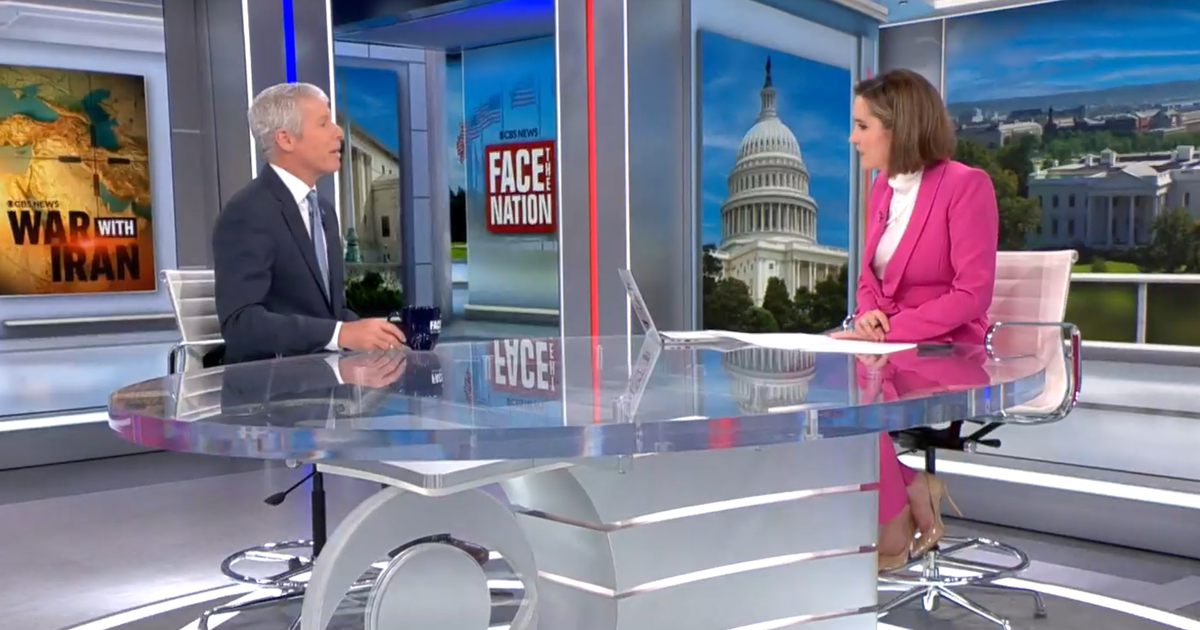
On this “Face the Nation with Margaret Brennan” broadcast, moderated by Margaret Brennan:
- Energy Secretary Chris Wright
- Sen. Mark Kelly, Democrat of Arizona
- Rep. Ted Lieu, Democrat of California
- Scott Gottlieb, former FDA commissioner
- Save the Children President and CEO Janti Soeripto
Click here to browse full transcripts from 2026 of “Face the Nation with Margaret Brennan.”
MARGARET BRENNAN: I’m Margaret Brennan in Washington.
And this week on Face the Nation: Global energy markets remain tied in knots by the conflict with Iran, as ships in the Strait of Hormuz remain at a standstill.
Awaiting a response to the latest U.S. offer to end the war with Iran, President Trump attended a tournament at his golf club in Virginia Saturday and last week settled on a new label for the conflict, which has persisted despite a previous declaration that the war had been – quote – “terminated.”
(Begin VT)
DONALD TRUMP (President of the United States): We’re in a little skirmish, military – I call it a skirmish, because Iran has no chance.
(End VT)
MARGARET BRENNAN: With critical energy trade routes through the Strait of Hormuz still near frozen, gas prices continue their march higher.
We will ask Energy Secretary Chris Wright what the plan is going forward. We will also hear from Arizona Democratic Senator Mark Kelly. And we will have a preview of an interview with Israeli Prime Minister Benjamin Netanyahu.
(Begin VT)
(CHANTING)
(End VT)
MARGARET BRENNAN: Then: Democrats are dealt a stinging defeat in the latest round of redistricting whiplash. We will ask the vice chairman of the Democratic Caucus, California Congressman Ted Lieu, whether his party can still retake the House in November’s elections.
Plus: Passengers from the hantavirus-infected cruise ship have disembarked off the coast of Africa this morning. We will get the latest from former FDA Commissioner Dr. Scott Gottlieb.
Finally, on this Mother’s Day weekend, we will check in with Janti Soeripto, the president and CEO of Save the Children U.S.
It’s all just ahead on Face the Nation.
Good morning, and welcome to Face the Nation.
As we come on the air, the cease-fire in the war with Iran remains fragile. Tehran has given an official response to a U.S. proposal of truce talks to a Pakistani mediator. But it’s not clear that peace between the U.S. and Iran would necessarily end the conflict, as America’s partner in the war, Israel, has kept its own timeline for hostilities.
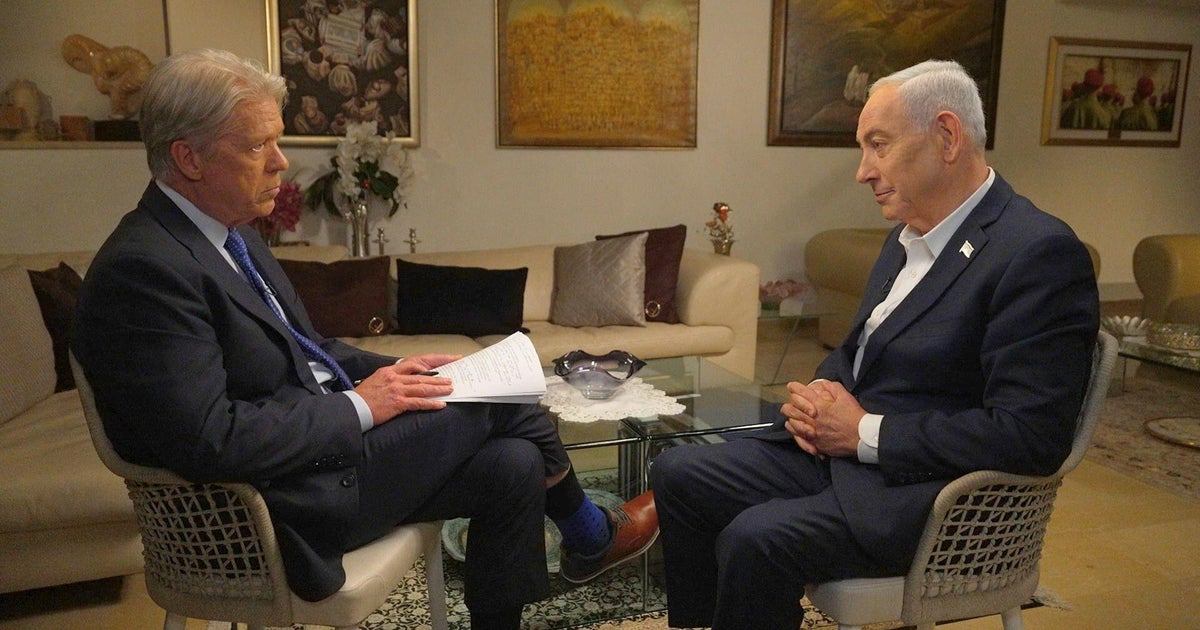
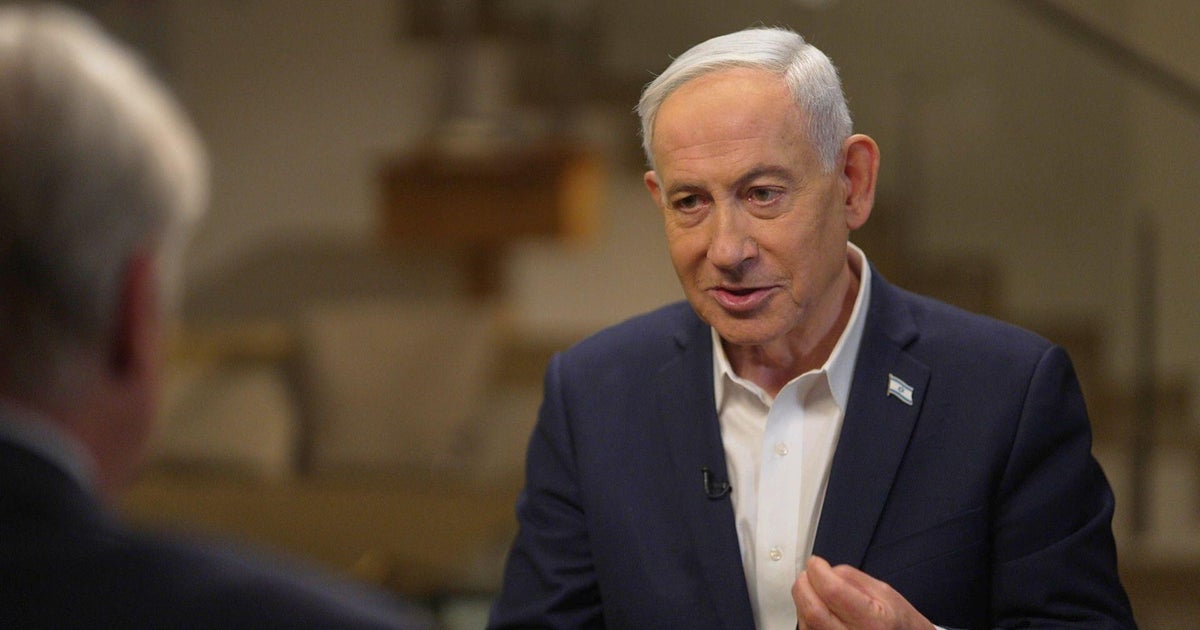
We begin today with Israeli Prime Minister Benjamin Netanyahu. He spoke with chief Washington correspondent and host of The Takeout Major Garrett in an interview for 60 Minutes.
Here’s a preview.
(Begin VT)
MAJOR GARRETT: Is the war with Iran over? And if it isn’t, who will decide when it is?
BENJAMIN NETANYAHU (Israeli Prime Minister): I think it accomplished a great deal, but it’s not over, because there’s still nuclear material, enriched uranium that has to be taken out of Iran. There is still enrichment sites that have to be dismantled.
There are still proxies that Iran supports. There are ballistic missiles that they still want to produce. Now, we have degraded a lot of it, but all of that is still there, and there’s work to be done.
MAJOR GARRETT: How do you envision the highly enriched uranium will be removed from Iran?
PRIME MINISTER BENJAMIN NETANYAHU: You go in and you take it out.
MAJOR GARRETT: With what, special forces from Israel, special forces from the United States?
PRIME MINISTER BENJAMIN NETANYAHU: Well, I’m not going to talk about military means, but what the president – what President Trump has said to me: “I want to go in there.”
And I think it can be done physically. That’s not the problem. If you have an agreement and you go in and you take it out, why not? That’s the best way.
MAJOR GARRETT: What if there isn’t an agreement? Can it be taken out by force?
PRIME MINISTER BENJAMIN NETANYAHU: Well, you’re going to ask me these questions. I’m going to dodge them because I’m not going to talk about our military possibilities, plans or anything of the kind.
MAJOR GARRETT: And I’m just trying to get at, how long is it going to take to achieve that aim?
PRIME MINISTER BENJAMIN NETANYAHU: Well, I’m not going to give a timetable to it, but I’m going to say that’s a terrifically important mission.
(End VT)
MARGARET BRENNAN: You can see more of their conversation tonight on 60 Minutes at 7:00 p.m.
We turn now to Arizona Democratic Senator Mark Kelly, who we spoke with earlier and began by asking whether the Pentagon has provided an answer on how depleted U.S. munitions are because of the war with Iran.
(Begin VT)
SENATOR MARK KELLY (D-Arizona): Yes, Margaret, we – we have. We’ve been tracking it.
A number of times, we’ve been briefed by the Pentagon on specific munitions. Actually, it’s been pretty detailed on Tomahawks, ATACMS, SM- 3s, THAAD rounds, Patriot rounds, so those interceptor rounds to defend ourselves.
And the numbers are – I think it’s fair to say it’s shocking the – how deep we have gone into these magazines because this president got our country into this without a strategic goal, without a plan, without a timeline.
And, because of that, we’ve expended a lot of munitions. And that means the American people are less safe. Whether it’s a conflict in the western Pacific with China or somewhere else in the world, the munitions are depleted.
You may have seen me ask the secretary of defense this question…
MARGARET BRENNAN: Yes.
SENATOR MARK KELLY: … about how long it’s going to take to replenish. We’re talking about years.
MARGARET BRENNAN: Well, you know, Admiral Paparo, the head of U.S. Pacific Command, was recently asked in front of Congress about American readiness and whether the diversion to the Middle East was hurting it.
He said he did not see any real cost on our ability to deter China. From what you have heard – when you say it’s shocking, do you think that the U.S. would be able to defend, for example, Taiwan, if China tries to move against it? Or are you saying we are not in a position to do that right now?
SENATOR MARK KELLY: Well, it all depends on the length of a conflict.
You know, a conflict that lasts a matter of days or just weeks, I think we’re well-positioned to do that. If a conflict goes on for months or years, when it takes years to replenish some of these munitions, of course we’re going to be in a worse posture than we otherwise would be in if this war in Iran didn’t happen.
And, by the way, Margaret, what are the American people getting out of this? This president said he wasn’t going to start any new wars, he was going to bring down costs. He’s done exactly the opposite, war against Iran. Costs on everything are up.
MARGARET BRENNAN: Well, that is true.
Of course, you know their argument that this was an inevitable conflict in some ways. But when it comes to making America ready to defend our allies and ourselves, does what you describe basically make it impossible for a Democrat like yourself to say no to that request from the White House for $1.5 trillion in defense spending?
SENATOR MARK KELLY: Well, first of all, let me – let me just back up a second.
Things like this, nothing is inevitable. There are always other options. During the Obama administration, the Iran deal, the JCPOA, kept the enrichment at a lower level. Donald Trump tore that up. That’s the reason we’re – we’re here.
But this also was not inevitable. There were other things that we could do. The $1.5 trillion request from this administration, it’s outrageous. When I got to the Senate 5.5 years ago, the defense budget was just over $700 billion.
Now they’re asking for twice as much money. It’s nearly the amount that the rest of the world pays for its defense.
MARGARET BRENNAN: So you’re a no.
SENATOR MARK KELLY: and as I pointed out in that – and I pointed – as I pointed out in that hearing, there’s stuff in there like Golden Dome. The physics on that stuff is really, really hard. I’m very confident we’re going to spend a lot of money, and we’re going to get a system that doesn’t work.
There are other things in there we do not need. I mean, they need to submit a defense budget that makes sense for the moment we’re in.
MARGARET BRENNAN: OK, it sounds like you’re saying no on that.
Let me ask you about something that the administration released late Friday, and that was sanctioning four entities for providing satellite imagery to enable Iran’s military strikes against U.S. forces and allies. Three of those entities are based in China. How extensive is China’s support for Iran and targeting of American assets?
SENATOR MARK KELLY: Well, of course, China’s supporting Iran. You know, so is Russia. I mean, they – they are allies. They’re all adversaries of ours. So I’m not surprised.
MARGARET BRENNAN: Not surprised.
SENATOR MARK KELLY: No.
MARGARET BRENNAN: Should there be a cost for it beyond these sanctions?
SENATOR MARK KELLY: Well, I – well, I think, you know, sanctions on – whether it’s on the Chinese for supporting Iran or the Russians, you know, for their war against our ally in Ukraine, you know, sanctions are a tool we have to try to get an effect from our adversaries.
And this administration is not using the sanctions power it has with regards to Russia. I mean, we’re trying to get them to put more sanctions on Russia. And this administration has been lifting sanctions on the Russians.
MARGARET BRENNAN: There is – you mentioned Russia. There is this three-day cease fire in the Ukraine war to allow prisoner exchanges and this parade that Vladimir Putin holds annually.
He said yesterday the Ukraine conflict may be – quote – “coming to an end, but it is still a serious matter.” We know the American diplomacy has failed to date. How do you interpret what Putin said there?
SENATOR MARK KELLY: Well, I think it’s a positive, you know, statement. We want this to end. Nobody wants this to end more than the Ukrainian people.
I’m going to be traveling back to Ukraine here in about three weeks or so to – to meet with government officials to get firsthand what the status of the conflict is, to hear from the Ukrainian people. We want this to end. They want it to end.
I think one of the barriers to peace is that Donald Trump has not provided the support to the Ukrainian government, the Ukrainian people that Ukraine needs. Instead, you know, he often – I mean, we’ve seen this over and over again, how he’s got this odd relationship with Putin. He refuses to press Putin, in a way.
He’s backed off on sanctions. He’s not put the pressure on the Russian government with the tools that we actually have to get an outcome and get this thing, this conflict to end.
MARGARET BRENNAN: Well, we’ll see if that position changes since the diplomacy, Secretary Rubio says, has not progressed.
I want to ask you about your own case here. You were in court this past week. You are suing Defense Secretary Hegseth on the grounds that he violated your free speech rights. The Justice Department is arguing the video you made was calling on active duty service members to reject legal orders.
I know you say it was just to resist illegal orders. You said it’s going to go to the Supreme Court. Why do you think that that’s where this is headed?
SENATOR MARK KELLY: Well, Margaret, I actually don’t know, you know, how this thing ends. I mean, the Supreme Court could take it up. Maybe they decide not to.
I do know this, that Pete Hegseth and Donald Trump tend to double down on bad ideas. You know, that’s why, you know, I said that. But, you know, the bottom line on this thing is, this isn’t about me. You know, I said something. It was very clear what we said, you know, do not obey illegal orders.
They’re saying I said something else. That doesn’t make any sense. What they said in court just the other day on Thursday is that, if retired service members like me and the other two million retired service members out there want to be able to exercise their First Amendment rights, they can give up their retirement, so give up their pension, give up their health care, give up that retired status.
Think about that for a second. The people who have given the most to this country, this administration wants them to give up their constitutional rights. How offensive is that?
MARGARET BRENNAN: Well, one of the judges said that you are different because you have a bully pulpit because you’re a senator, that you’re not the same as every other veteran.
SENATOR MARK KELLY: Well, I mean, my job is to hold this administration accountable. I’m on the Armed Services Committee. That’s, like, specifically that – part of the Constitution is a separation of powers, Margaret.
My role as a United States senator on that committee is to speak out about these issues. And I said something that they didn’t like. But, again, this isn’t about me. They’re trying to shut people up. But, in this case, they picked the wrong guy. I’m not going to let them violate my constitutional rights or the constitutional rights of two million retired service members.
I had – by the way, I had service members, retired service members, there with me in the courtroom…
MARGARET BRENNAN: Yes.
SENATOR MARK KELLY: … because they understand what is at stake here.
I mean, if the government was to win this, if Pete Hegseth and Donald Trump got their way…
MARGARET BRENNAN: Yes.
SENATOR MARK KELLY: … I mean, they said I should be hanged, executed. Now – and then they tried to prosecute us and throw us in jail.
And now what they’re doing…
MARGARET BRENNAN: The reference – for treason, yes.
SENATOR MARK KELLY: Yes, exactly.
MARGARET BRENNAN: Yes.
SENATOR MARK KELLY: And now they’re trying to take away these rights, not only from me, but they said in court, two million retired service members can give up their rights.
MARGARET BRENNAN: Senator Kelly, we’ll watch what happens next in that case. Thank you for your time this morning.
(End VT)
MARGARET BRENNAN: Face the Nation will be right back. Stay with us.
(ANNOUNCEMENTS)
MARGARET BRENNAN: We’re now joined by U.S. Secretary of Energy Chris Wright.
Good to have you here.
CHRIS WRIGHT (U.S. Energy Secretary): Great to be here. Happy Mother’s Day.
MARGARET BRENNAN: Oh, thank you for that.
President Trump said that he expected a response from Iran. He said this yesterday.
Has one been received, and what is the U.S. going to do with it?
SECRETARY CHRIS WRIGHT: Not that I’m aware of.
But I suspect we will get a response very soon. Things are tough for the leaders of Iran right now, and I think they’re – they get growing motivation to make it – make a deal. But we know where this is going to end.
We don’t know the route to there, but, at the end of the day, we’ll have free flow of traffic through the Straits of Hormuz, and we will have an end to the Iranian nuclear program. The end point, we know. The route, we don’t.
MARGARET BRENNAN: The – the goal is there.
But Prime Minister Netanyahu told my colleague Major Garrett the war is not over. He said there’s still work to be done, ballistic missiles, nuclear program. President Trump told Congress that hostilities had been terminated. So, is the U.S. view that the war itself is over?
SECRETARY CHRIS WRIGHT: Well, the military objectives that we set out to achieve – and we guided the world to four to six weeks, and it took about five weeks to achieve.
Those are achieved. The ending of the Iranian nuclear program is a different matter. And that’s what still needs to be achieved, and, again, most likely achieved by negotiation, but doesn’t necessarily have to be achieved by negotiation.
MARGARET BRENNAN: So, the goal of a conflict has not been achieved yet, is what you’re saying?
SECRETARY CHRIS WRIGHT: Well, one of the major goals was to degrade their ability to produce missiles, to produce drones, their sort of industrial complex that supports their military.
MARGARET BRENNAN: Right.
SECRETARY CHRIS WRIGHT: That has been wiped out. Their navy has been ended. Their air force has been ended. Their air defense forces across their country have been ended.
Those were critical, because that was the porcupine that protected their nuclear program in the middle of all that. Those have been largely wiped out.
MARGARET BRENNAN: You run America’s nuclear program.
And Prime Minister Netanyahu told – said on – on CBS that Trump wants to go in and get the enriched uranium in Iran. But he did say it’s best if you first have an agreement to go in and take it out.
So what does that plan look like? Is that U.N. nuclear inspectors going in and grabbing the enriched uranium? Are those your employees and the Department of Energy going in? Is that the U.S. military?
SECRETARY CHRIS WRIGHT: We don’t know.
That’s what – that’s what’s still yet to be determined. It could be any of those, but yes, it definitely would involve people from the Department of Energy. The nuclear expertise in the United States is within my department. They are ready. They’ve been monitoring what’s happening in Iran.
And they’ve been involved in the dialogues about, how would we handle this material, where would we take it, what would we do with it? But that is a critical thing. Iran has nearly 1,000 pounds of uranium enriched to 60 percent, so close to weapons-grade, way higher than any potential commercial use of it.
They’ve lied all along that it’s for a civil nuclear program, it’s for their own energy.
MARGARET BRENNAN: Yes.
SECRETARY CHRIS WRIGHT: It was never about that. It was always about weapons. And the world just can’t live with a nuclear-armed Iran.
MARGARET BRENNAN: Well, you know, Iran says they’re not pursuing and never have, but the IAEA says that’s all questionable, of course.
SECRETARY CHRIS WRIGHT: Yes.
MARGARET BRENNAN: But what you just said there, are you saying the goal for President Trump is getting Americans on the ground in Iran to get that enriched uranium, perhaps the inspectors who work for the Department of Energy?
SECRETARY CHRIS WRIGHT: No, it’s to end their nuclear program. If it’s pulled out by the International Atomic Energy Agency, that’s fine too.
MARGARET BRENNAN: OK.
SECRETARY CHRIS WRIGHT: We need to remove the nuclear material from Iran and end their enrichment activities to produce more of it. There’s many ways that that can be achieved, but that must be achieved.
MARGARET BRENNAN: And that’s open for discussion now.
Let’s talk about what’s happening with the energy markets. It was just three days ago that three American destroyers were harassed by Iranian small boats in the strait. Overnight, we did see a Qatari vessel with liquefied natural gas cross through the strait successfully. Another one was buzzed by a drone.
So exactly what is the status of this transit point?
SECRETARY CHRIS WRIGHT: So the United States is blocking all traffic to and from Iranian ports.
MARGARET BRENNAN: Right.
SECRETARY CHRIS WRIGHT: And Iran continues to harass all other ship traffic through the Gulf. So there’s two ways the Hormuz thing can end. One is – just like with the nuclear thing, one is an agreement with Iran to reopen the traffic and for them to stop their harassment activities.
MARGARET BRENNAN: This is their main card that they’re playing.
SECRETARY CHRIS WRIGHT: That’s their – that’s their only card, essentially.
So the U.S. destroyers there and ships starting to come out is a great message to Iran that, one way or another, we will reestablish free flow of commercial traffic through the Strait of Hormuz.
MARGARET BRENNAN: So, They’re not going to give up that card, though, right, if that’s their one thing to play. That is their point of leverage.
So I want to come to this because it has been unclear how the Strait of Hormuz is going to be – the stalemate there is going to be resolved. Last Sunday, President Trump announced Project Freedom. He said that U.S. ships would guide other vessels out of the waterway, starting the following day.
May 5, Project Freedom, less than 48 hours later, was called off, at Pakistan’s request, according to the president. And then we saw that, a day later, he said, if Iran didn’t open the strait, the bombing would restart at a higher level and intensity.
Then we saw this harassment that we just talked about. And then, on May 8, the president was asked if Project Freedom would resume. He said: “I don’t think so. We may go back to Project Freedom, but it would be Project Freedom plus others.”
So, as of this morning, is the United States military going to begin clearing the strait?
SECRETARY CHRIS WRIGHT: We are actively clearing the strait today, but we did stop Project Freedom at Iran’s request.
As you said, it’s their only card. If we militarily reopen the strait, which is a challenge – it’s not a one-or-two-day endeavor. That’s – that’s an effort to do that. They said, wait a minute, wait a minute, let’s make a deal. Let’s make a deal. We’ll agree to reopen it. Let’s engage in the talks about the nuclear program, and let’s make a deal.
So this pausing of that military effort to open the straits is to get a negotiated settlement with Iran. And if we can get a successful negotiated settlement with Iran, that’s great.
MARGARET BRENNAN: But that…
SECRETARY CHRIS WRIGHT: That’s a good end to the conflict. If we can’t…
MARGARET BRENNAN: But that takes time. A negotiated settlement takes time. We’re just talking about letters going back and forth with a memorandum of understanding.
So is the U.S. military going to clear that strait? Is Project Freedom going to resume anytime soon?
SECRETARY CHRIS WRIGHT: If it’s – if it’s clear in the next few days that there’s not a good path to a negotiated settlement, we’ll go back to the military method to open the strait.
The economic pressure on Iran right now is increasing dramatically. Not only is their government in the country losing their main export revenues because of our blockade, but also Economic – our Economic Fury operation that we launched starting just a few weeks ago is collecting the monies of the corrupt IRGC leaders that they’ve squirreled away abroad.
We are turning the economic pressure up on the leaders of Iran to drive their motivation to come to the table.
MARGARET BRENNAN: But then we’re also cutting a deal with those same IRGC leaders that would allow them to stay in power, which is sort of at odds with this argument that they are corrupt and horrible and have been for 50 years.
But the all-time record high in gas prices was five bucks back during the Biden administration in 2022. It lasted, that real spike, for about eight weeks’ time. With this conflict, you had said last month that prices had already peaked. You advised the president.
What are you advising him now?
SECRETARY CHRIS WRIGHT: Well, the main advice we’re – we’re giving right now is, 47-year-long conflict, the world simply cannot live with a nuclear-armed Iran. Everyone in this government knows it. In fact, everyone in the opposition party in our country knows that as well.
That is the – that is the overall objective, not just for peace and freedom, but for energy markets.
MARGARET BRENNAN: Right.
SECRETARY CHRIS WRIGHT: A nuclear-armed Iran could threaten a major oil-and-gas-producing region forever.
MARGARET BRENNAN: But you’re not – you’re not saying you’re – you’ve got to come to a nuclear agreement before the Strait of Hormuz is opened? Because that could take a lot of time. As you know, nuclear deals are really complex.
SECRETARY CHRIS WRIGHT: Well, it – Obama made a complex deal because it didn’t end their program. Well, you get to keep the program. You keep enriching, but do it a little bit slower and we’ll send you a bunch of money.
That was clearly a failed thing. President Trump is a much clearer, black-and-white, stronger leader, which means we’re going to end your nuclear program. It’s not a crazy long negotiation. It may take a week, it may take a few weeks, but that’s not a many-months-long negotiation. We’re going to end the nuclear program.
MARGARET BRENNAN: But gas prices have not peaked at this point?
SECRETARY CHRIS WRIGHT: I don’t know the future of gas prices.
MARGARET BRENNAN: Well, they climbed over the past week.
We’re also hearing from the airline lobby ticket prices aren’t going to go down in the summer or the fall. Saudi Aramco CEO said: “Reopening routes is not the same as normalizing a market deprived of a billion barrels of oil.”
None of these problems are going to end quickly.
SECRETARY CHRIS WRIGHT: Ending the Iran nuclear program is a tough challenge, as you’re rightfully pointing out. Is there short-term dislocation from that? Absolutely.
But we need to make that trade-off, or we have a long-term threat to peace in the region, long-term threat to energy supplies, long-term threat to Americans.
MARGARET BRENNAN: Energy Secretary Wright, thank you for your time this morning.
SECRETARY CHRIS WRIGHT: Thank you, Margaret.
MARGARET BRENNAN: We’ll be right back.
We will be right back.
(ANNOUNCEMENTS)
MARGARET BRENNAN: And we will be back with former FDA Commissioner Dr. Scott Gottlieb, plus California Congressman Ted Lieu, and the head of Save the Children U.S., Janti Soeripto.
(ANNOUNCEMENTS)
MARGARET BRENNAN: Welcome back to “FACE THE NATION.”
Passengers from the hantavirus-stricken cruise ship arrived this morning in Spain’s Canary Islands, where they were ferried onto land by small launch boats, then checked for symptoms before being flown on evacuation flights. Close to 150 people on board the ship and, among them 17 of them Americans, they’re going to be flown to a quarantine unit in Nebraska. No one so far is showing symptoms.
For more now we turn to former FDA commissioner Dr. Scott Gottlieb. He also serves on the boards of Pfizer and UnitedHealthcare.
Welcome back, Doctor.
DOCTOR SCOTT GOTTLIEB (Former FDA Commissioner): Thank you.
MARGARET BRENNAN: So, there have been three deaths linked to the outbreak. Here in the U.S., there are six states monitoring potential exposure, all either linked to the ship itself or flights of people who had been on the ship. And then those 17 Americans.
Do you agree with the CDC and the World Health Organization that the risk to public health is low?
DOCTOR SCOTT GOTTLIEB: Yes, I do agree with that. We have to concede that there are still things we don’t know about this virus. We haven’t had to grapple with many outbreaks in the past. There’s been two large outbreaks in Argentina. But based on that experience, what we know is that typically for transmission you have to have close contact. We also know that people typically aren’t contagious unless they’re showing signs of the infection itself in what we call the prodromal phase, where they start to have an onset of symptoms.
And the progression from that onset of symptoms to severe disease, and in these cases death, is typically just days. This is a very aggressive virus. And so, based on what we know, the transmission risk is low.
Now that said, when you look back at the past experience, there are these outlier cases where there appears to have been transmission among people who weren’t perceived to be in close contact. And so there are these cases that we need to look at closely from the past experience and just be wary that perhaps there’s things we don’t know fully about this virus.
I will say that we are nearing the end of the transmission window for the people who are being repatriated here in the U.S. And so, it looks to be like the last death on that cruise ship was May 2nd. That patent had an onset of symptoms on April 28th. If you believe that the incubation period is about two to six weeks, they’ll be at the peak of that incubation cycle at some point this week. So, I think we’re about two weeks away from knowing whether or not there will be additional cases that come from that initial outbreak on the cruise ship.
MARGARET BRENNAN: So, a key moment here. I mean the WHO said it’s very clear, this is not Covid all over again. But as you know, it has ignited some of the very same skeptics who, during the pandemic, really questioned our government institutions and the response.
The WHO has said there is no research that ivermectin is an effective treatment for the virus. But I’m wondering what you make of these calls for alternative treatments and resistance of government health advice?
DOCTOR SCOTT GOTTLIEB: Look, I think we’re going to be relitigating the consequences of Covid for a long time. And I think a lot of people who are in public health positions right now believe that their tenure and their appointment to these positions is a referendum on Covid in some respects. And so that echoes through their public comments.
This is not Covid. It’s not going to spread like a pandemic virus, like Covid did, like a coronavirus did. It spreads far less efficiently.
There aren’t any treatments, successful treatments, for this virus. Ivermectin certainly isn’t an effective treatment. Just by virtue of its mechanism, it doesn’t work against this virus. It prevents viral replication in the nucleus, not the sedoplasim (ph) that this virus replicates. It’s just not going to work. So, I would encourage people not to use that. I know that there’s been some things on social media –
MARGARET BRENNAN: Yes.
DOCTOR SCOTT GOTTLIEB: Suggesting that people should stockpile ivermectin. We don’t have an effective treatment for hantavirus. And that would – that’s what makes this very menacing.
MARGARET BRENNAN: Well, indeed. And we’re going to continue to track that.
You served in the first Trump administration as his FDA commissioner in the first term. The person in that job now has been a guest on this program, Dr. Marty Makary. He was a vocal critic of Covid response during Trump and Biden. There’s a lot of reporting right now that his current position, that he’s at risk of losing his job.
Given how important the FDA is, they regulate, I saw, one-fifth of consumer spending in the country, how damaging would it be to lose its leader and is there someone who could step in quickly?
DOCTOR SCOTT GOTTLIEB: No one obvious to me. And there’s been some reporting about different candidates that could work on an interim basis there.
Marty’s a friend. You know, I think that that’s a very difficult job. As you said, regulates about 20 percent of the U.S. economy, products that are very important to people’s lives, medical products, food, food safety. And so, there’s a lot of debate and consternation about decisions that get made at FDA. And so, it’s been a controversial position for whoever’s held that job, including me. You know, I got criticized for decisions that I made in that position as well.
I think the continued upheaval at FDA has been detrimental to the agency, not just the speculation about Marty’s fate, but also the departures that we’ve seen from the agency. The agency’s lost thousands of medical reviewers, some voluntary through the – through the DOGE cuts, or some forced through the DOGE cuts. Involuntary means some voluntary. There’s been a lot of voluntary departures from the agency.
If you look at the oncology division, they had a starting strength (ph) of about 100 medical reviewers at the beginning of this administration. They’re down to about 50.
MARGARET BRENNAN: Wow.
DOCTOR SCOTT GOTTLIEB: The hematological group that reviews drugs for lymphoma and leukemia had 21 medical reviewers and he’s down to six. They lost an entire breast cancer review team.
So, there’s been a lot of departures from the agency. You’ve seen political appointees take over what are typically career leadership positions, running the medical product centers, the drug center and the biologic center. So, I think cumulatively, that’s taken a toll on the agency and there’s continued speculation that we saw on Friday, I think, is just going to be another step downward.
MARGARET BRENNAN: Those are stunning numbers to hear you rattle off there.
I want to ask you about some of current leadership there. Secretary Kennedy was speaking about the use of antidepressants in this country. Almost 17 percent of Americans use them. He says they’re over prescribed, and he compared his experience of heroine withdrawal to a family member’s experience getting off antidepressants known as SSRI’s.
Take a listen.
(BEGIN VC)
ROBERT F. KENNEDY JR., HHS SECRETARY: I watched a family member get off of them after a couple of years on them. And she was suicidal literally every day. She woke up every morning and said, I don’t want to live. She said, the only reason I’m staying alive is for you guys, for the family.
(END VC)
MARGARET BRENNAN: He later said that he was not telling people to stop if they’re taking that medication. But what do you make of his description of antidepressants as risky?
DOCTOR SCOTT GOTTLIEB: Look, these are prescribed in a primary care setting. Like any drug that’s prescribed in that setting, I’m sure there’s some marginal prescribing, you know, isolated, marginal prescribing. But for most American that take these drugs, they’re very important and, in some cases, lifesaving. And I would encourage everyone who is thinking about potentially stopping these medications based on the secretary’s comments to consult a doctor. There is a period of time that patients need to be weaned off these drugs. They can be successfully weaned off these drugs if they want to be. And there’s alternatives that could be effective for their mental health. But nobody should just stop these drugs out right without being under the consultation of a medical provider.
I worry that the secretary’s comments is going to discourage legitimate use of these drugs, in the same way that his comments around Tylenol discouraged use of Tylenol in the setting of pregnancy where it can be very important for certain pregnant women who need pain relief and fever relief in that setting. And we saw a lot of women move away from those drugs, use of those drugs, even appropriate use of those drugs. Based on the secretary’s comments about that, I worry about the same thing here.
MARGARET BRENNAN: Yes.
DOCTOR SCOTT GOTTLIEB: It’s clear that the secretary wants to put downward pressure on prescribing. He tried to implement regulatory steps to do that as well. And so, it is concerning.
MARGARET BRENNAN: OK.
Doctor Gottlieb, we’re going to have to leave it there. I want to have you back to talk about vaping one of these days, but I’m going to have to leave it there due to time constraints.
Thank you so much for your analysis.
We’ll be back in a moment.
(ANNOUNCEMENTS)
MARGARET BRENNAN: Virginia Democrats suffered a major setback on Friday when the state supreme court struck down a congressional map recently approved by voters that could have created four democratic House districts. The court’s majority found that the timing of the referendum process had violated the state’s constitution. Virginia Democrats say they plan to challenge that decision.
Meanwhile, furious Democratic protesters charged state capitols in Louisiana, Alabama, and Tennessee, when legislators there took steps to redraw current district maps that would be favorable to Republicans. Congressional maps in at least five other states have also been changed for partisan reasons ahead of the mid-term elections. CBS estimates that Republicans are now approximately nine seats closer to keeping control of the House.
We go now to California Congressman Ted Lieu. He is the vice chair of the Democratic Caucus and a member of the Foreign Affairs Committee. He joins us this morning from Los Angeles.
Good morning to you.
REPRESENTATIVE TED LIEU, (D-CA): Good morning, Margaret.
MARGARET BRENNAN: So, you are in Democratic leadership. You just heard us lay out what’s going on with redistricting. How concerned are you that Republicans now hold the advantage given the recent court decisions?
REPRESENTATIVE TED LIEU: Yes. Thank you, Margaret, for that question.
Let me just first say, Happy Mother’s Day to all the mothers across America.
MARGARET BRENNAN: Thank you.
REPRESENTATIVE TED LIEU: Regarding you question, I would disagree that Republicans may have a nine-seat advantage because that’s based on data from last term. And their Trump correlation has completely collapsed because of sky rocketing gas prices, surging inflation. And if you look at the polling data and the results we’ve had in special elections this year as well as last year, we think the Republicans may have an advantage of anywhere between three to five additional seats. That is not enough for them to stop a Democratic blue wave coming this November.
And the best thing to do when a court does something outlandish, like the Virginia Supreme Court, is to get back up and fight and make sure we win in the mid-terms.
MARGARET BRENNAN: But that Virginia push by Democrats, you spent more than $60 million on that redistricting effort. Wouldn’t those funds have been better spent on those front-line candidates and arguing on the issues?
REPRESENTATIVE TED LIEU: Yes. Yes. So, what the Virginia Supreme Court did was not only wrong, it was disgraceful. They basically said, hey, Virginia, spent all this taxpayer’s money holding an election, do all this stuff and, oh, by the way, just kidding, that election didn’t count. The court could have stopped this by not having the election in the first place. They suckered people of Virginia. It was a complete disgrace.
Now, most of the money that Democrats spent in the race is called C-4 (ph) money. So, that’s not direct, hard money that would (ph) have need for races in the mid-terms. But it was taxpayer’s money that was wasted because of the disgraceful opinion of this supreme court.
MARGARET BRENNAN: So, you think it – you think it was worth – you think it was worth the financial cost? I mean are Democrats going to somehow continue to fight this in court?
REPRESENTATIVE TED LIEU: Yes. We’re going to look at all available opens. We’re definitely going to try to keep fighting this battle. And I just want to note, the best way, again, if someone shoves you down is to get right back up and fight back. And that’s what we’re going to do. And of these four seats in Virginia, we believe we’re going to win two of them in the mid-terms. And that’s what we’re doing, we’re fighting back.
MARGARET BRENNAN: OK. So, you still believe that Democrats can retake the House. What is your main message for –
REPRESENTATIVE TED LIEU: The House – we will take the House.
MARGARET BRENNAN: On what message?
REPRESENTATIVE TED LIEU: The American people voted in Donald Trump because they wanted lower costs, and he lied to them. We have surging inflation, sky rocketing gas prices. The Trump tariffs have raised costs across many products across America. People are drowning in debt and in bills. And Democrats are going to reduce healthcare costs, lower costs across the board, reduce your energy costs. That’s the message we’re running now.
MARGARET BRENNAN: How are you – how are you going to do that? Democrats shut down the government to have an argument over healthcare and they didn’t get any policy concessions and premiums went up. You lost that fight.
REPRESENTATIVE TED LIEU: Well, actually, we passed through the House an extension of ACA tax credits for three years, we urged the Senate to pass that legislation as well.
MARGARET BRENNAN: Right.
REPRESENTATIVE TED LIEU: Democrats, when we give control, we’re going to reverse the massive Medicaid cuts, the Medicare cuts, and the cuts at ACA that Trump and Republicans put in last year.
MARGARET BRENNAN: Let me ask you about your position on the Foreign Affairs Committee. Secretary Rubio said Taiwan will likely be discussed during President Trump’s visit to China this week to meet with Xi Jinping. This is a hugely consequential summit. On Friday, Taiwan’s parliament approved $25 billion in funds to buy more American weapons.
Are you largely supportive at this point of the Trump administration’s willingness to strengthen Taiwan’s defense?
REPRESENTATIVE TED LIEU: Yes. Both Democratic and Republican administrations have had the exact same policy, which is to preserve the current status quo. And we’re trying to keep China from doing anything stupid in the Indo-Pacific, including a military conflict.
And I just want to emphasize that the Iran War has shown that we need a brand new strategy in the Indo-Pacific because in any prolonged conflict with China or Russia, the U.S. will run out of defensive munitions. We already started running out of defensive munitions in a war that lasted less than 60 days. And even against a second-rate military, like Iran, they struck multiple U.S. bases. So, in any overseas conflict, our overseas bases will be obliterated by Russia and China. We need a new defense strategy. And I call on the Pentagon to deliver that to Congress.
MARGARET BRENNAN: Well, President Trump has made these record large promises of arm sales to Taiwan. Are you saying that America actually can’t deliver on them because the stockpiles are so depleted and the industrial base can’t deliver?
REPRESENTATIVE TED LIEU: That’s absolutely correct. We don’t have enough defensive munitions in any prolonged conflict with Russia and China that will sustain what we need to do. We couldn’t even do this in Iran, of a war of less than 60 days we started to run low on defensive munitions.
And part of the problem is, some of these missiles, for example, take a long time to make.
MARGARET BRENNAN: Right.
REPRESENTATIVE TED LIEU: We basically make 96 of some of these defensive missiles a year. That’s just not enough.
MARGARET BRENNAN: I want to ask you about A.I. “The Times” report – “New York Times” reported that President Trump is considering an executive order that would implement some government oversight over new A.I. models. I know you have legislation on (AUDIO GAP).
REPRESENTATIVE TED LIEU: I just want to first say, as a recovering computer science major, I think it is horrible for the A.I. industry to run wild. We need to have reasonable guardrails.
MARGARET BRENNAN: Yes. OK. Sorry, I think we’re having audio –
REPRESENTATIVE TED LIEU: Can you hear me?
MARGARET BRENNAN: Yes. I think we’re both having audio issues there, Congressman, but I’m going to go to commercial break here.
Thank you.
(ANNOUNCEMENTS)
MARGARET BRENNAN: We turn now to Janti Soeripto. She is the president and CEO of Save the Children U.S., which works to provide humanitarian aid and health resources to children worldwide.
Good to have you here on this Mother’s Day.
JANTI SOERIPTO (CEO and President, Save the Children U.S.): Thank you, Margaret. And Happy Mother’s Day.
MARGARET BRENNAN: You’re just back from Sudan, which is one of the hardest places in the world to be a parent, certainly to be a mother. Pope Leo called it an inhumane tragedy. The U.N. says 34 million people need urgent assistance. I know the U.S. is trying to work on humanitarian ceasefire, but tell me what you saw there on the ground.
JANTI SOERIPTO: Well, Margaret, it is truly the world’s worst humanitarian crisis, with millions of people in need. And probably also the one that gets the least attention relative to the need. It literally took me four days to actually get from here to see the first school that we are supporting there. So, the level of logistical and operational impediments to actually get support to children and mothers where they are is unbelievably difficult. You have to cross multiple lines of various militant groups. It is truly, truly the last mile. And the scale of the need is really astonishing. I see a lot of emergency situations across the world, I see a lot of fragile states, but this was really right up there.
MARGARET BRENNAN: I know the U.S. has said this is essentially a proxy fight now. But when you look at the humanitarian need, some of the statistics that were flooring to me here was the degree of sexual violence.
JANTI SOERIPTO: Yes.
MARGARET BRENNAN: It is systemically used as a tactic of war according to the U.N. Thirteen million people, mostly women and girls, require support according to the U.N. related to that kind of violence. That’s four times higher than before the conflict. Doctors Without Borders said the war is being fought on the backs and bodies of women and girls, but they fault aid groups for not doing enough. Do you think aid groups are?
JANTI SOERIPTO: We’re doing what we can. But I will certainly agree that it is not enough. We simply do not have the resources. And I would agree. What I heard there, and that is just a tiny tip of the iceberg, was completely, you know, unbelievable. Our colleagues there, we have about 150 colleagues in Darfur, which is the area where I was, all of those have lost their homes. They are displaced themselves. They have lost their homes. Most of them came from El Fasher, where a lot of the violence occurred last October. I spoke to a colleague of mine who had to walk with her 16-year-old daughter. The daughter was threatened. She fought. I mean I saw the scars on her face. She fought to help her daughter, to keep her daughter alive and safe. And then she did get out and was essentially rescued by somebody. So, this one had a somewhat happy ending. But so, so many don’t have that.
And you see it in the eyes of the women that I spoke to. You know, they’ve walked for days without sleep just trying to keep themselves and their families alive. Most of the households in the north of Darfur, where I was, where there are 700,000 displaced people in one stretch of desert, the vast majority of those households are women led households. The men are either – have either been killed or have disappeared or have joined the fighting groups. So, these women are literally doing everything they can to keep their families and themselves alive.
MARGARET BRENNAN: There’s a lot of humanitarian aid that’s stuck in that Strait of Hormuz right now because of the war in Iran.
JANTI SOERIPTO: That’s right.
MARGARET BRENNAN: How significant is the impact on the ability to give goods to those who need it?
JANTI SOERIPTO: Yes. It is truly what we say. You know, this is another element of the example of the cost of war, right? There is the human cost and then there’s the financial cost, which also lead to human cost. We have currently about a half million stock still stuck in Dubai that we can’t get out, medicine, drugs. The cost of transport have gone up, as you hear everywhere. So, you know, the plumping (ph) treatment for malnutrition for young infants and children who are malnourished is now, what is it, 12 to 15 percent more expensive than it was before the war. So – and it takes longer to get there because we have to find alternative routes in order – you know, for us to (INAUDIBLE) we had.
So, yes, it makes it harder and our supply chain teams have already – who have to be incredibly creative and adaptive all the time because the logistics in the country are also incredibly difficult to get authorization to – I mean the tarmac road ended an hour after – from the border in western Darfur. From then on in, it is essentially a very, very rocky road. So, to get stuff there even physically is – takes days and sometimes weeks.
MARGARET BRENNAN: Let me ask you about the Middle East. The White House says there is tremendous progress on implementing President Trump’s 20- point peace plan in Gaza. I know you and a number of other organizations said six months into the Gaza ceasefire the plan is failing. Those are two incredibly different accounts of what’s happening on the ground.
JANTI SOERIPTO: They are indeed.
MARGARET BRENNAN: What is happening on the ground?
JANTI SOERIPTO: So, we’ve taken the 20-point plan and we literally looked at, OK, so what are we seeing on the ground? So, we took the data, our own staff accounts of what they were witnessing, public available data from the U.N. and others, to say, OK, so is there less violence? Is there access –
MARGARET BRENNAN: Yes.
JANTI SOERIPTO: Unfettered access for supplies and for staff? And we scored them accordingly. We’ve published a methodology and we stand by those – by those facts as we see them. There were still – we have 200 staff in Gaza doing heroic work every day.
MARGARET BRENNAN: Yes.
JANTI SOERIPTO: It is incredibly difficult for us to get supplies in. We cannot get staff in and rotate it.
MARGARET BRENNAN: OK.
JANTI SOERIPTO: So, no, that –
MARGARET BRENNAN: Yes.
JANTI SOERIPTO: That plan, as it stands, is – is not working.
MARGARET BRENNAN: Janti Soeripto, thank you for the work you are doing.
We’ll be right back.
(ANNOUNCEMENTS)
MARGARET BRENNAN: That’s it for us today. Thank you all for watching. And Happy Mother’s Day to all the moms out there. Until next week, for “FACE THE NATION,” I’m Margaret Brennan.
(ANNOUNCEMENTS)








Leave a Reply