
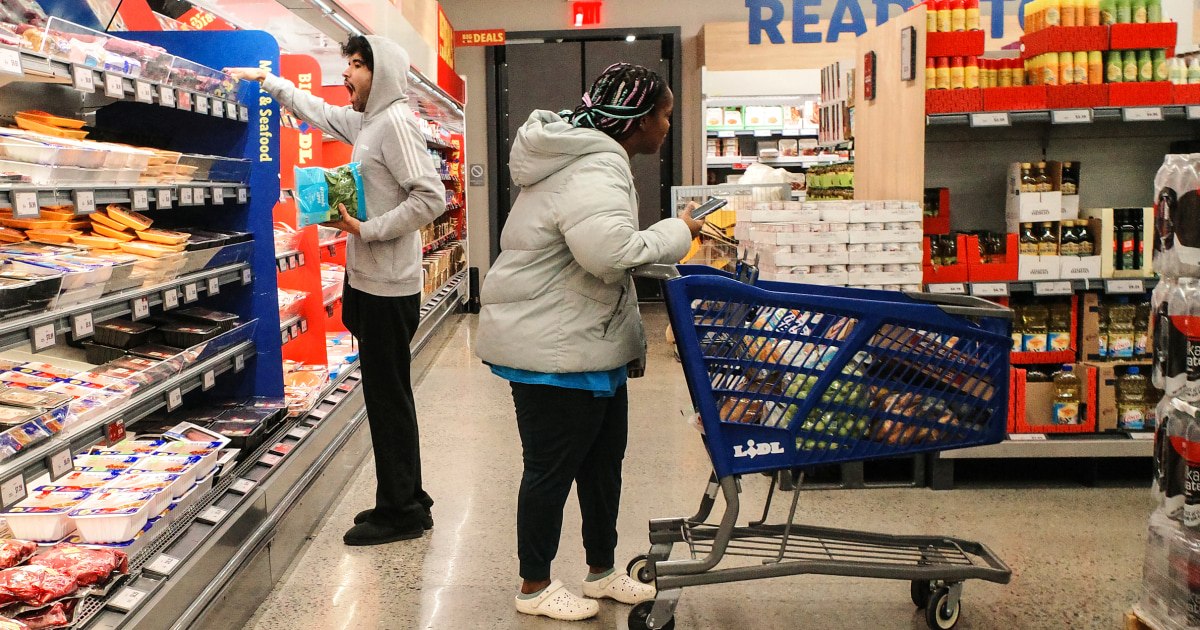
The Consumer Price Index is widely expected to show inflation has risen to a nearly three-year high when April’s data is released Tuesday morning.
Subscribe to read this story ad-free
Get unlimited access to ad-free articles and exclusive content.

The Iran war’s wide-ranging economic fallout has caused prices to spike, and economists and analysts project that inflation will hit 3.8%, up 0.6% from March to April, according to a survey from Dow Jones.
April’s inflation reading follows an even sharper 0.9% jump from February to March. Last month’s increase was the largest month-to-month jump since 2022.
As inflation continues to accelerate, it’s eating into Americans’ wages at a rapid clip.
The pace of wage gains has been slowing over the past two years. In November, wages continued to rise at a pace of almost 4%. By March, that had fallen to 3.4%.
If the data lines up with economists’ projections, inflation in April will have surpassed wage growth for the first time since 2023.
If wages can’t keep up with inflation, the affordability crisis that has been gripping consumers could become an even larger issue than it was before the war.
Core inflation, which excludes volatile food and energy prices, is expected to jump 0.3%, economists predict.
Goldman Sachs said it expects “strong travel services inflation this month, partly reflecting passthrough of the increase in oil prices” since the U.S. and Israel went to war with Iran.
“We forecast a 3% increase in airfares,” Goldman economists Jessica Rindels and Ronnie Walker said Monday. They also expect President Donald Trump’s tariffs to continue to play a role in overall prices and to “modestly boost monthly inflation over the next few months.”
Several analysts said they believe soaring gas prices in recent months haven’t fully hit consumers yet.
“Energy costs likely would not start to feed through to core goods prices for at least a few more months,” Citigroup economist Veronica Clark wrote in a client note.
The measure of core inflation is how Federal Reserve policymakers primarily interpret inflation data, because fuel and food prices can rise and fall so quickly.
Last week, the Bureau of Labor Statistics reported that the U.S. economy added 115,000 jobs in April, more than had been expected.
The week before, the BLS also reported that the Fed’s favorite core inflation gauge — called PCE — rose only 0.3% in March. That having been said, the rise brought it to its highest level since late 2023.
As of early Tuesday, oil prices appeared to have topped off, for now, at around $100 per barrel. Earlier in the war, U.S. crude oil prices briefly surpassed $120 per barrel. Stocks, meanwhile, have kept climbing to record highs.
On Wall Street, there is little consensus about what’s driving the apparent disconnect between the red flags going up in oil prices and inflation and the banner performance of U.S. stock indexes.
The Iran war weighs heavily on the path ahead for inflation and the economy overall.
As of Monday, the average price for a gallon of gas was still $4.52, only 4 cents off the high this year.









Leave a Reply