
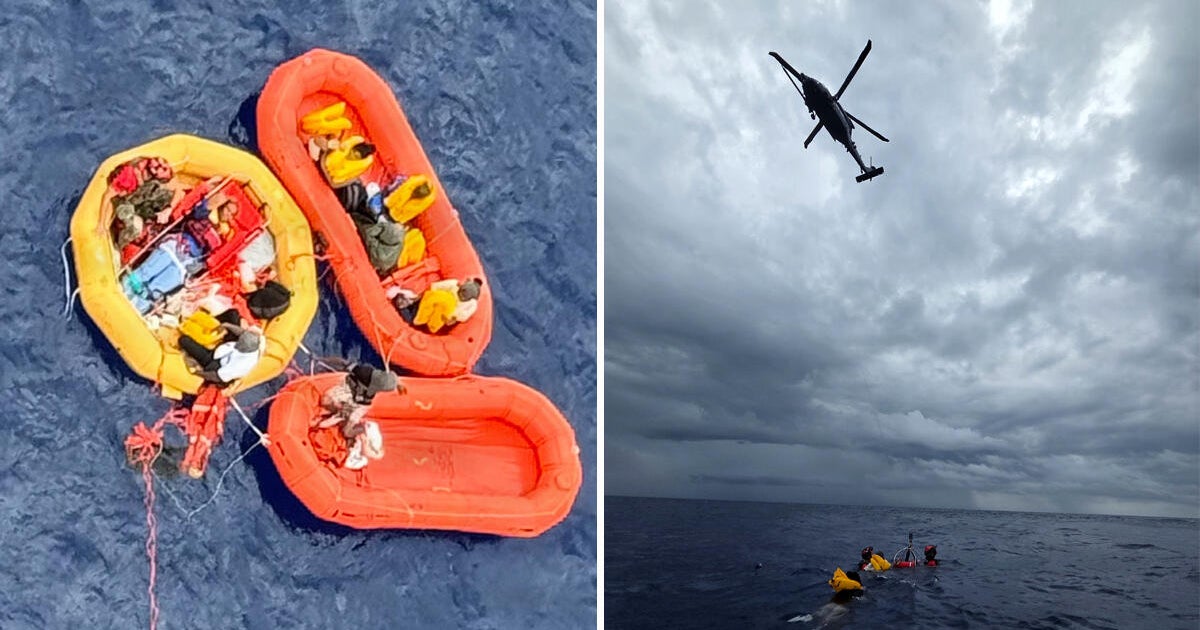
Members of the U.S. military who helped to rescue 11 people who were on board a plane that crashed about 80 miles off the east coast of Florida on Tuesday spoke about the dramatic incident and said it was “miraculous” that no major injuries were reported.
The nail-biting incident took place about 80 miles off the coast of Melbourne, Florida, which is about 175 miles north of Miami.
Military officials said an emergency locator transmitter signal from a twin-engine turboprop airplane had alerted the U.S. Coast Guard Southeast District watchstanders to a potential distress situation around 11 a.m. Tuesday, and a rescue operation was soon launched.
At the time the alert was received, a 920th Rescue Wing HH-60W Jolly Green II helicopter crew had already been airborne conducting a training mission at the time and was redirected to assist in the search and rescue effort.
DVIDS / Photo by Gwendolyn Kurzen / Air Force Reserve Command 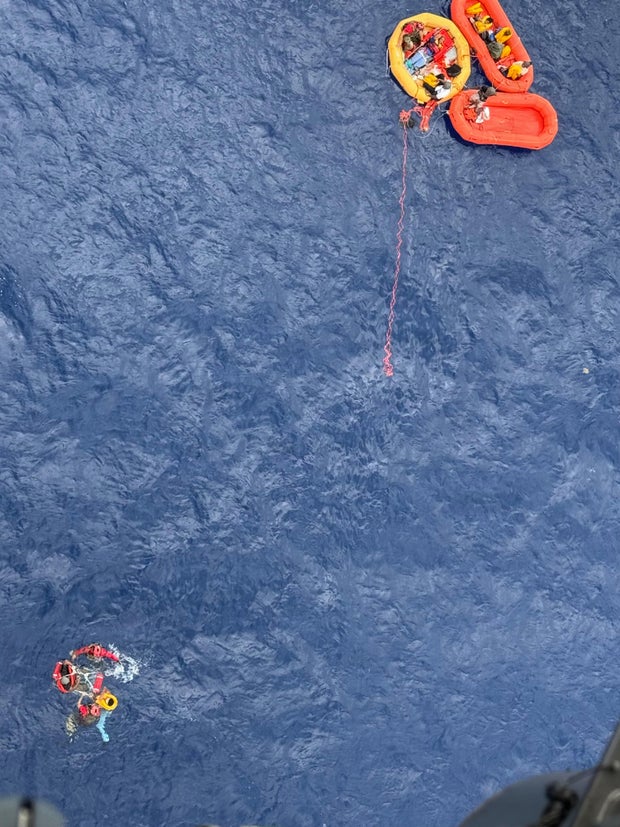
A Coast Guard Air Station Clearwater C-27 Spartan aircrew and an HC-130J Combat King II aircrew from Patrick Space Force Base also assisted with the rescue.
“We got notification from their (Emergency Locator Transmitter) beacon, and that was all the information that was relayed to us at the time,” Maj. Elizabeth Piowaty, aircraft commander on the HC-130J Combat King II, said during a news conference Wednesday.
She said the ELT sends a signal when there’s a potential issue.
“It’s a certain amount of impact when it hits land or water,” Piowaty said. “It can trigger that sensor, which will go off and give notifications.”
Plane crash survivors were floating on raft for hours
The 11 Bahamian adults were eventually spotted on a life raft floating in the ocean, and the military said their survival was “miraculous.”
“They had already been in the raft for about five hours,” Capt. Rory Whipple said. “You could tell just by looking at them that they were in distress. Physically, mentally and emotionally.”
He said they train for situations like that all the time, so for them it was “just another day at work.”
But for those who survived the crash, it wasn’t.
“Dehydration is probably, like, the biggest threat to them,” Whipple said of their possible injuries. “Also, it was a plane crash. So, possibly any kind of injuries.”
It was likely an emotional time for the survivors.
“They didn’t have communication,” he said. “They didn’t even know we were coming (to rescue them) until we were directly overhead.”
920th Rescue Wing 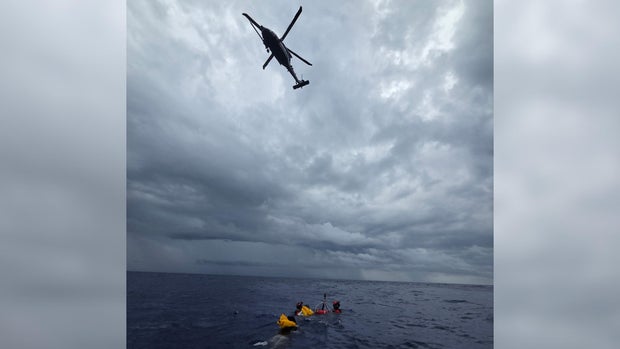
If they waited even a minute, a storm might have derailed the rescue
Piowaty echoed those statements and described their rescue, which took place as a thunderstorm was about to roll in.
“Once we flew over them and identified them, a thunderstorm was coming in, so they had their rain tarp over them for protection from exposure,” Piowaty said.
She went on to say that surviving a crash in the ocean was rare.
“I have not known anyone to survive a ditching in the ocean,” she said. “So, the pilot would be worried about the sea states, the crest. Trying to land at the slowest but safest air speed. And, from what I’ve seen, I mean, for all those people to survive is pretty miraculous.”
All 11 survivors were hoisted into the helicopter with minutes left of fuel to spare. They were transported to Melbourne Orlando International Airport and were all listed in stable condition.
Officials said the plane departed from Marsh Harbor, Bahamas, and was headed to Freeport when it experienced engine failure and crashed. Bahamian authorities will investigate the official cause.






Leave a Reply