
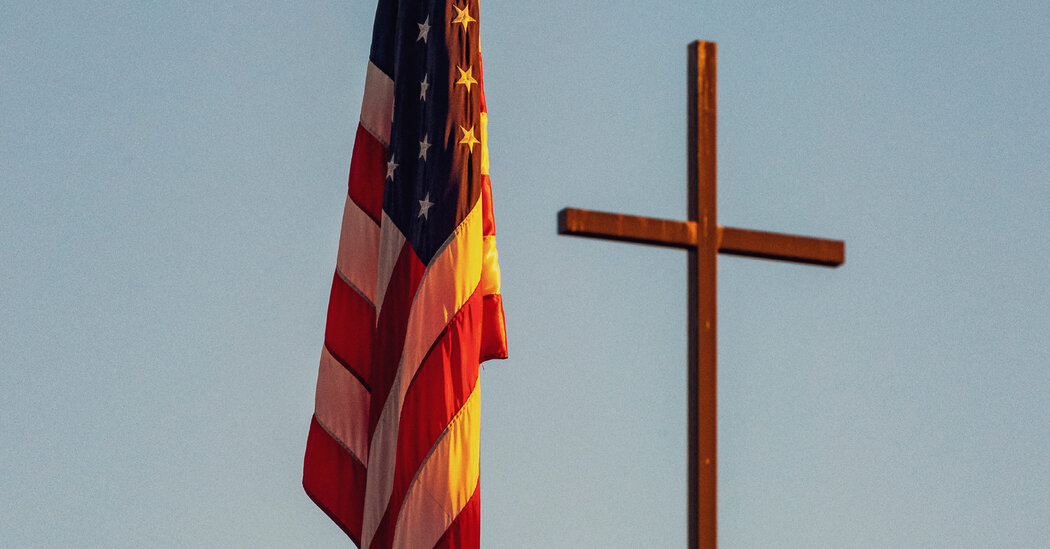
Like the 20th-century Americanist Perry Miller, Sutton maintains that with their “extraordinarily inflated view of the importance of themselves,” the Puritans — and for that matter the Pilgrims — have inspired Protestants to consider America “the new Israel” for four centuries. Consider, Sutton writes, that when Donald Trump recaptured the presidency in 2024, his revivalist supporters considered his re-election “part of God’s plan to reclaim America, not just as a nation, but as his chosen land.”
Sutton argues that even famous religious skeptics often spoke in terms of Christian exceptionalism. In 1861, a man unassociated with any church, Abraham Lincoln, called Americans the Almighty’s “almost chosen people.” During the Civil War Lincoln deliberately used biblical images to stress the need for national unity, which Sutton reads as Lincoln “leading the people toward Christian righteousness, to serving as God’s instrument.”
Largely sidelining the different ways Christian denominations thought about, say, biblical literalism, the possibility of redemption, free will, the Virgin Birth, grace or the experience of sin, Sutton is more concerned with political stances such as the abolition of slavery or agitation for racial and gender equality than with actual doctrine. And though he celebrates the unassailable vitality of American Christianity, to his credit he never hesitates to point out how religious dissidents and minorities have been harassed, outlawed, hounded or pushed to the margins of American society.
Ironically, then, the same government whose First Amendment would give rise to a whole lot of religions would also give rise, if inadvertently, to a whole lot of religious persecution. In other words, the First Amendment failed to ensure the free exercise of religion, particularly when religious leaders “claimed that only through the privileging of their beliefs and the silencing of others,” Sutton acknowledges, “could they secure the future of American democracy.” Perhaps so; but that doesn’t undermine the value, significance or even beauty of the First Amendment.
“In the United States people love God and they love his son, Jesus Christ,” Sutton summarizes. “Nearly two-thirds of Americans currently identify as Christians.” This is likely true, especially since Sutton corrals all the Protestant “streams” together, for good and ill, and adds Catholics to the Christian mix. But numbers alone don’t make America “profoundly Christian.”



Leave a Reply