
Bucks County, Penn. — Catholic churches seem to be everywhere in this southeastern Pennsylvania county — 33 parishes, to be exact — and for good reason. More than a third of Bucks County residents are Catholic, according to the privately run 2020 U.S. Religion Census.
In 2024, Catholic voters helped deliver Bucks County to President Trump, marking the first time in 36 years that a Republican presidential candidate carried the county and helping him win statewide.
But the Iran war, Pope Leo XIV’s biting criticisms of it and, in turn, Mr. Trump’s attacks on the pope have many Catholics in Bucks County watching closely in a midterm year.
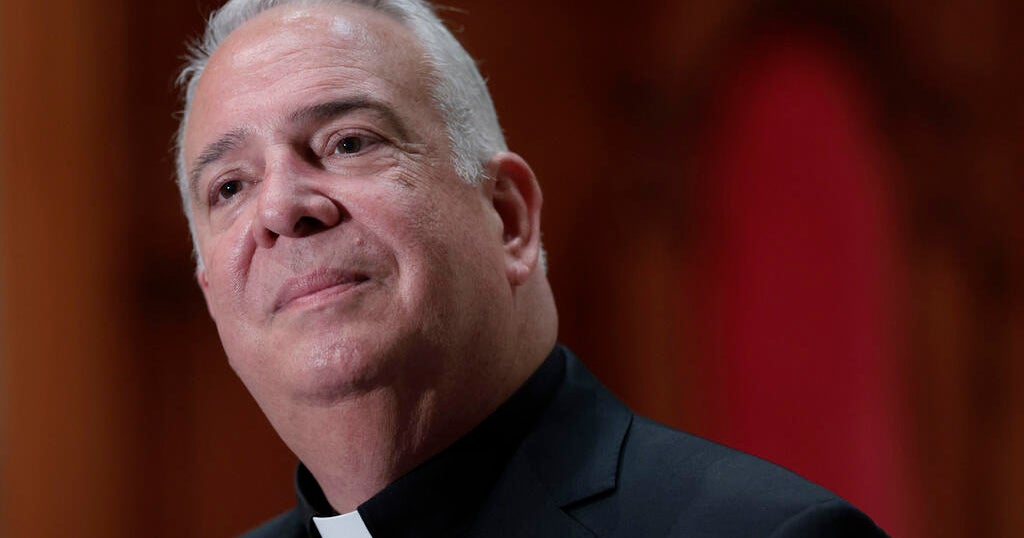
Even Philadelphia Archbishop Nelson Perez, who oversees Bucks County, weighed in. He defended the pope from Mr. Trump’s attacks, saying in a statement that the pope’s call for peace “powerfully reflects the truth of the gospel.”
That sentiment was echoed from the pulpit at the Cathedral of St. Matthew the Apostle in Philadelphia into the pews at St. Mark’s parish in Bristol borough.
William Watkins, a Democrat from Bristol who has voted for GOP Rep. Brian Fitzpatrick in past elections, told CBS News after a Friday morning Mass that he would likely vote against the moderate Republican in the fall if the U.S. is still at war with Iran on Election Day.
“I would do it as a protest,” he said. “Not that I think he’s not a good candidate. I just think that the policy of the Republican Party right now is too one-sided.”
Bucks County has comprised the majority of Pennsylvania’s First Congressional District since 2019, and was part of the state’s Eighth District before that. The southern population of the county is more working class than its northern counterpart, and it is fiercely independent.
In 2024, Fitzpatrick won reelection by nearly 13 percentage points, up from less than nine in his first election in 2016, signifying security in a historically swing-happy region, built through a meticulously moderate voting history.
But local elections in Bucks County tell a different story. When Fitzpatrick first won his seat, Republicans held a supermajority among county elected officials, controlling all but one of the county’s 12 seats. Today, Democrats hold 11 of those 12 seats.
“People will come out and vote if Trump is on the ballot. But they won’t come out and vote if he’s not,” said Bob Harvie, vice chair of the Bucks County Board of Commissioners and the frontrunner for the Democratic House nomination in the district. Harvie is also Catholic.
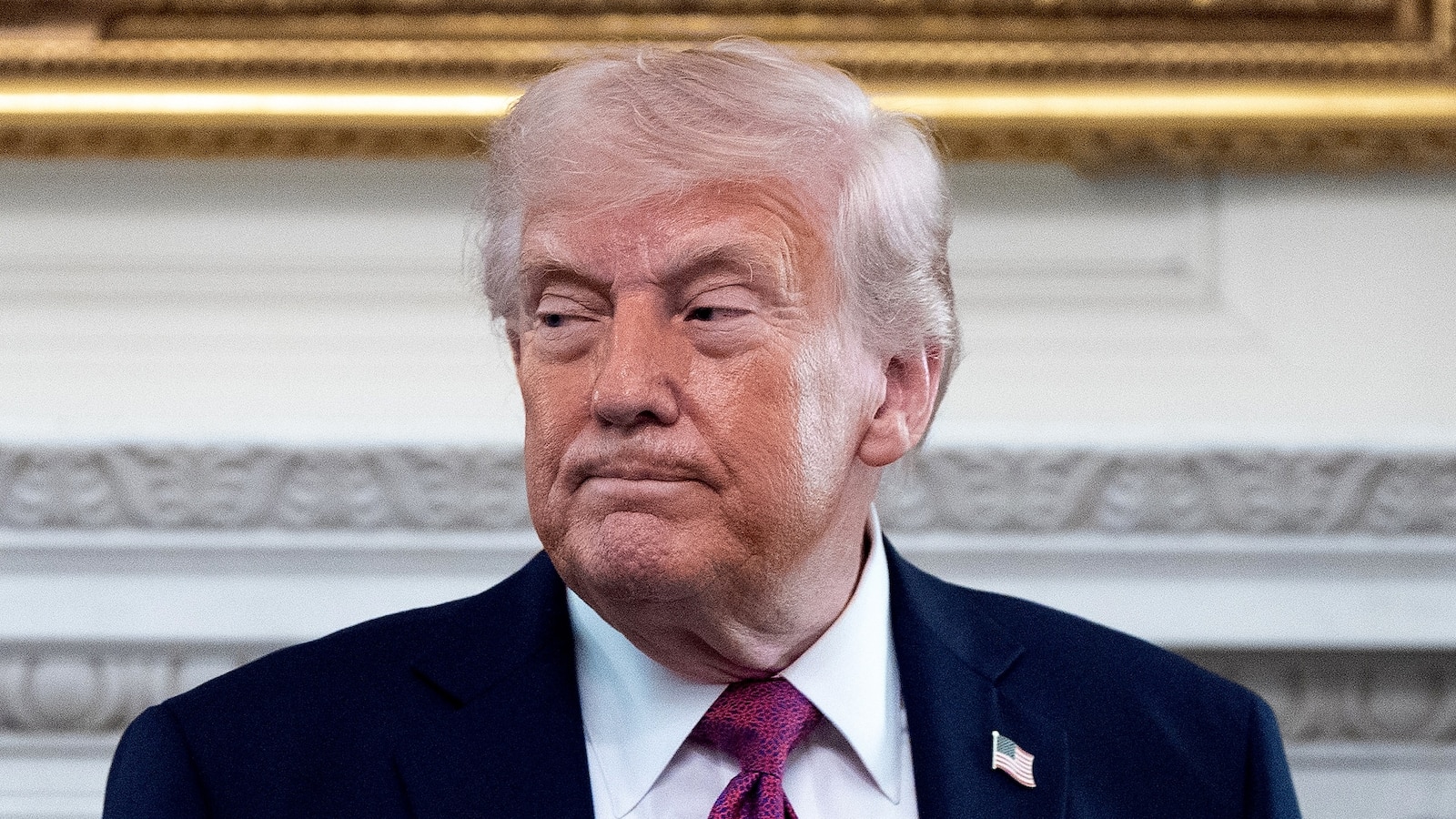
The pope raised concerns about the U.S.’s war with Iran shortly after it began and grew more critical as the conflict went on, calling Mr. Trump’s threats to destroy Iranian civilization “unacceptable.” Mr. Trump has lashed out in response, calling the first U.S.-born pope “weak on crime” and “very liberal,” and saying he isn’t “doing a very good job.”
Fitzpatrick was swift in his defense of the pope after Mr. Trump’s attacks on the pontiff, calling the president’s words “disgraceful” and “plainly sacrilegious” last week.
“I am not a fan of any divisive rhetoric ever, particularly when it’s targeted at any religious leader,” Fitzpatrick told CBS News. “The pope is one of many religious leaders who’s trying to bring world peace and solve world hunger and see the humanity and dignity of every human being. That’s somebody we should hold in high esteem.”
Tyger Williams / AP 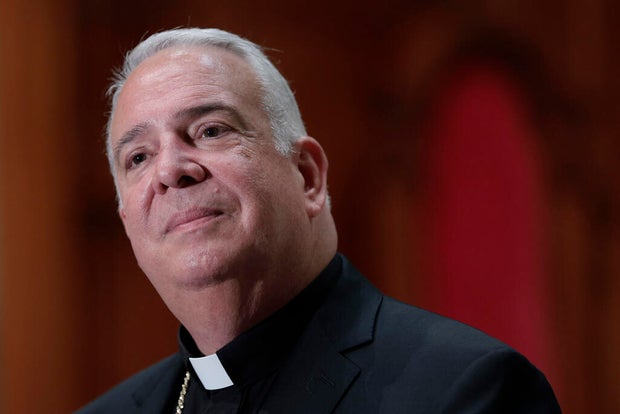
For Pat Balcer, a Catholic Republican from Bristol Township, that’s precisely why he has voted for Fitzpatrick despite breaking from his party and never supporting Mr. Trump.
“Let the pope have his say. The pope is for world peace, and … that’s what he was proclaiming,” he told CBS News after Mass. “I like that [Fitzpatrick] crosses the line every once in a while and doesn’t stay with the rest of the lemmings.”
Still, the war with Iran may be a bigger political issue for Fitzpatrick than the president’s spats with the pope. Polling suggests most Americans oppose the war — including most Catholics.
“Brian Fitzpatrick can talk all he wants about how upset he is with Donald Trump, but I haven’t yet seen him cast a vote that matters when it comes to stopping Trump’s agenda,” said Harvie, the Democrat running for the chance to challenge Fitzpatrick.
Fitzpatrick in March voted against a resolution to force the U.S. military to stop hostilities with Iran without permission from Congress, calling it “recklessly over-broad,” although only two Republican members voted for it. Fitzpatrick did, however, introduce his own resolution in April to force compliance with the War Powers Act of 1973, but the measure has not reached the floor.
Fitzpatrick has also broken ranks on other significant votes in the past, including voting against Mr. Trump’s One Big Beautiful Bill Act last summer.
“You condemn the statement, which I did. And you introduce a War Powers Resolution, which I did,” Fitzpatrick said. “So what in the world is [Harvie] talking about?”
War in the Middle East has historically been politically precarious in Bucks County.
Before Mr. Trump’s victory in 2024, the last Republican to carry the county was President George H.W. Bush. The year after Operation Desert Storm, the Democratic candidate, then-Arkansas Gov. Bill Clinton won Pennsylvania in 1992.
That pattern has extended to congressional races. Bucks County last elected a Democrat to the U.S. House in 2006, unseating GOP Rep. Mike Fitzpatrick, Brian Fitzpatrick’s late brother, after he voted to fund U.S. military operations in Iraq and Afghanistan. Mike Fitzpatrick reclaimed the seat in 2010.
“I don’t like [the GOP’s] policies connected to the war,” Watkins, the Democrat from Bristol, said. “I don’t think they should have gone in the way they did, and I don’t think they’re going to be able to finish it the way they think they will. It’s a lose-lose situation.”
Still, some of those in the district for whom the MAGA movement initially made the GOP attractive have found ways to square their faith with their support for Mr. Trump.
One CBS News poll conducted earlier this month — before the feud between the pope and Mr. Trump escalated — found 46% of Catholics approve of Mr. Trump’s job performance and 44% approve of U.S. military action against Iran. But Catholics who attend religious services at least once a week are more likely to approve of the president (58%) and action against Iran (50%).
Dennis McGee Jr., a market researcher and podcaster from Bristol Township, said he was a lifelong independent and joined the Republican Party in 2016. He’s now a local GOP committee member.
“I became a registered Republican in 2016 because I was motivated by President Trump in many of his positions,” he said.
McGee, who attends Mass seven days a week, rejected Leo’s criticism of the Iran war.
“Popes have an infallible ability, meaning they speak, and we as Catholics have to be obedient to what they say. This is not an infallible statement that Pope Leo made. It was a general statement,” he said, acknowledging the rarity of such a case.
Zak Hudak 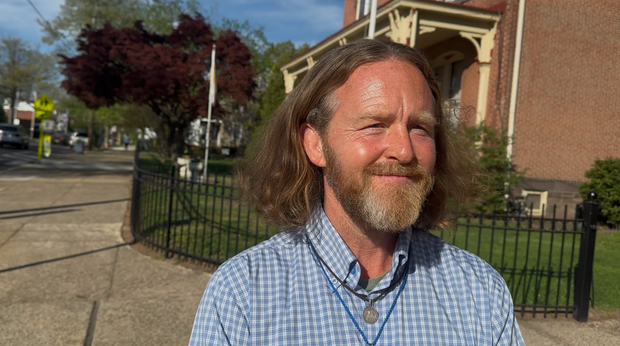
Bucks County is often considered a bellwether area politically. Fitzpatrick and Harvie grew up in the southern part of it — their childhood parishes are a six-mile drive apart — where the population is more economically diverse and political fortunes can turn more quickly.
The Iran war, and the pope’s assessment of it, could have broader impacts across Pennsylvania, which has enjoyed must-win status in the last few presidential races.
Nearly two decades ago, the prominent Pennsylvania pollster G. Terry Madonna told The New York Times: “Whoever wins the Catholic vote will generally win our state and, most of the time, the nation.”
In recent years, nearly a quarter of the total population of Pennsylvania still identified as Catholic and more than 60 percent as Christian, according to Pew Research Center’s 2023–24 Religious Landscape Study.
The state’s recent political history reflects that influence. The last two Republicans elected governor of Pennsylvania were Catholic, as are 10 of the state’s 17 current House members. Four of the last seven U.S. senators from Pennsylvania were Catholic.
“For Republicans, the Catholic vote is pivotal,” said Charlie Gerow, a GOP strategist based in Harrisburg. “A lot of Catholic voters are still old-line Democrats, who will vote Republican, particularly in statewide and national elections. So capturing the Catholic vote is very, very important.”



Leave a Reply