

Hanizam/Getty Images 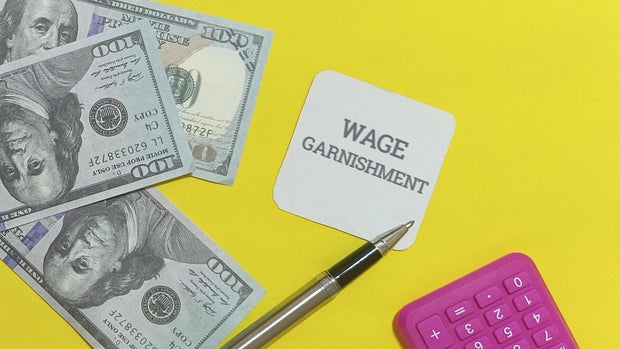
If you find yourself increasingly worried about your personal financial health now, it’s easy to see why. Inflation in March surged to its highest level in years, and a frozen Federal funds rate that hasn’t been reduced since December is helping to keep borrowing costs high. While unemployment has improved, stock market returns are also particularly volatile, hitting a new record high this week after an especially turbulent March. And if you’re a credit card borrower in this climate, your financial situation may be even more precarious.
The average credit card interest rate is around 21%, making it one of the most expensive ways to borrow money now. Interest on any accumulated debt, meanwhile, will compound daily, allowing even the most manageable debt balances to quickly spiral out of control. If this has already happened to you, it’s not uncommon to find yourself at the next inevitable stage – wage garnishment. This occurs when a credit card company sues you and wins a court judgment to have a portion of your paycheck intercepted to repay what you owe. This can devastate your finances and make it more difficult to pay your bills (and your debt) than it already is.
In these circumstances, debt relief options become critical to explore. Credit card debt forgiveness, in particular, may move to the top of the list as it can result in 30% to 50% of your outstanding debt being wiped out. But can you even qualify for credit card debt forgiveness if your wages have already started to be garnished? The answer to this question can help determine your next best course of action.
Start by checking your credit card debt forgiveness qualifications here.
Can you qualify for credit card debt forgiveness if your wages have been garnished?
In short, yes, you can qualify for credit card debt forgiveness if your wages have been garnished. Proof of garnishment may actually help boost your case for forgiveness, as it demonstrates a tangible inability to repay your credit card debt as agreed to. Traditionally, credit card debt forgiveness eligibility comes down to three primary factors:
- An inability to repay: If you’re behind on your payments, as wage garnishment can help prove, then you have a demonstrated inability to repay your debt. This is something credit card companies will look for, and something debt relief companies will help clearly demonstrate when establishing your forgiveness qualifications.
- Proof of financial hardship: Credit card companies won’t just take your word that you can’t make your payments; you’ll be expected to provide proof of financial hardship that makes debt repayment difficult, if not impossible. So, if you have documentation showing job loss, a divorce or a medical issue, expect to be asked to provide it (and have it readily available).
- A significant debt load: If you’re behind on your payments and have proof of hardship demonstrating the reason why, you’ll be close to getting a portion of your debt forgiven. This typically won’t apply for smaller amounts, however. Instead, you’ll need to have a significant debt load to be approved for a forgiveness plan, and that means having a minimum debt of $7,500 to $10,000. That said, significantly higher debt amounts, like those close to the six figures, often won’t apply here either, as bankruptcy is often the better route to take at that point.
You’ll still generally need to be able to pay something back to your creditors, though — even if you meet these three primary criteria. This usually means paying a lump sum on the difference. For example, if you owe $20,000 and have 50% forgiven, you’ll be expected to pay the other $10,000, which can be difficult to do if your wages are already under a garnishment order. And there will be tax implications to account for, too, as forgiven debt is considered income.
Still, this could be the preferred way to have some of your debt forgiven in today’s economy, and you will technically qualify even if you’re already contending with wage garnishment issues.
Explore your top credit card debt relief options online today.
The bottom line
A wage garnishment order won’t disqualify you from qualifying for credit card debt forgiveness, and it may actually help make your case to credit card companies, as it demonstrates serious financial hardship. That said, you will be expected to pay something, even if you’re approved, which can be difficult if your wages are currently being garnished on a routine basis. But there are other debt relief options, like debt management programs, debt consolidation loans and potentially even bankruptcy, that may better apply to your unique situation. Evaluate those options, too, before taking action, but don’t wait any longer to act. Fortunately, multiple viable debt relief solutions can not only help stop garnishment but, more importantly, help you regain your financial health and security at the same time.












Leave a Reply