
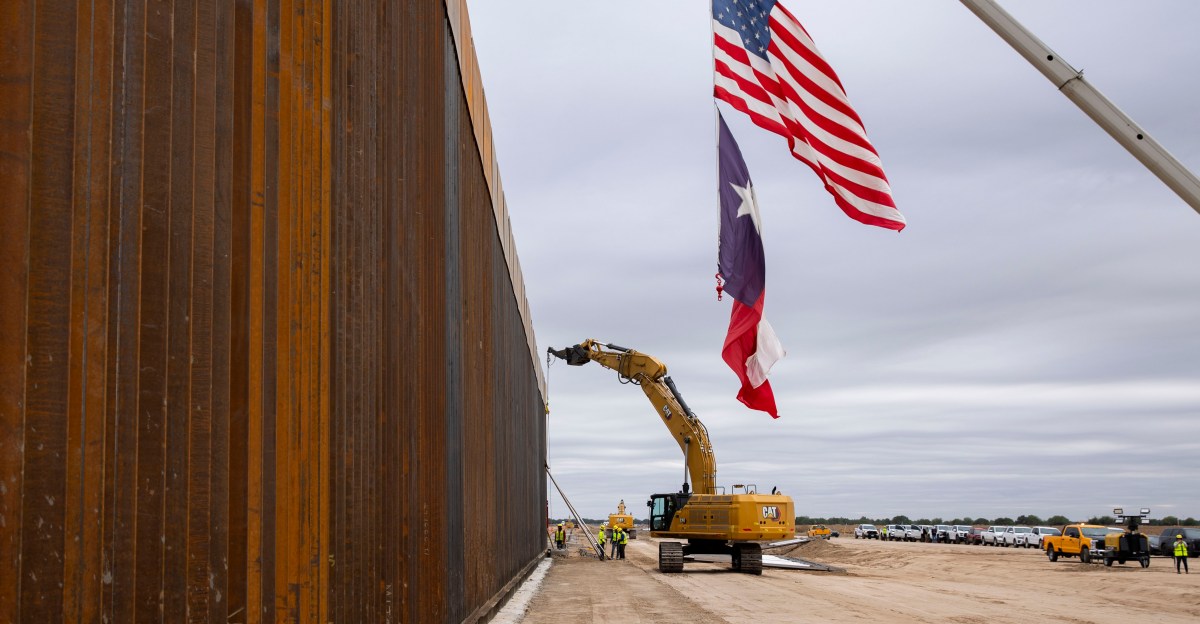
Immigration enforcement was once one of President Donald Trump’s strongest issues, driving his victories in the 2016 and 2024 presidential contests. But these days, most Americans seem to hate just about everything Trump’s administration has done to actually address the issue.
Polls show Americans have shifted dramatically on immigration since Trump returned to office — and about half of all Americans now want to abolish ICE, the deportation force Trump has empowered since returning to office.
But what do Americans really think about immigration, beyond their feelings about the current administration? And as we build toward the 2026 midterm elections (and eventually the 2028 presidential elections), how will both parties wrestle with an electorate that has often seemed to agree with Trump’s diagnosis of a problem while also rejecting his proposed solutions?
In this week’s episode of America, Actually, I talk with two people with different perspectives on America’s immigration conundrum. Caitlin Dickerson, Pulitzer-Prize winning reporter at The Atlantic, has reported on how both parties have helped build the immigration system that they now agree is broken. And Yana Kuchinoff, a reporter with Arizona Luminaria and corps member with Report for America, has followed how Trump’s actions have roiled local communities she covers on the Arizona border.
Here are some takeaways from the episode that stuck out, and read on for an excerpt from my conversation with Caitlin.
The data: Gallup found last year that the share of Americans who want immigration reduced had dropped significantly, from 55 percent in 2024 to 30 percent today. The same poll also found a record-high 79 percent of US adults say immigration is a good thing for the country, suggesting that Trump’s enforcement actions have had the opposite effect on the electorate.
The quote(s): “Obviously there’s a lot that is novel that Donald Trump is doing on interior enforcement of our immigration laws right now. But if I think about your question, most of what we’re seeing and most of the issues, frankly, that the public is taking with the current system come from many, many presidents ago.” —Caitlin Dickerson
“When I was covering the election in 2024, the concerns about border security and people’s feelings about what was happening were really big, emotional talking points. But I think some of the enforcement in the Tucson-area communities is a lot less abstract.” —Yana Kuchinoff
What comes next: The shift in sentiment on immigration has already impacted the landscape for this year’s midterm elections. Trump’s approval rating with Latino voters has cratered since returning to office, and Democratic wins in special elections across the country (including recently in New Jersey) have capitalized on that vulnerability.
But the biggest tests for both parties on the issue will likely come next year, as the presidential race begins in earnest. Republicans have let Trump (and his adviser Stephen Miller) define their immigration policy for a decade, and have unanswered questions on where they stand on issues like H-1B visas, avenues for legal immigration, and ICE’s massive credibility loss among the general public. Democrats have big questions, too, which mostly center around finding a middle ground between embracing enforcement efforts and spearheading a broader immigration reform bill in Congress.
Below is an excerpt of my conversation with The Atlantic’s Caitlin Dickerson, edited for length and clarity. You can watch America, Actually on YouTube or find it wherever you get your podcasts.
It feels like the Democrats’ one principle around immigration is: we don’t like what Donald Trump does. Why do you think this has remained broken for so long? I mean, why not fix something?
There are a few different theories as to why Democrats have really not shown leadership on this issue. One is this idea that you’ll hear Democrats talking about: They feel like the party is fighting scared.
Democrats are always susceptible to this criticism that they’re soft on crime, that they’re open to lawlessness, that they are prioritizing DEI and people of color over public safety. And so immigration very much falls into that kind of easy beating that they can take on a campaign trail.
And forces Democrats to have to—
Come from a defensive crouch.
Come from a defensive crouch and show this ability to have a [stronger] image.
I think another, probably more important and of course, more cynical issue is, it’s just politics.
Donald Trump saw a very clear upside in focusing on immigration for himself from his earliest campaign rallies, and he smartly intuited, these people are going to show up and vote for me if I keep talking about this. And he has continued to talk about it.
Look at the calculation on the Democratic side: Democrats aren’t sticking their neck out for a population of people who by nature cannot vote for them.
Not only can this constituency not vote, but Americans generally tend to really underestimate, I think, how interconnected we all are with the immigration system. That is being challenged right now.
People are seeing that they personally are affected by this deportation campaign. Even if it’s not someone in their family who’s being arrested, because their kid is scared, because their kid’s friend got arrested, or their kid’s friend’s parent got arrested. People aren’t showing up for church. Their employees aren’t showing up for work. Their patrons aren’t showing up to buy things from them.
The interconnectedness is becoming more clear now, but generally speaking, I think what holds Democrats back is if you have two years or four years, or maybe six years, depending on how long you might have the advantage in Congress to push forward just a couple of priorities, why are you going to focus on one that Americans tend to think of as for those people over there?
Not for us. Even if the public is sympathetic to the issue, it’s not going to be number one or number two on their list of concerns.
[Sen. Ruben] Gallego has talked about the need to embrace practical [reforms] rather than something like the dramatic step of abolishing ICE. I wanted to know, from your perspective as someone who has done kind of systemic work, what is the biggest gap you see in the political conversation about immigration that could be really tangibly impactful for folks’ lives?
Something that Gallego has been one of the few people to talk about, I think, is largely absent from the conversation and pretty key to how stuck we are. We don’t have a lot of legal pathways to the United States and we especially don’t have legal pathways to the United States for the jobs that we tend to rely on undocumented workers for.
Construction, restaurant work, hospitality, domestic work. These jobs are dominated by immigrant workers and by and large, do not have visas available to do them. I mean, we now have a couple hundred thousand guest worker visas for agriculture. We have millions of agriculture workers in the United States, and so [Gallego] actually has talked at different times about a need for legal pathways and balancing that with border security. I think that’s smart because historically, when you’ve seen these attempts at cracking down on the border, they’ve never been able to overpower the draw on the other side.

Leave a Reply