
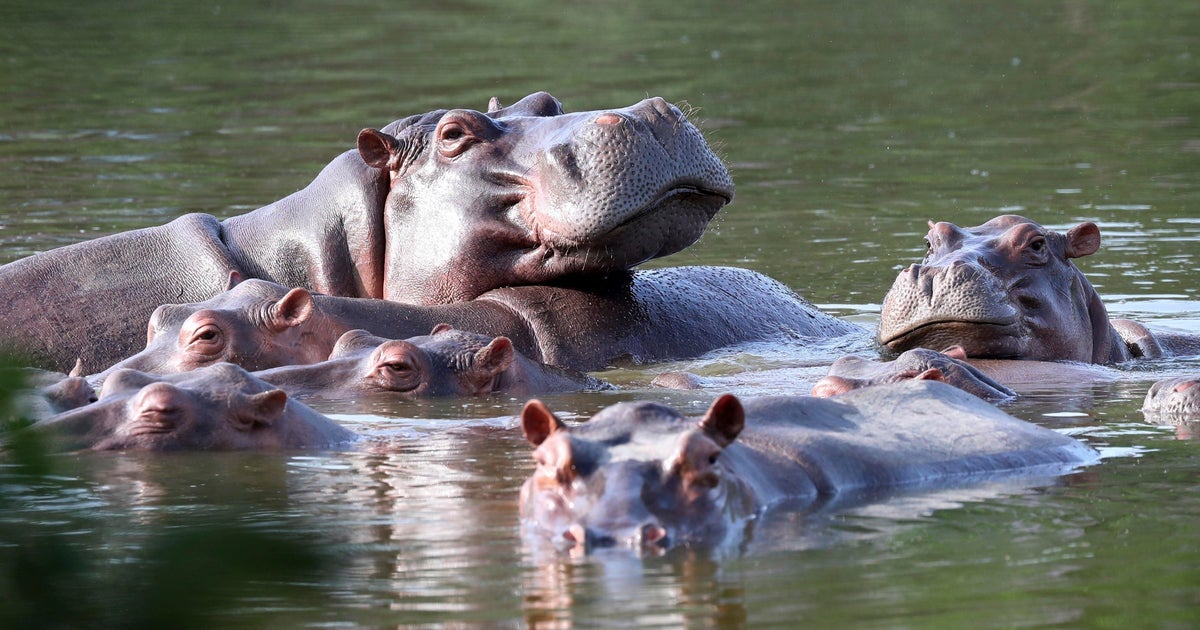
An Indian billionaire’s son offered on Tuesday to take the so-called “cocaine hippos” descended from those introduced to Colombia by drug kingpin Pablo Escobar, rather than have the animals killed.
Anant Ambani, the son of tycoon Mukesh Ambani, said he had formally requested the Colombian government to stay a decision to kill the animals, which have wreaked havoc on rivers in the South American nation.
Instead, he has asked to allow the “safe, scientifically-led translocation that would bring the 80 animals to a permanent home” at his Vantara animal center.
The vast zoo in India’s western state of Gujarat bills itself as “one of the world’s largest wildlife rescue, care and conservation centers.”
Vantara is already home to hundreds of elephants, as well as 50 bears, 160 tigers, 200 lions, 250 leopards and 900 crocodiles, among other animals, according to India’s Central Zoo Authority.
Experts have repeatedly sounded the alarm on Vantara’s massive animal intake, including the import of critically endangered and rare species. The shelter was at the center of angry protests after an ailing elephant was relocated to Vantara last year, BBC News reported.
Escobar brought hippos — which are native only to Africa and can weigh up to several tons — to Colombia in the 1980s.
After Escobar’s death, hippos from his private zoo made a new life in the lush river banks of the Colombia’s Magdalena River — where they have attacked fishermen, prompting moves to cull them.
Colombia declared them an invasive species and experts have said sterilization alone is not enough to control the growth of the animals, which is why the government previously arranged for the possible transfer of hippos to overseas sanctuaries. But the cost of deporting the hippos is also expensive — an estimated $3.5 million.
Fernando Vergara / AP 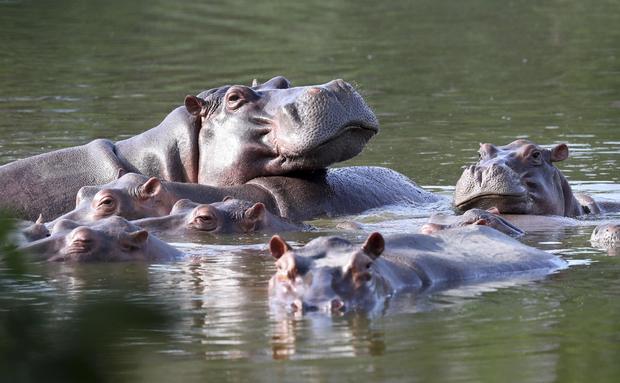
Anant Ambani, son of the billionaire head of the multinational conglomerate Reliance Industries, said he had submitted a detailed plan to give the animals a new home at Vantara.
The animal center is located alongside the Reliance Jamnagar Refinery Complex, which the conglomerate says is the world’s largest crude oil refinery.
Summers there can get extremely hot, with temperatures soaring above 100 degrees Fahrenheit.
Ambani’s proposal sets out a veterinary-led capture and transport, as well as the creation of a “purpose-designed naturalistic setting” for the hippos, the animal center said a statement.
“Vantara has the expertise, infrastructure and resolve to support this effort, entirely on Colombia’s terms,” the statement said.
“These 80 hippos did not choose where they were born, nor did they create the circumstances they now face,” Ambani added. “They are living, sentient beings, and if we have the ability to save them through a safe and humane solution, we have a responsibility to try.”
The hippos are one of the main attractions at the Nápoles ranch, which was confiscated by Colombia’s government as it seized Escobar’s properties. It now functions as a theme park, featuring swimming spools, water slides and a zoo that includes several other African species.
Last October, Colombian President Gustavo Petro announced the country handed over a chunk of Escobar’s ranch to women caught up in the nation’s armed conflict.
Animal welfare activists in Colombia have long opposed proposals to kill the hippos, arguing they deserve to live. They say that addressing the problem through violence sets a poor example for a country that has gone through decades of internal conflict.
Independent journalist Audrey Huse, who has lived in Colombia for years, previously told CBS News that because the hippos roam freely, they end up killing fish and threatening endemic species like manatees, otters and turtles.
“Because they have no natural predators here, as they would in Africa, the population is booming and it’s affecting the local ecosystem,” Huse said. “Because they are such large animals, they consume considerable amounts of grassland and produce significant waste, which then poisons the rivers.”




Leave a Reply