
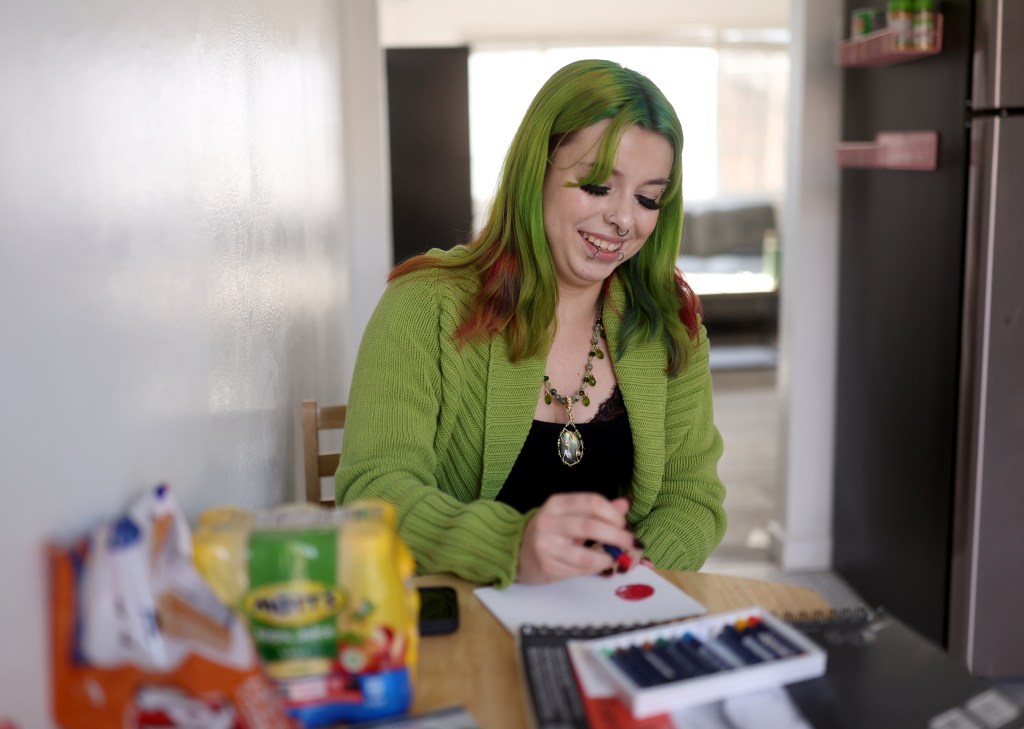
 By the time Stevie Steele turned 18, they had been kicked out of their family’s home, had bounced in and out of children’s group homes, had dealt with addiction and homelessness, and had no idea what to do next.
Once a child turns 18, the assistance from California’s foster care system changes dramatically for many young people exiting their foster homes.
For those who meet eligibility requirements such as employment or education, there are still some services provided by California, but even those young people often struggle without the guidance of traditional foster care.
It’s sink or swim.
“And of course, we see many, many of them sink,” said Thomas Lee, chief executive officer of First Place for Youth, an Oakland-based nonprofit that provides aged-out foster children with the resources they need to start life as an adult.
“Without First Place, I’d probably still be in the same spot I was,” Steele said.
The organization began in 1997, when Amy Lemley and Deanne Pearn, two graduate students at Berkeley, realized that young people transitioning out of foster care had little in the way of public support.
“They were literally dropped off on a corner or at a homeless shelter with a garbage bag of belongings, and that was it,” said Jayme Catalano, First Place for Youth’s communications director.
First Place began offering these young people financial literacy courses and a bit of money to help them pay rent. They later expanded to cover move-in costs and long-term subsidized housing. And by 2000, the organization had an eight-person staff and a full case-management system to help foster youth finish high school and prepare them for life as adults.
Over the following 25 years, the organization raised millions of dollars and developed a statewide system supporting young people transitioning out of foster care. It has also advocated for legal changes like Assembly Bill 12, which created the extended foster care system that offers continued financial support and housing options until age 21, and helped educate the public about the importance of providing support to these young people.

“It’s hard because [when] so many of our young people come to us, they’ve been through, on average, six different homes,” Catalano said. “They have a lot of traumatic experiences and have been without parental guidance. So coming into this program feels like a home to many of them.”
Steele was first kicked out of their family home at 12 years old.
“My mom struggled with alcoholism, and things were really bad,” Steele said. “I never felt stable in my living environment. At 16, I ended up calling Child Protective Services and asking to be placed somewhere. I put myself in the system.”
Placed in a children’s group home, Steele felt like it was a lateral move, at best.

Three months later, the pandemic hit.
“Any sense of normalcy just got knocked out the window,” Steele said. “We weren’t allowed to go on walks. We weren’t allowed to leave the house.”
So Steele ran away, “just to feel some type of independence.”
After couch-hopping for six months, Steele found a new group home, where they lived until they turned 18.
At that point, they had no idea where to go.
A social worker named Brian Coughlin helped Steele get back on their feet and connected them with First Place for Youth.
First Place helped Steele find a home and get enrolled in classes at Los Medanos College, where they are now studying to get a master’s degree in social work.
They’re most grateful for the emotional support and guidance of First Place for Youth mentors.
“Whether it be taking me to the DMV to do my writing test or sitting and helping me do homework if I needed it, I’m always texting them asking them a million questions,” Steele said. “I’ve found a lot of peace now.”
Lee said providing these young people with safe and reliable support is the organization’s primary goal.

“We have an opportunity to help young people in a very short amount of time,” he said. “Almost 90% of all of our young people want to go to college. They want good jobs. They want to work, and they want to have their own homes, and they want to be able to start their own families one day. They just need support, mentorship and someone pulling for them to help them figure out the how.”
For those who make it into First Place, their chances increase dramatically.
Of the nearly 700 people who come through the program each year, 97% are able to get their own housing and become financially stable, Lee said. And 82% of them become enrolled to earn their high school diploma and get some form of secondary education.
“For youth that don’t go through programs like this, that number drops by almost half, to 43%,” he said. “And 85% of our youth get jobs while in our program.”

In the Bay Area, First Place serves young people in five counties: Solano, Contra Costa, Alameda, San Francisco and Santa Clara.
“I recently interviewed some of our young people, and so many of them feel like somebody’s finally looking out for them,” Catalano said. “They finally have someone to answer questions about credit scores, how to apply for a loan for a car and how to get financial aid for college. We step into that role.”
Said Steele: “They really care. And that really means a lot.”
ABOUT SHARE THE SPIRIT
Share the Spirit is a 501(c)(3) nonprofit organization operated by the East Bay Times/Bay Area News Group. Since 1989, Share the Spirit has been producing series of stories during the holiday season that highlight the wishes of those in need and invite readers to help fulfill them.
HOW TO HELP
Donations to First Place for Youth will help fund their programs that assist young people who grew up in foster care with safe, stable housing and support to succeed in work, school and life. Goal: $20,000
HOW TO GIVE
Donate at sharethespiriteastbay.org/donate or by mail using this form. Donations are tax deductible.
ONLINE EXTRA
Read other Share the Spirit stories, view photos and video at sharethespiriteastbay.org.


Leave a Reply