
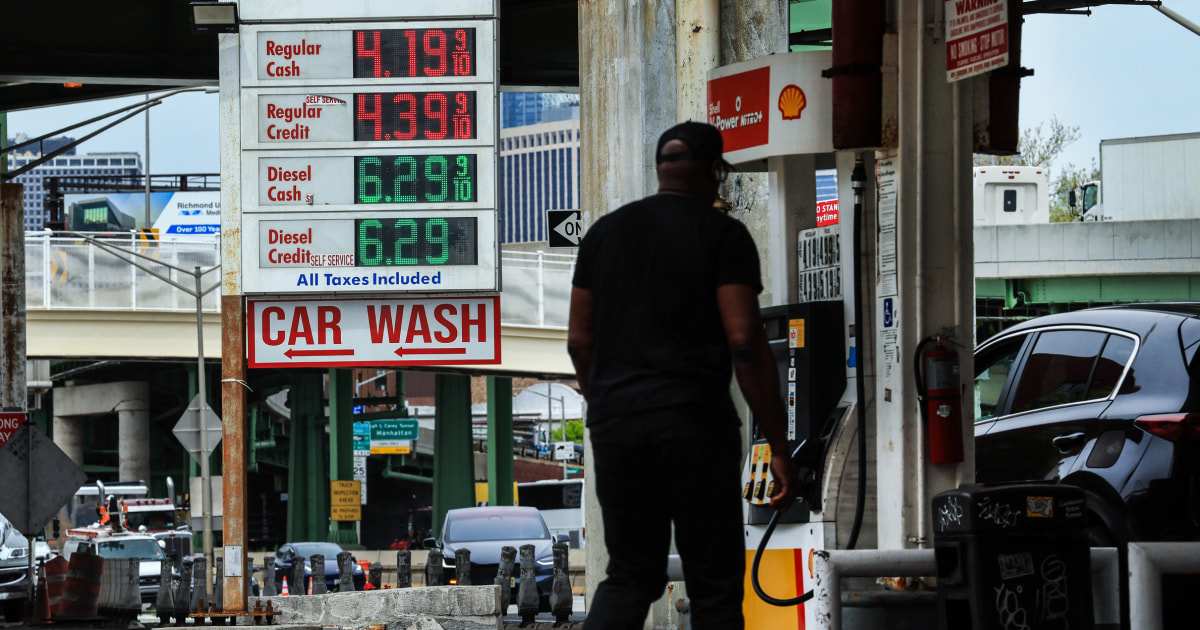
U.S. gas prices have hit a fresh record since the start of the war with Iran, rising to an average nationwide of $4.23 per gallon Wednesday, according to the motor club AAA.
Subscribe to read this story ad-free
Get unlimited access to ad-free articles and exclusive content.

The grim milestone comes as oil prices have surged higher over the past week amid a dual blockade by the U.S. and Iran of the Strait of Hormuz, the key chokepoint in the region for transiting crude and petroleum-based products out of the Persian Gulf.
The price of Brent crude, the international benchmark that influences the price of U.S. gasoline prices, now stands at $114.60, up nearly 25% from the recent low seen April 17 and just a few dollars away from the recent high of $118.
A day earlier, AAA recorded the biggest single-day increase in more than a month, with prices rising $0.07. Gasoline prices have climbed $1.25 a gallon, or more than 40%, since prior to the war’s start in late February.
The surge in oil prices have compounded the typical price increases seen this time of year as refineries undergo maintenance and the spring-summer driving season begins to kick off.
Many gas stations have also sought to artificially keep prices below the $4 threshold by reducing their own profit margins, said Tom Kloza, chief energy advisor to Gulf Oil. But they can only stomach lower margins for so long, he said.
“This is the most serious squeeze, in terms of margin suppression, we’ve seen for retailers since 2020,” he said.

In a report whose data was largely compiled before the recent run-up, Bank of America analysts found that so far, only lower-income households were seeing a significant household budget impact from higher gas prices. And despite the price surge, households are still spending less of their budgets on gasoline than during peaks seen in 2008, 2011 and 2012.
At some point, however, those buffers will start to get eroded — especially if higher fuel costs start showing up in household staple goods.
“A significantly bigger risk arises if higher gasoline and oil prices leak into other necessities such as grocery and utility prices — though so far there is little evidence for this,” the analysts wrote.
They continued:
“While there may be capacity for some to ‘ride out’ a gasoline shock by relying more on credit card borrowing, this appears somewhat limited — particularly for lower-income households,” the analysts wrote.
Consumer confidence continues to remain subdued. On Tuesday, the Conference Board reported an uptick in its principal index, likely tied to the ceasefire announced earlier in the month that sent stock prices to record levels.
However, the index remains well below both its pre-Covid levels and the readings seen in the weeks following President Donald Trump’s second electoral victory in November 2024.









Leave a Reply