
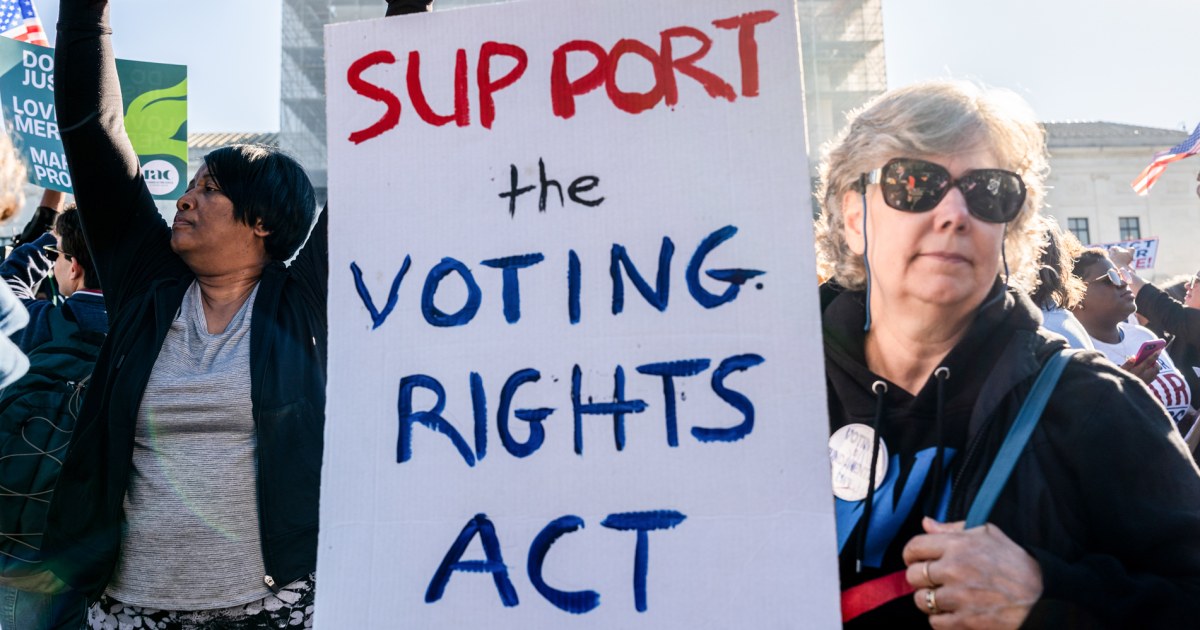
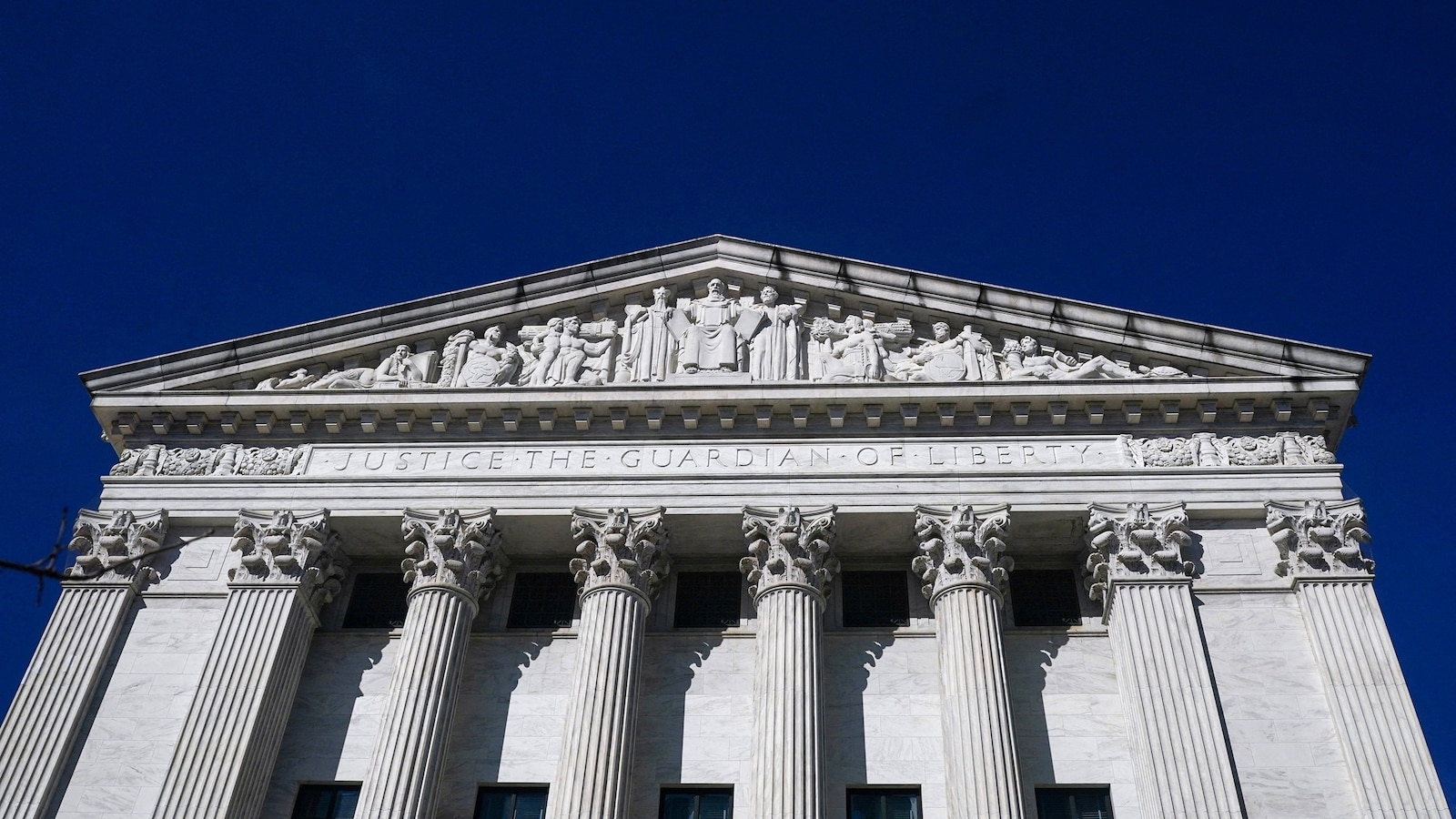
WASHINGTON — The Supreme Court on Wednesday further weakened the Voting Rights Act, ruling that a congressional map in Louisiana was a racial gerrymander even though it was drawn to comply with the landmark law aimed at protecting minority voters.
Subscribe to read this story ad-free
Get unlimited access to ad-free articles and exclusive content.

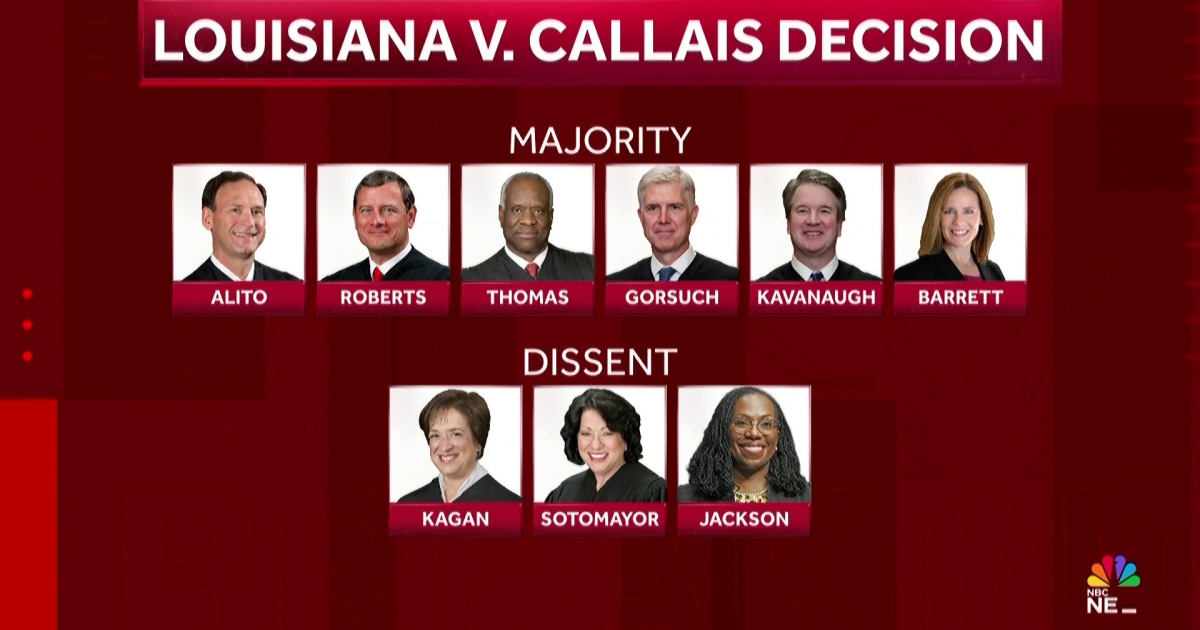
The justices, split 6-3 with the court’s conservatives in the majority, told states they can almost never consider race when drawing maps to comply with Section 2 of the Voting Rights Act, which was enacted to protect minority voters who long faced discrimination in elections.
Conservative Justice Samuel Alito, writing for the majority, said that while there may be extreme situations where the use of race can be justified to draw a map, it was not in the Louisiana case. As a result, the new map was an “unconstitutional racial gerrymander,” he added.
The decision means Louisiana will need to redraw its map. Other states could try to do so as well, although there is little time this year with primaries underway ahead of November’s midterm congressional elections. Louisiana’s primary is May 16, just two weeks away.
While the court had previously assumed that states could consider race in seeking to comply with the Voting Rights Act, Alito wrote that “allowing race to play any part in government decision-making represents a departure from the constitutional rule that applies in almost any other context.”
In justifying the court’s change of course, Alito highlighted developments in recent years, including “social change” in the South, where most of the race-based redistricting challenges arise. He also cited the court’s 2019 decision that paved the way to unfettered partisan gerrymandering.
As a result, when civil rights plaintiffs challenge newly-drawn maps, the state can argue as a defense that it was merely seeking to maximize partisan advantage. In the South in particular, party preference is often aligned with race, with most Black people voting for Democrats.
In a separate concurring opinion, conservative Justice Clarence Thomas, a longtime critic of the Voting Rights Act, said the ruling should “largely put an end” to a system that he saw as unlawfully dividing people into districts based on race.
The three liberal justices dissented, with Justice Elena Kagan writing that the “consequences are likely to be far-reaching and grave and that the ruling effectively “renders Section 2 all but a dead letter.”
“Under the court’s new view of Section 2, a state can, without legal consequence, systematically dilute minority citizens’ voting power,” Kagan said.
“The Supreme Court betrayed Black voters, they betrayed America, and they betrayed our democracy,” said Derrick Johnson, president of NAACP, a leading civil rights group. “This ruling is a major setback for our nation and threatens to erode the hard-won victories we’ve fought, bled, and died for.”
The court has taken chunks out of the Voting Rights Act twice via major rulings issued in 2013 and 2021. In 2023, the court, in an unexpected decision that appeared to buttress the voting law, struck down Republican drawn congressional districts in Alabama.
The court ruled in the Louisiana case that the state unlawfully considered race when it redrew its congressional map in 2024.
The state originally drew a map after the 2020 census that contained just one majority-Black district out of six in a state in which a third of the population is Black.
A lower court found that the map violated the Voting Rights Act, so the state redrew it in 2024 to have two majority-Black districts. The Supreme Court has now found that map to be unlawful too, but for different reasons.
The case touches upon what conservatives see as a tension between the Voting Rights Act and the Constitution’s 14th and 15th amendments, which were enacted after the Civil War to ensure equal rights for former slaves, including the right to vote.
Conservatives view those amendments as requiring an entirely “colorblind” approach to the law, a view that liberals reject.
The Louisiana case initially reached the court on a narrower legal question, but the justices themselves expanded its importance by setting a second round of oral arguments on the broader constitutional issue of whether race can be considered in redistricting when seeking to comply with the Voting Rights Act.
Louisiana, which initially defended its new map, switched sides and joined a group of self-identified “non-African-American” voters who sued to block it on constitutional grounds. The Trump administration later joined the case in support of the state.




Leave a Reply