
In the early weeks of the Covid pandemic, in those days when public spaces emptied and hospitals filled up, I used to see this magazine cover from 2017 being passed around social media. The story was a familiar one to me, because I was the one who had written it:
The posts were all versions of the same thing: The warning signs had been there, we knew something like this was coming, why weren’t we prepared? All of which was true, and all of which I had been trying to get across in that story, which was itself the culmination of years of reporting on emerging diseases: SARS in Hong Kong in 2003, H5N1 bird flu in Indonesia in 2007, H1N1 flu in 2009. Surely I’d seen Covid coming too.
Sign up here to explore the big, complicated problems the world faces and the most efficient ways to solve them.
Except I hadn’t. Through January and into February 2020, as lockdowns and cases of what would soon be called Covid-19 accumulated in China and then elsewhere, I remained surprisingly nonchalant. I assume it would burn out, much like bird flu itself or MERS or Ebola or any number of scary viruses that didn’t quite have the legs to cause global catastrophes. If you’d asked me for predictions, I probably would have said a (hopefully) more sophisticated version of what President Donald Trump said on February 25, a day before the first suspected community transmission in the United States: Covid was “going to go away.”
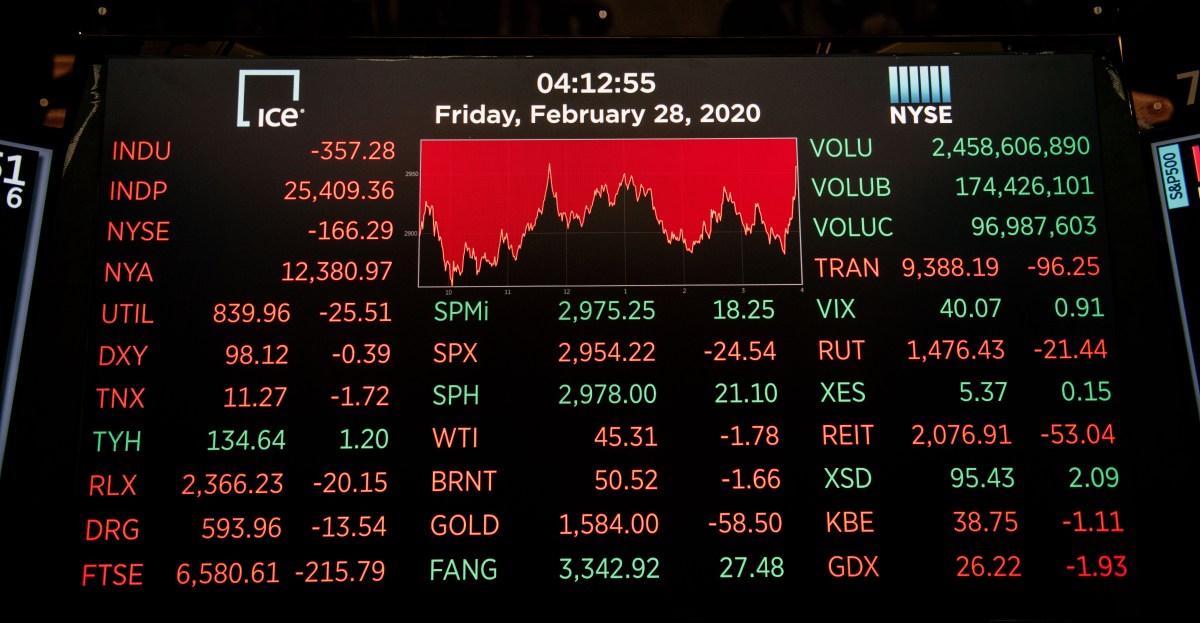
I was wrong, obviously. I couldn’t make myself see it — or maybe, I couldn’t make myself believe it, believe that we were about to experience sudden, transformative change. And I wasn’t alone. On February 19, 2020, just before Italy reported its first cluster of Covid cases, the S&P Index hit an all-time high, which is not the behavior of markets anticipating what actually happened next: an unprecedented global economic shutdown.
I now believe a similar economic blindness is at work today, with a different crisis.
The crisis we’re not pricing in
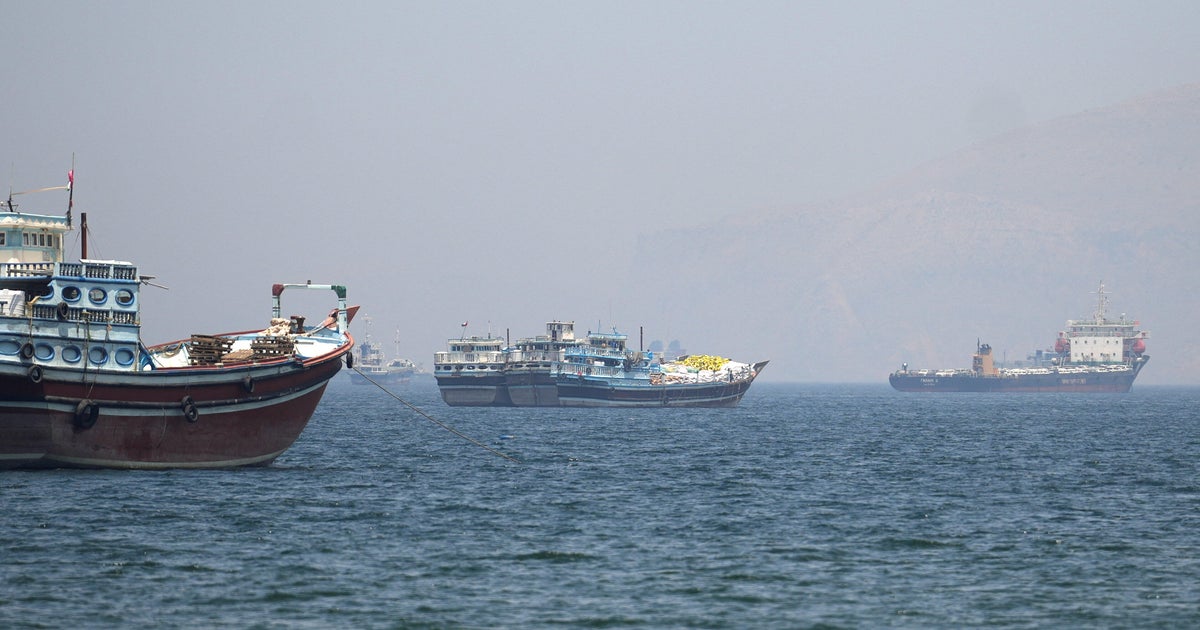
That crisis is the war with Iran, and specifically the ongoing closure of the Strait of Hormuz. The numbers are not subtle. The International Energy Agency calls it the largest disruption in the history of global oil markets, with global supply down by more than 10 million barrels a day in March. The Atlantic Council notes that the 1973 oil embargo — the shock that defined a decade of American economic anxiety — pulled 7 percent of global supply off the market. Hormuz has cut that same supply by 13 percent, and the infrastructure damage from the war and the shutdown will take months or years to repair.
The downstream effects are everywhere if you look. In Como, Mississippi, a 73-year-old corn farmer told NPR he is buying diesel “hand to mouth”; fertilizer is up 60 percent, an increase so steep that he may not fertilize his corn this spring at all. In Dhaka, vehicles are lining up around blocks for propane refills. The Philippines declared a state of national energy emergency. South Korea, Thailand, and Vietnam are rationing fuel. Lufthansa has already canceled 20,000 summer flights.
And yet in the same week the New York Times put all of this on its front page, the S&P 500 hit another new all-time high. The disconnect is dizzying. As one analyst quoted by David Dayen in the American Prospect put it, “The market priced peace. The oil system didn’t.”
How we miss what’s in front of us
So why the gap? Why are markets, and many of us, treating the largest energy disruption in history as just another potentially bad thing that probably won’t actually happen?
The answer, I think, speaks to the same factors that kept me from believing a pandemic was coming in February 2020. Human beings are systematically bad at recognizing the moment when a slow-moving or theoretical threat becomes a clear and present one.
Wharton economists Robert Meyer and Howard Kunreuther call this the ostrich paradox, and they identify six biases that drive it: myopia, amnesia, optimism, inertia, simplification, and herding. Investors are betting on near-term political resolution (myopia), drawing on the pattern that Trump has often reversed market-damaging policies like tariffs (amnesia and optimism), defaulting to buy-the-dip behavior (inertia and herding), and tracking earnings while ignoring the effects of physical supply chain disruptions (simplification).
The deeper problem is that human cognition is built for sudden threats with a specific source — the punch you can see coming — and badly miscalibrated for diffuse, distributed ones. Harvard psychologist Daniel Gilbert has argued that gradual threats fail to trip the brain’s alarm, leaving us “soundly asleep in a burning bed.” A 2025 paper in Science by UCLA’s Rachit Dubey and colleagues showed this formally: When information arrives in continuous form — fertilizer up 60 percent in Mississippi, propane queues in Dhaka, another flight canceled in Frankfurt — people fail to perceive a shift even when the shift is real. A binary headline (“the strait closed”) would register more sharply. But the closure of Hormuz, like the early spread of Covid, hasn’t been a headline. It’s been a process.
But you can only ignore reality for so long, and when transformative events happen, change comes fast.
Five weeks after the market hit that all-time high on February 19, 2020, it was down 34 percent — the fastest correction from a peak in market history, as Covid was finally priced in. The information that produced the crash had mostly been available weeks earlier. What changed was not the data but the integration of the data: the moment when the abstract became concrete, when Wuhan and then Italy and then Seattle made what had been a story about Over There into a story about Right Here. Markets didn’t suddenly become smart. They just became unable to stay dumb.
While I can’t see the Iran crisis causing anywhere near the economic disruption of Covid, I do think we are weeks from a similar shift. In the spirit of Future Perfect forecasting, I’ll express that thinking as a falsifiable prediction: If the Strait of Hormuz remains materially restricted through June, the S&P 500 will be at least 10 percent off its April 22 high by Labor Day.
You shouldn’t take financial advice from me, but I’m no more alone in my pessimism today than I was in my careless optimism as the pandemic was spreading. Princeton Policy Advisors has forecast a US recession beginning in May; the IMF, which projected 3.3 percent global growth in January, has now cut its baseline to 3.1 percent and added an adverse scenario at 2.5 — the latter approaching territory the world hasn’t seen outside the 2008 crisis and the pandemic. Mark Dowding, the chief investment officer at RBC BlueBay, told Bloomberg last week that the current market reminds him of February 2020: “Only when it truly disrupted our lives did the market see bigger shocks.”
I missed the Covid pandemic, even with a magazine cover predicting it sitting on my desk. The market missed it too, right up to the day it didn’t. I hope we don’t miss the next big disruption. There is still time, but probably not much.
A version of this story originally appeared in the Future Perfect newsletter. Sign up here!

Leave a Reply