
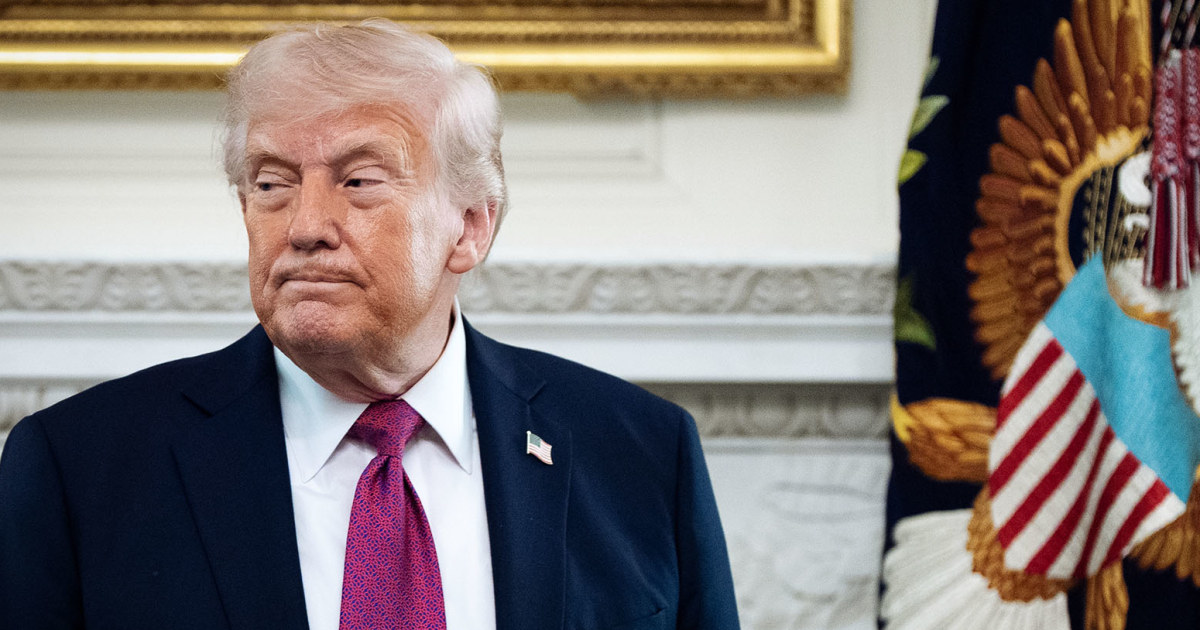
The president has extended his deadline on coming to a deal with Iran five times now, always accompanied by severe threats. There’s an internal debate at the White House about whether to publicly set another firm deadline only to blow past it, according to a person familiar with the White House discussions.
Weeks ago, the president vowed to “obliterate” power plants if Iran did not “fully open” the Strait of Hormuz. Two days later, the president announced a five-day pause on those strikes, citing progress in the diplomatic negotiations. Two days after that, he pushed it back further, and then did so again on April 7.
White House press secretary Karoline Leavitt said that only President Trump can set the next deadline on an Iranian proposal to end the war.
On Tuesday, Vice President JD Vance prepared to travel to Pakistan for a second round of talks after the first session failed, only for the trip to be postponed. Special envoy Steve Witkoff and Trump’s son-in-law Jared Kushner were summoned to the White House to discuss possible next steps, only to return to Florida after it was decided that the negotiating team would not be traveling to Islamabad imminently.
Trump is gambling that a U.S. naval blockade on Iran’s ports will force Tehran to make concessions at the negotiating table and reopen the strait. Iran heavily depends on oil exports to keep its economy afloat, and U.S. officials and advocates of the blockade believe it will eventually trigger hyperinflation and a serious financial crisis in Iran, forcing Tehran to relent.
Since Trump declared the blockade, U.S. forces have boarded at least two ships associated with Iran that it says were carrying oil and have turned away 33 that approached the strait.

The blockade could, over time, change Iran’s calculus, as it will eventually need to export oil. But Iran is also hoping to continue to charge fees for ships transiting the strait which could provide revenue in the meantime, the Western officials said.
Meanwhile, Iran maintains its own stranglehold on the Strait of Hormuz — it attacked three ships on Thursday. Already, the closure of the waterway, which has disrupted shipments of oil, fertilizer and other goods, is triggering economic shocks around the world.
Iran is betting it can hold out longer because it has years of experience absorbing economic punishment and could generate revenue by selling off oil it has in storage beyond the blockade, off the coast of Malaysia and China, as well as exporting gas by pipeline and printing money, the Western officials said.
The Western diplomat said the Iranians had clearly been in a weaker position before U.S. and Israeli military operations in late February, as exhibited by the dramatic shift in Tehran’s willingness to compromise from then until now. The offer put previously forward by the Iranians included significant concessions to their nuclear program, which had, according to the diplomat, long been their greatest source of leverage.
Now, with effective control of the Strait of Hormuz, Iran has found a far more effective global advantage for “peanuts” of the previous cost, the diplomat said, leaving Tehran with little reason to capitulate.
Iran’s parliamentary speaker Mohammad Bagher Ghalibaf suggested on Wednesday that Tehran would not cave to any of Washington’s demands.
“A complete ceasefire only makes sense if it is not violated by the maritime blockade and the hostage-taking of the world’s economy,” and if the “warmongering across all fronts is halted,” Ghalibaf wrote on X.
“Reopening the Strait of Hormuz is impossible with such a flagrant breach of the ceasefire,” he added, saying that the U.S. and Israel “did not achieve their goals through military aggression, nor will they through bullying.”
Despite repeated U.S. and Israeli bombing, Iran retains plenty of missiles, drones and mines to maintain control of the strait. But even beyond its military capabilities, the regime has found that it does not take much to drive up insurance costs for shipping companies and discourage commercial traffic in the waterway.








Leave a Reply