
Washington — The longest shutdown of a federal department in U.S. history came to an end on Thursday when President Trump signed a bill to fund most of the Department of Homeland Security following a breakthrough on Capitol Hill.
The House unanimously approved a Senate-passed bill to fund most of DHS earlier in the day, with the exception of the department’s immigration enforcement agencies, which have been largely unaffected by the shutdown. The chamber passed the legislation through voice vote with little fanfare, a sign that lawmakers were finally ready to put the impasse behind them.
The 76-day shutdown left many critical agencies like the Coast Guard, FEMA and the TSA struggling to maintain operations as funding ran dry. Repurposed money to pay employees was set to expire within days, increasing pressure on lawmakers to resolve the funding lapse.
The DHS shutdown
Spending authority for the department expired on Feb. 14, kicking off weeks of protracted negotiations between Republicans and Democrats that ultimately resulted in the bill that earned the House’s sign-off.
From the start, Democrats objected to funding Immigration and Customs Enforcement and Border Patrol, the two agencies under DHS that have led the charge in enforcing Mr. Trump’s immigration crackdown. Democrats pushed for reforms to the agencies’ operations, including banning the use of face masks and requiring warrants for certain immigration-related arrests.
But talks over those reforms failed in the Senate. In the dead of night last month, the chamber unanimously passed legislation to fund the rest of the department, setting ICE and Border Patrol aside.
But House Republicans rejected that plan, arguing that the bill would be caving to Democratic demands to defund the president’s immigration agenda.
Johnson, Senate Majority Leader John Thune and President Trump eventually coalesced around a plan to fund the entirety of DHS on two parallel tracks. The first would involve the House passing the Senate DHS bill to immediately reopen the department. The second involves funding ICE and Border Patrol for the next three years through the budget reconciliation process, which will allow Republicans to approve a bill without support from Senate Democrats.
The president ordered DHS to redirect money to pay employees in March, but Homeland Security Secretary Markwayne Mullin warned that funding to make payroll would dry up by the beginning of May, increasing pressure on lawmakers to pass the Senate bill.
House leaders had been waiting for the reconciliation process to move forward before bringing up the Senate legislation. Both chambers took the first step toward crafting the reconciliation package this week, adopting a budget plan that instructs the relevant committees to write legislation to fund the immigration agencies.
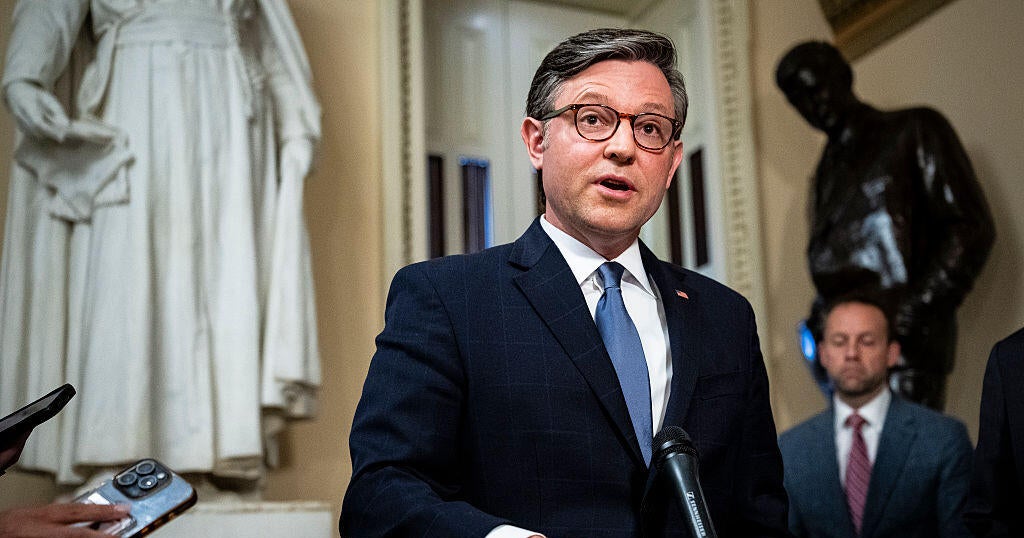
“We held the homeland bill, the underlying funding bill, because we had to ensure that they could not isolate and eliminate those two critical agencies,” Johnson told reporters after Thursday’s vote. “We are getting those done now. We passed the resolution first. That was critically important for us to do, to ensure that we’re going to protect the homeland, even though Democrats are unwilling to do it. So now that that box is checked, we’re allowed then to proceed and go through with the rest of it.”
Mr. Trump has said he wants the reconciliation package on his desk by June 1.
Both ICE and Border Patrol received tens of billions of dollars in funding in last year’s One Big Beautiful Bill Act, meaning their operations have continued mostly unimpeded during the shutdown. Law enforcement agents at both agencies have continued to get paid.
The brunt of the funding lapse has thus been felt by other DHS components like the Coast Guard, Transportation Security Administration and Federal Emergency Management Agency. Adm. Kevin Lunday, the commandant of the Coast Guard, told CBS News in an exclusive interview that his workforce was “furious” that the impasse had dragged on so long, calling it “incredibly frustrating.”









Leave a Reply