
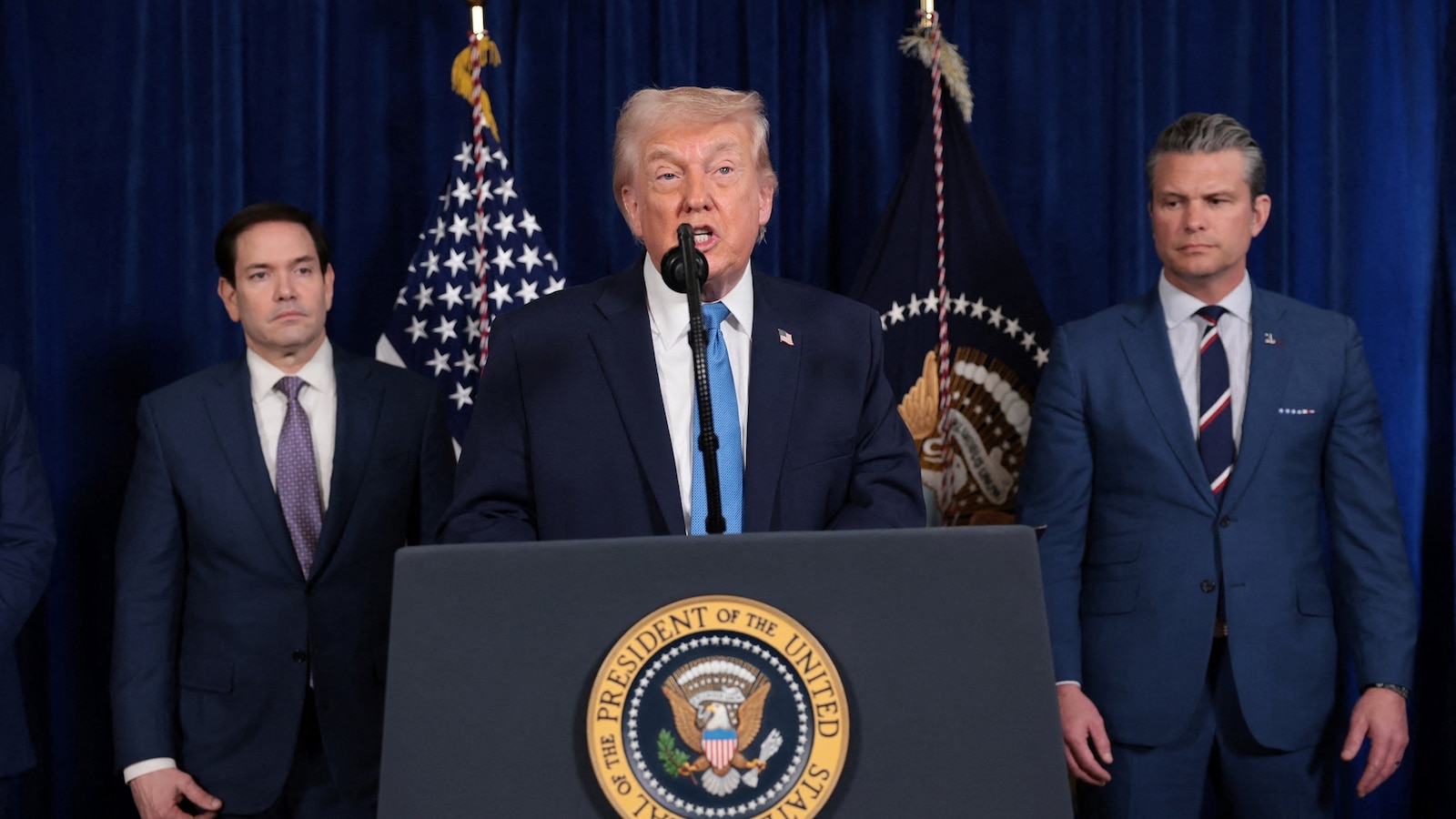
In a triumphant news conference following the capture of Venezuelan President Nicolás Maduro in the middle of the night last week, President Donald Trump invoked what he called the “Donroe Doctrine” — his vision of a U.S. superpower that could assert its military might to conquer the Western Hemisphere.
The State Department doubled down on the sentiment, posting on X on Monday: “This is OUR Hemisphere, and President Trump will not allow our security to be threatened.”
Secretary of State Marco Rubio suggested as much during cable hits over the weekend, saying, “This is the Western Hemisphere. This is where we live — and we’re not going to allow the Western Hemisphere to be a base of operation for adversaries, competitors, and rivals of the United States.”
World leaders are likely to proceed with caution as they now face growing pressure due to a more assertive and dominating American presence, as Trump renews his push to acquire Greenland — a Danish territory, and the Arctic.

President Donald Trump holds a press conference following a U.S. strike on Venezuela where President Nicolas Maduro and his wife, Cilia Flores, were captured, from Trump’s Mar-a-Lago club in Palm Beach, Fl., on Jan. 3, 2026.
Jonathan Ernst/Reuters
“We need Greenland from the standpoint of national security,” he told reporters on Air Force One on Sunday.
Trump openly threatened Colombia and said it could face a similar fate as Venezuela, and he said Cuba was imminently “ready to fall.” He also said Mexico could be next, as the administration seeks to continue its battle against drug cartels.
His rhetoric even raised questions about the plight of Taiwan as it faces growing threats from China in the Indo-Pacific; his comments could also include repercussions for Ukraine as it battles Russia in a nearly four-year long war.
What is the “Donroe Doctrine?”
The “Donroe Doctrine” is a portmanteau of Donald Trump and the Monroe Doctrine — the 1800s-era doctrine that warned against European colonization in the Americas articulated by President James Monroe.
Pointing to China, Iran and Russia’s influence on the oil industry in Venezuela, Trump said, “All of these actions were in gross violation of the core principles of American foreign policy, dating back more than two centuries.”
“All the way back, dated to the Monroe doctrines. And the Monroe Doctrine is a big deal, but we’ve superseded it by a lot, by a real lot. They now call it the Donroe Doctrine,” Trump said Saturday at Mar-a-Lago.
According to the Department of State’s Office of the Historian, the Monroe Doctrine served as justification for U.S. intervention in Cuba, Nicaragua, Haiti, and the Dominican Republic.
In November, the Trump administration released its national security strategy, modeling its policy toward the Western Hemisphere after the Monroe Doctrine.
“After years of neglect, the United States will reassert and enforce the Monroe Doctrine to restore American preeminence in the Western Hemisphere, and to protect our homeland and our access to key geographies throughout the region,” the strategy reads.

Ousted President Nicolas Maduro of Venezuela and his wife, Cilia Flores arrive at the Wall Street Heliport in New York City, January 5, 2026.
EPA/Shutterstock
“We will deny non-Hemispheric competitors the ability to position forces or other threatening capabilities, or to own or control strategically vital assets, in our Hemisphere,” per the strategy. “This ‘Trump Corollary’ to the Monroe Doctrine is a common-sense and potent restoration of American power and priorities, consistent with American security interests.”
Trump later added during his news conference: “Under our new national security strategy, American dominance in the Western Hemisphere will never be questioned again. It won’t happen. So just in concluding, for decades, other administrations have neglected or even contributed to these growing security threats in the Western Hemisphere. Under the Trump administration, we are reasserting American power in a very powerful way in our home region.”
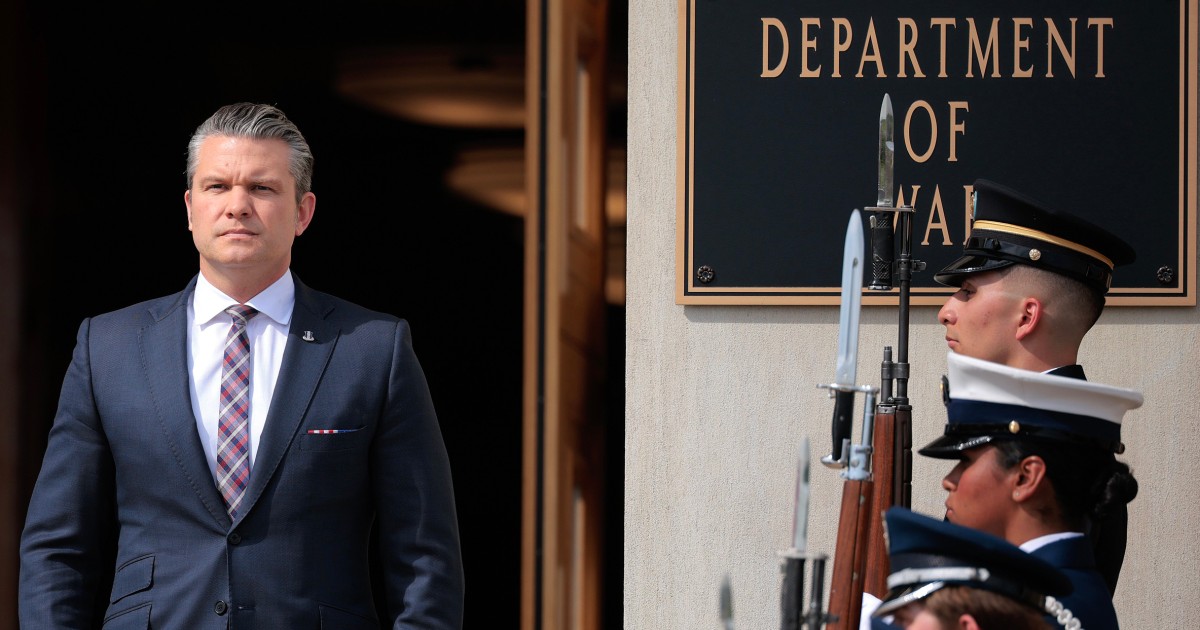
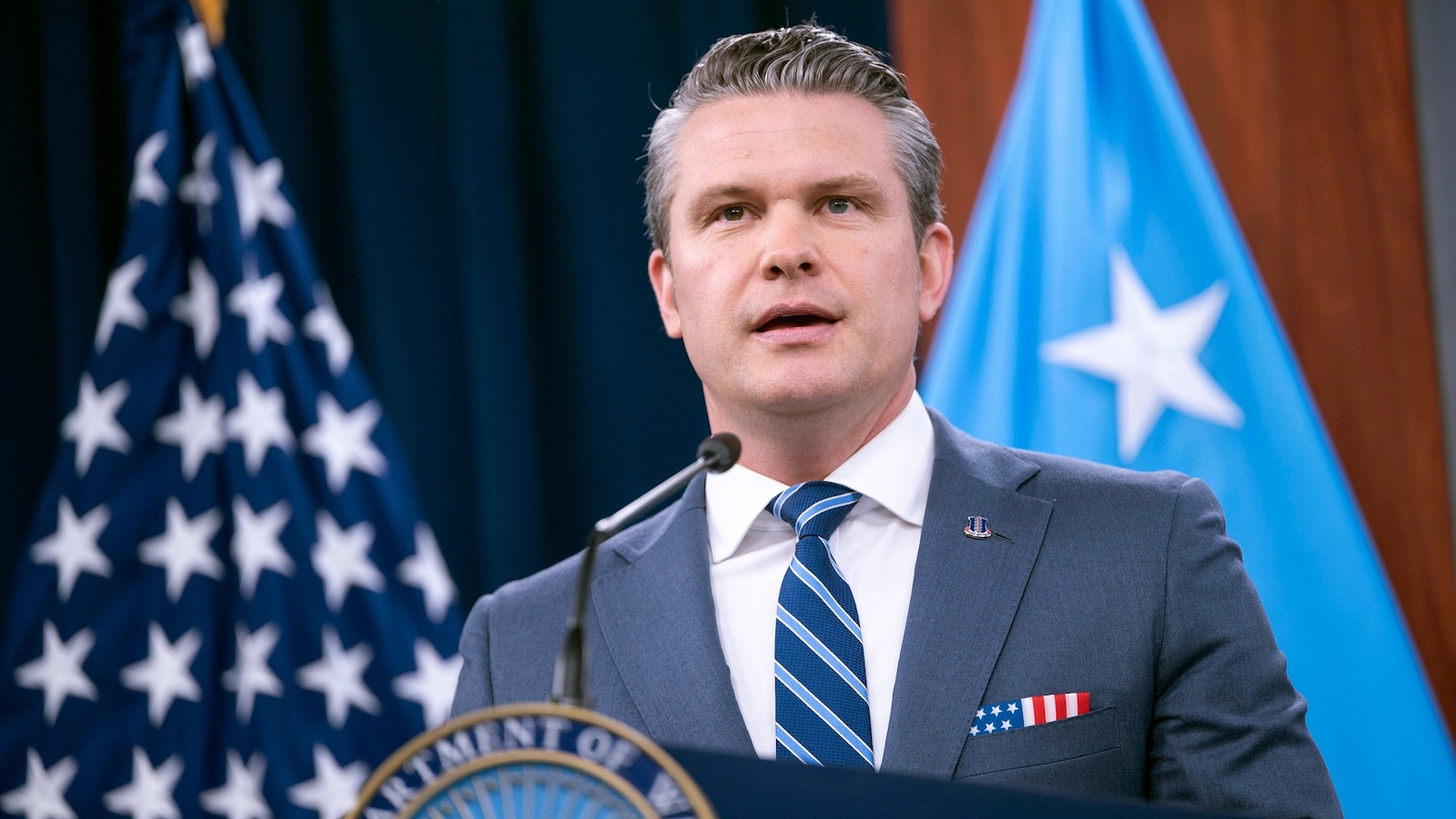
In remarks Monday, Secretary of Defense Pete Hegseth also noted that the Monroe Doctrine is back in full force.
“As we continue to ensure that American interests are protected in the Western Hemisphere, the Monroe Doctrine is back and in full effect. And all of you will be a part of ensuring that. All the way back to 1823, James Monroe established the Monroe Doctrine. You are a part of it now, you are a part of that legacy,” Hegseth said.
But not all are convinced.
In a blistering statement, Independent Sen. Bernie Sanders of Vermont decried the administration’s “brazen violation of international law” in capturing Maduro and suggested “this is the horrific logic of force that Putin used to justify his brutal attack on Ukraine.”
“Trump and his administration have often said they want to revive the Monroe Doctrine, claiming the United States has the right to dominate the affairs of the hemisphere. They have spoken openly about controlling Venezuela’s oil reserves, the largest in the world. This is rank imperialism. It recalls the darkest chapters of U.S. interventions in Latin America, which have left a terrible legacy. It will and should be condemned by the democratic world,” Sanders said.
European leaders eye Washington warily
World leaders largely condemned Maduro’s capture as a breach of international law and experts have said it could have a chilling effect because of the message it sends: that the U.S. no longer views international law as a binding constraint on its power.
Denmark’s leader warned on Monday that Trump’s threats should be taken seriously after he repeated his desire to annex Greenland.
“Firstly, I believe that the American president should be taken seriously when he says that he wants Greenland. But I also want to make it clear that if the United States chooses to attack another NATO country militarily, then everything stops. That is, including our NATO and thus the security that has been provided since the end of the Second World War … of course, we will not accept a situation where we and Greenland are threatened in this way,” Danish Prime Minister Mette Frederiksen said.
Many analysts of the Trump administration’s renewed national security strategy — which is now more aligned with the Monroe Doctrine — have said the approach is “shortsighted and runs the risk of creating long-term backlash that could ultimately undermine U.S. interests and cooperation across the Americas,” according to Adam Ratzlaff, founder and CEO of Pan-American Strategic Advisors, a think tank focused on the Western Hemisphere.
The Trump administration’s “willingness to violate another state’s sovereignty reinforces fears that Washington is increasingly open to reordering the international system along great-power lines,” Chris Herrmann and Asli Aydinsasbas, senior fellows with the European Council on Foreign Relations said.
“From Greenland to Ukraine to Taiwan, European leaders must prepare for a strategic environment in which US actions are less predictable, more unilateral and increasingly shaped by domestic politics,” Herrmann and Aydinsasbas said, adding that a U.S. “pivot towards military interventionism in Latin America may also divert political attention and resources away from European security, while emboldening Moscow to pursue transactional arrangements with Washington over Ukrainian territory and resources.”
And on Taiwan’s security, Herrmann and Aydinsasbas noted that “while China is unlikely to replicate a similar military operation, Beijing may interpret Washington’s actions as evidence of a more permissive global environment for coercive tactics.”
In recent days, China has dispatched air, naval and rocket troops to conduct joint military drills around the island of Taiwan, a move Beijing called a “stern warning” against separatist and “external interference” forces. Notably, the State Department issued a statement urging Beijing to exercise restraint, and said China’s military activities would “increase tensions unnecessarily.”
Other experts maintain a return to the Monroe Doctrine could have a positive deterrence effect.
They suggest the administration now has a unique opportunity to build upon its pressure campaign against Maduro to reestablish overwhelming U.S. strategic predominance in the Western Hemisphere “by tacitly shaping a post-Maduro settlement that ensures extra-hemispheric powers like China and Russia are excluded from meaningful influence in Caracas.”
“The success of this operation creates a once-in-a-generation opportunity for Washington to translate its security preferences into strategic reality,” Alexander B. Gray, a nonresident senior fellow with the Atlantic Council, said. Gray served as deputy assistant to the president and chief of staff of the White House National Security Council during Trump’s first term.



Leave a Reply