
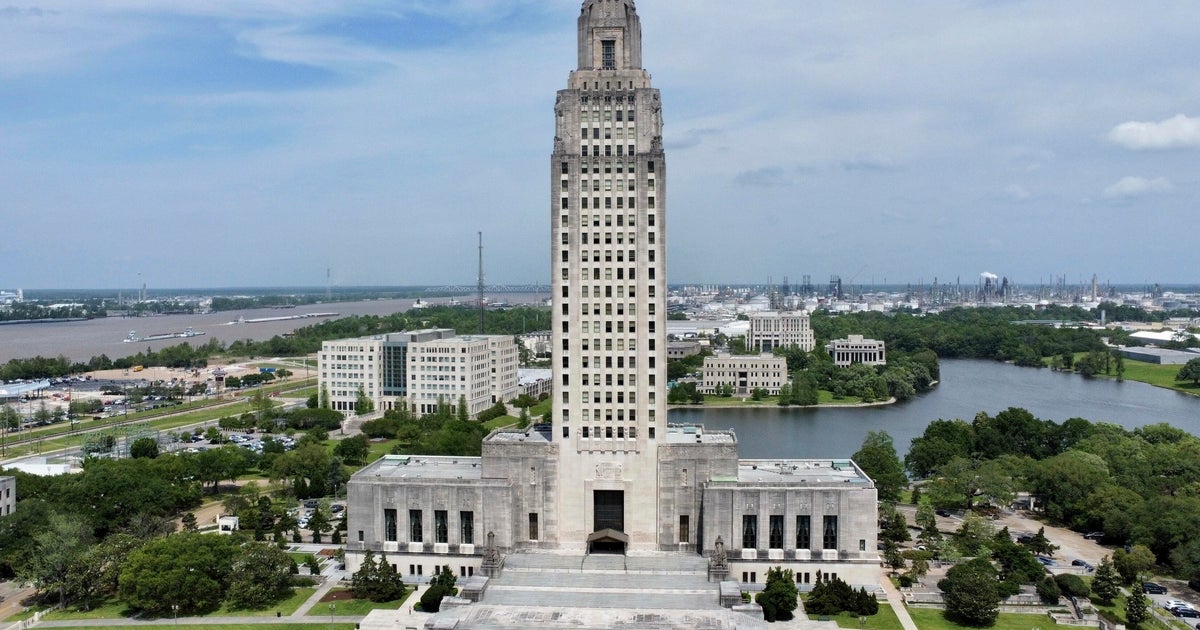
Louisiana’s Secretary of State on Thursday announced the state would suspend the May 16 House primaries in the wake of the U.S. Supreme Court striking down the state’s congressional map one day earlier.
The Supreme Court’s ruling on Wednesday about Louisiana’s congressional map could have implications for several southern states, as it weakened the relevant section of the Voting Rights Act about majority-minority districts.
In a perfect world for Republicans, many southern states could redraw their maps, withstand legal challenges and collectively add between one to nine more GOP-friendly districts for the 2026 midterms, according to a CBS News analysis. That number is expected to grow for the 2028 cycle as more states redraw their lines in the wake of the U.S. Supreme Court’s ruling.
But there is a big obstacle for any more GOP redraws in 2026: time.
Many states either have conducted their primary elections, have them coming up soon or have already passed the qualification deadline for candidates to get onto the ballot. Legal challenges are likely, and last-minute changes to the maps could run into trouble with the “Purcell principle,” which establishes that federal courts cannot change voting or election rules too close to an election.
Another obstacle for 2026 is the uphill political environment for the party, stemming from voter frustrations with the economy and continuing U.S. war waged on Iran.
“If you draw a Trump +7 district or even a Trump +10 district, that may not be enough. So why not wait til’ an election cycle in 2028 that might be better for your party?” said Michael Li, senior counsel in the Brennan Center’s Democracy Program.
While there have been calls from GOP activists to tweak their maps in many Republican-controlled states, including Georgia and South Carolina, here is a breakdown of which states are likely to try to redraw their maps before this November’s midterm election:
Louisiana (potential +1 to 2 R seats)
Early voting for the May 16 primary was set to start May 2, and ballots have already been printed. Secretary of State Nancy Landry said Thursday that the other primaries will go on as planned, including for the state’s Senate race, and they will post at all voting locations that the House primary has been suspended.
“Pursuant to 18:401.1(B), I have certified the emergency in light of the Supreme Court ruling. This is a mandatory step prior to the Governor issuing an executive order suspending the upcoming Louisiana U.S. House races,” Secretary Landry said in a statement on social media.
In an executive order signed Thursday, Republican Gov. Jeff Landry encouraged the state legislature to pass new congressional maps and schedule elections “as soon as practical.” President Trump thanked Landry on Thursday for moving quickly to redraw the lines after the high court’s decision.
Louisiana Attorney General Liz Murrill told CBS News on Wednesday that the state may move to revert back to the old map, with just one Black-majority district, even if it is a “big lift” to change the dates for the state’s May primary. That map favored Republicans in five districts and Democrats in just one.
Depending on how aggressive state GOP legislators are, a new map could add one to two GOP-leaning seats by carving up the Black-majority seats they have. The state is nearly one-third Black, according to the U.S. Census.
“We can realistically end up having six congressional districts with no African-American, or Democratic representation, it’s very possible, given what we’ve seen happen across this country,” Democratic Rep. Troy Carter told CBS News on Wednesday.
“The reality is this is much deeper and much further than Louisiana. This can impact up to 19 or 20 seats in the congressional Black Caucus. It can impact school boards. It can impact city councils, legislative seats. This is, in fact, an explosive move to turn the clock back all the way pre-1965,” he added.
Florida (potential +4 R)
A proposed map from Republican Gov. Ron DeSantis passed the state legislature on Wednesday and is waiting for his signature. It looks to add four more Republican-leaning seats by eliminating or shrinking Democratic-leaning districts in Tampa, Orlando and parts of the state’s southeast coast.
DeSantis’ counsel had already been anticipating this ruling from the U.S. Supreme Court, and argue it means they don’t have to follow racial requirements within their own state constitution’s “Fair Districts” Amendments.
“Much like Louisiana’s ‘intentional compliance with the court’s demands constituted an express acknowledgement that race played a role in the drawing of district lines,’ Florida’s intentional compliance with the [Fair Districts Amendments] would constitute such an acknowledgement,” DeSantis general counsel David Axelman wrote in a letter to state lawmakers as they were debating the map.
Democratic election lawyer Marc Elias has pledged to challenge the map in court.
Tennessee (potential +1 R)
Gubernatorial candidate and current U.S. Sen. Marsha Blackburn has already called repeatedly for the Tennessee legislature to reconvene to redraw the lines for the 2026 election. Blackburn proposed a map that could result in a nine Republican to zero Democrat split, by breaking up Tennessee’s 9th District that encompasses Memphis and diluting the Black voter population.
The state’s Congressional primaries are scheduled for Aug. 6, though the qualifying deadline in March has already passed. Republican Gov. Bill Lee has not called for a redistricting session yet, but the state’s House Republican Whip State. Rep. Johnny Garrett threw his support behind Blackburn’s proposal.
“Tennessee should do its part in supporting @realDonaldTrump’s America First agenda by getting rid of the woke @RepCohen,” Garrett wrote.
Mr. Trump said he called Governor Lee on Thursday, and was told he’d “work hard to correct the unconstitutional flaw in the Congressional Maps of the Great State of Tennessee.”
“This should give us one extra seat, and help Save our Country from the Radical Left Democrats,” Mr. Trump wrote. “Thank you Governor Lee – PUSH HARD!”
Mississippi (potential +1 R)
Republican Gov. Tate Reeves has already announced that a redistricting session would happen 21 days after the Louisiana v. Callais ruling, which would be May 20. GOP operatives in the state note his call was technically focused on redrawing the State’s Supreme court districts, as those lines had been challenged in courts over diluting the voting power of Black voters.
But it’s possible that Mississippi Republicans will tack on congressional redistricting to this, too, and add 1 GOP-leaning seat by targeting the state’s 2nd Congressional District, a majority-Black district represented by Democratic Rep. Bennie Thompson.
“First Dobbs. Now Callais. Just Mississippi and Louisiana down here saving our country!” Reeves wrote on X Wednesday.
But like Louisiana, Mississippi has a timeline problem since its primaries already happened in March.
“There’s lots of complications to [schedule another primary]. If you schedule an August primary, like who’s going to turn out for another primary in August? There’s a lot of variability when you move primaries in different times, and it’s expensive,” said Li, senior counsel in the Brennan Center’s Democracy Program.
“Unlikely legally that redraw would stand, but they can try,” added Michael McNulty, the policy director at the Issue One organization.
That isn’t stopping Republican state officials from saying the lines should be redrawn anyways.
“This likely opens the door to redrawing Mississippi’s congressional districts. Mississippi might no longer have a district drawn to protect Bennie Thompson,” wrote Republican Mississippi state Auditor Shad White.
“It’s time to erase Bennie Thompson’s District,” wrote Republican state Sen. Kevin Blackwell.
Alabama (potential +1 R)
In 2023, the U.S. Supreme Court ruled against Alabama when they took up a similar case to Louisiana v. Callais. They ruled 5-4 in the Allen v. Milligan case that a state GOP-supported congressional map violated Section 2 of the Voting Rights Act, and ordered the state to redraw a map that includes a second Black-majority Congressional seat.
But after a federal three judge panel ruled that map violated the Voting Rights Act and 14th Amendment, the state appealed to the U.S. Supreme Court again.
Republican Gov. Kay Ivey pointed to that pending litigation as a reason to not yet call for a special session to redraw the maps. “While we are not in position to have a special session at this time, I hope in light of this new decision, the court is favorable to Alabama,” Ivey said in a statement.
The state now has two Black-majority seats: the 2nd District and 7th District. Alabama Attorney General Steve Marshall said the state “will act as quickly as possible” to apply the Louisiana ruling to Alabama’s redistricting efforts, to “ensure that our congressional maps reflect the will of the people, not a racial quota system the Constitution forbids.”








Leave a Reply