
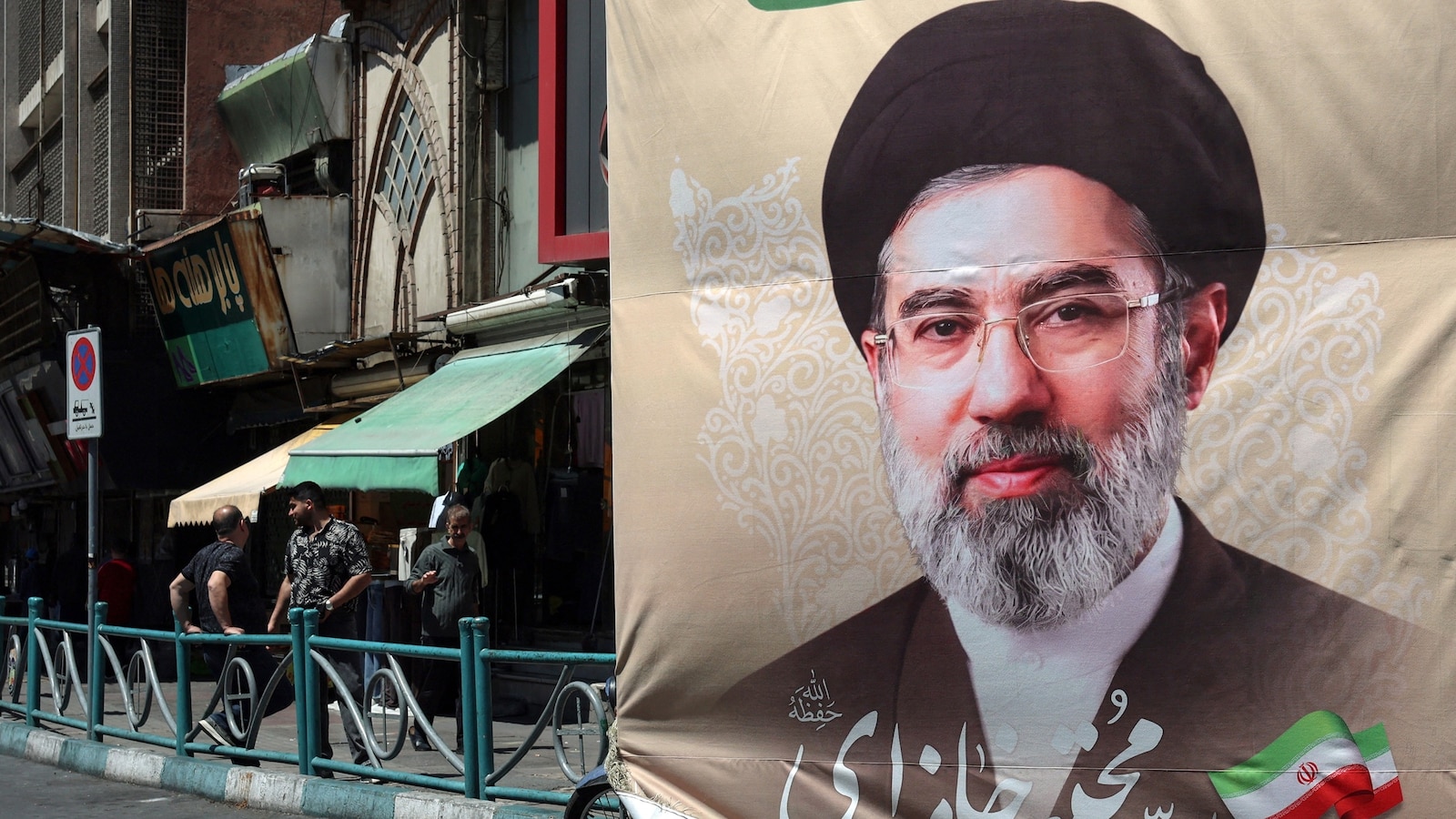
President Donald Trump has claimed Iran is having a hard time figuring out who its leader is and that there’s infighting between hardliners and moderates. Over the last week, he has repeatedly claimed there are divisions or fractures in the leadership to explain the lack of progress in negotiations.
But ABC News has spoken to multiple sources involved in security and policy, and a former head of the Iran branch in the Research and Analysis Division (RAD) in Israeli defense intelligence, who all paint a very different picture.
The overall view is that decision-making in Iran is no longer centralized around the supreme leader as it was before the war and the consensus is that there is not a huge gap between different factions within the regime, despite Trump’s posts.
One regional policy source with knowledge of the intelligence says, “there may be differences in emphasis and approach within the Iranian system, but there is no clear evidence of fractures at the level of core decision-making.”
There is concern that Iran has become an increasingly militarized country tightly controlled by the Islamic Revolutionary Guard Corps. The IRGC was established in 1979 by Ayatollah Ruhollah Khomeini as the military protector of the revolution and the regime.
Unlike before the war, sources say decision making is now decentralized. Mojtaba Khamenei became the supreme leader after his father, Ali Khamenei, was killed in the U.S.-Israeli strikes on Iran on Feb. 28, but he is also in hiding and hard to reach. That makes decision making slow and difficult.
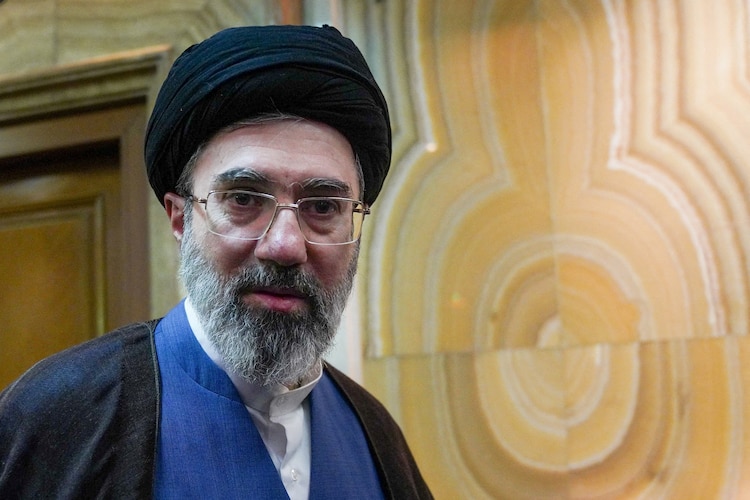
Iran’s new supreme leader, Mojtaba Khamenei, the second son of late Iran’s Supreme Leader Ayatollah Ali Khamenei, attends a meeting in Tehran, Iran, October 13, 2024.
Hamed Jafarnejad/West Asia News Agency via Reuters
Key members of this new politburo style system have been laid out by multiple security sources. The one thing that binds them all is the IRGC.
These include:
- Mojtaba Khamenei, who also fought with the IRGC in the Iran-Iraq War.
- Brigadier General Ahmad Vahidi, commander in chief of the IRGC.
- General Mohammad Bagher Zolghadr, the head of the Supreme National Security Council and former deputy commander of IRGC.
- General Yahya Rahim Safavi, who is military advisor to Mojtaba (as he was to his father) and also a former chief commander IRGC.
- Mohammad Bagher Ghalibaf, speaker of parliament, chief negotiator and former commander in chief of the IRGC.
Speculation about the new supreme leader
There has been repeated speculation about Mojtaba Khamenei’s health after he was badly injured in the bombing at the start of the war.
But most agree he is conscious and involved in decision-making. One senior security official believes that while not everything is brought to the supreme leader he is still making decisions.
Another security source says the supreme leader remains in hiding and not in real contact with anyone. There is, however, a system of communication, of talking to people and passing messages, but he does not use the telephone and is not meeting key people.
The source added, “You can’t run a country like that….They’re in disarray, but they’re still in control over the country. I wouldn’t say they’ve lost control.”
U.S. Secretary of Defense Pete Hegseth says Mojtaba Khamenei was badly wounded and disfigured. The New York Times reports he is “recovering from severe injuries, including burns on his face and lips, making it difficult to speak — which could be a reason why he hasn’t shown himself publicly.”
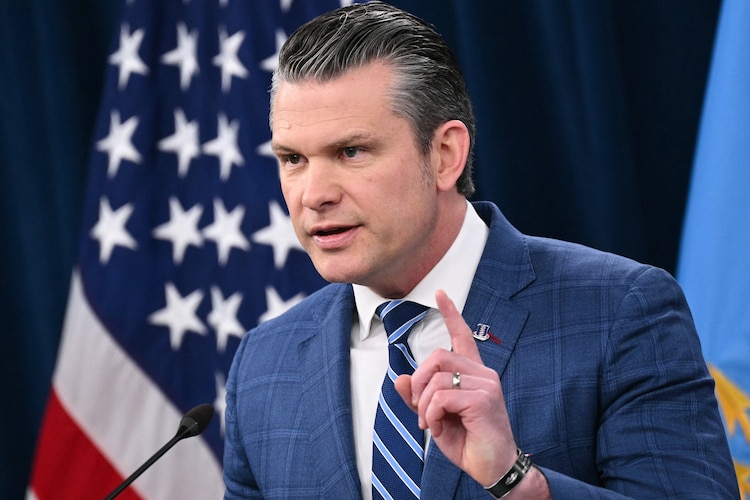
Secretary of Defense Pete Hegseth speaks during a press briefing at the Pentagon in Washington, April 8, 2026.
Mandel Ngan/AFP via Getty Images
But the main problem for the Trump administration and Israeli Prime Minister Benjamin Netanyahu’s government appears to be less who is now making decisions but that there is little mood to compromise.
An Israeli official pushed back on this narrative, telling ABC News, “It’s huge, huge [military] achievements… bottom line is that Iran is weaker than it’s ever been, ever, not even close.”
Even so he insisted, ”there’s still a lot to do. I think a lot, a lot has been done, more than anybody could have ever anticipated being done in 40 days. But there’s still stuff to do, and it’ll be done. It will either be done, either by means of negotiation, which I personally am kind of skeptical to, or it will be done by other means.”
There has been reporting that Netanyahu pushed Trump into backing regime change. The Israeli official flatly denies this saying, “At no point did the Prime Minister set the goal, or try to convince the President or America, or whatever, that the goal of this thing was regime change.”
The U.S. blockade of the Strait of Hormuz has become front and center in this conflict and Trump wants to use economic pressure to wring concessions from Iran. The Israeli official says, “I think he [Trump] is, he’s seeing that the blockade is working and therefore there is no real reason to give [Iran] concessions. I think a lot of people underestimated his resolve.”
Danny Citrinowicz, former head of the Iran branch in the Research and Analysis Division (RAD) in Israeli defense intelligence and now senior researcher in the Iran and the Shi’ite Axis Program at the Institute for National Security Studies, says “at the end of the day, we got what we did. You know, this is the outcome that we created, meaning that we have a militarized country controlled by the IRGC.”
He thinks the problem with Trump’s tactics — and those of Netanyahu — is that “he’s looking for a silver bullet about the (Military) campaign, about the blockade, about something that will change the situation. But it’s not going to happen, it’s very reactive behaviour.”
Citrinowicz warns, “this isn’t a system that you can reach a compromise with,” criticizing Trump’s online posts as serving nothing other than the Iranians looking at it and saying “he’s in despair.”
With the not-insignificant exception of the degrading of Iran’s offensive capability, he believes the war has failed to achieve any of its primary goals.
Iranian capabilities still significant
This week, the U.S. Defense Intelligence Agency reported that Iran still has significant capabilities, with thousands of missiles and attack drones. This is echoed by Israeli officials. The battle damage estimate is now put at 60% of missile launchers, but it is acknowledged that in some cases these can be dug out and made operable.
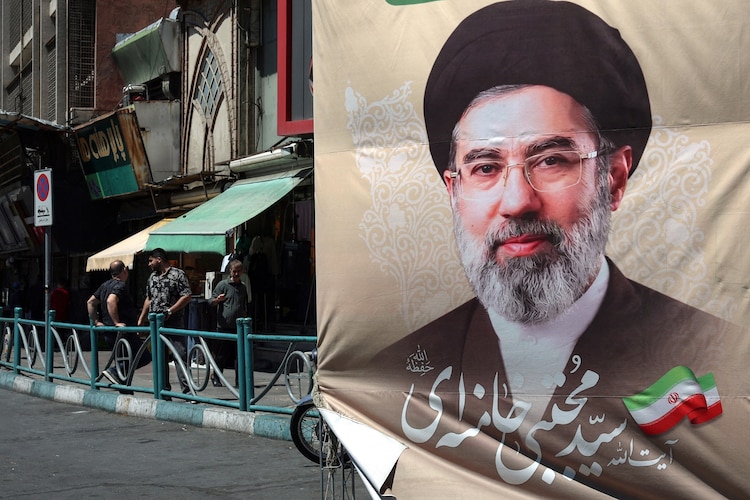
Iranians stand on a pavement along a street next to a billboard depicting Iran’s Supreme Leader Ayatollah Mojtaba Khamenei, in Tehran, on April 24, 2026.
AFP via Getty Images
According to Israeli security officials, intelligence assessments suggest Iran still retains a ballistic missile arsenal in the thousands. The Israel Defense Forces says over 550 long range missiles were launched by Iran at Israel from Feb 28 to the start of the ceasefire in early April.
At the beginning of the war, the IDF estimated Iran had about 2,500 ballistic missiles in its arsenal. That was a conservative estimate, and didn’t include short range missiles which cannot reach Israel.
As for Iran’s nuclear capabilities, Citrinowicz warns that although “they don’t have industrialized capability (it doesn’t) mean they don’t have these capabilities” and that Iran has almost a ton of enriched material (from 20 to 60%) that could be highly enriched to 90% (nuclear capable) in a matter of weeks.
Both he and a senior intelligence source warn Iran retains the ability to cascade centrifuges and enrich uranium, meaning simply removing the almost 1,000 pounds of highly enriched uranium which has been part of the discussions so far, would not be enough to deny Iran the potential for nuclear capabilities.
But the IAEA, the UN nuclear watchdog, has reported that the exact status of Iran’s nuclear program is uncertain. In February, the IAEA said it cannot verify “Iran’s inventories of centrifuges and related equipment.”
Israel’s intentions are clear. Israeli Defense Minister Israel Katz said the country “is prepared to renew the war against Iran.. We are waiting for the green light from the U.S. first and foremost to complete the elimination of the Khamenei dynasty and return Iran to the Dark Ages and the Stone Age.”
But achieving this lofty goal has so far proved elusive.






Leave a Reply