

OAKLAND, Calif. — Six tech billionaires walk into a courthouse …
Subscribe to read this story ad-free
Get unlimited access to ad-free articles and exclusive content.

It’s not the setup to a joke. It’s the extraordinary spectacle that played out at a federal court complex over three weeks, as a mass concentration of tech wealth was put on display in a lawsuit brought by the wealthiest tech baron of them all, Elon Musk.
The case has now gone to a jury of nine people who are set to begin deliberations Monday morning, but the trial has already illuminated the ways that the federal courts in the United States operate differently for the very wealthy — and the ways in which they operate exactly the same.
“This is probably the most contact they’ve had with normal people in 10 years, at least,” said Catherine Bracy, one of many tech industry observers who have attended the trial. She is the CEO of TechEquity, an advocacy organization focused on addressing the inequality created by the tech industry.

The trial centers around artificial intelligence startup OpenAI, the maker of ChatGPT. Musk, a co-founder and early donor, alleges that OpenAI betrayed its nonprofit origins when it created a for-profit arm and took money from outside investors, including Microsoft. OpenAI and Microsoft counter that OpenAI is still controlled by a nonprofit, that Musk agreed with them about the need to raise outside capital and that Musk is harassing OpenAI because he owns a rival startup, xAI.
The trial had numerous markings of its subjects’ wealth. The courthouse was swarmed with high-priced lawyers for the various parties and witnesses. When a billionaire sought passage through a public hallway or elevator, security guards cleared the way. Some of the rich men used fancy butt cushions to protect themselves from the hard wooden courtroom benches, Wired reported.

And on the witness stand, some of the rich guys were asked precisely how many billions of dollars they were worth.
Steven Molo, a lawyer for Musk, asked OpenAI President Greg Brockman during the second week of testimony whether it was true that his stake in the organization was valued at $20 billion. Brockman testified that was correct, and Molo kept pressing.
“It may be closer to $30 billion, correct?” he asked.
“I think that may be true, yes,” Brockman responded.
Molo returned to the $30 billion figure during his closing statement, calling it an example of unearned wealth. He accused Brockman and OpenAI CEO Sam Altman of enriching themselves at the expense of what he said was supposed to be a charity dedicated to ensuring that AI benefits humanity.
“Greg Brockman never invested a nickel,” he said.

Bill Savitt, a lawyer for OpenAI and its executives, didn’t try to deny the size of the wealth at issue.
“You look at these numbers and, wow, they’re big numbers!” he told the jury in a closing statement. “If OpenAI continues on the path that it’s on, the equity is worth just a crazy amount of money — just a crazy amount of money,” he said, repeating the phrase for emphasis.
But he said Brockman earned his billions through hard work and taking risks.
“In 2019, when Greg Brockman received his equity, no one had any idea that the equity would be worth anything,” Savitt said. “Only with 20/20 hindsight do we know that this was the rare organization that succeeded.”
Brockman was the second-wealthiest person to testify in the case, according to the Forbes billionaires list and the testimony about their wealth. The others, all men, were: Tesla and SpaceX CEO Musk with $814 billion; OpenAI co-founder Ilya Sutskever with $7 billion; Altman with $3.4 billion; OpenAI board Chairman Bret Taylor with $2.5 billion; and Microsoft CEO Satya Nadella with $1.3 billion.

Witnesses name-dropped even more billionaires who were not in attendance but who were relevant as past contributors to OpenAI, such as Facebook co-founder Dustin Moskovitz (worth $9.9 billion, per Forbes) and LinkedIn co-founder Reid Hoffman ($2.7 billion).
On a plaza outside the courthouse, anti-billionaire demonstrators set up props most days to pillory either Musk, Altman or both. Their faces appeared on punching bags and lawn signs. There was also a 15-foot-tall inflatable Musk doll that made a Nazi salute, referring to a gesture Musk made at a rally last year.

One protester, who gave his name only as Keith, showed up with a Musk mask, a cardboard cutout of a Tesla Cybertruck and a bag labelled “ketamine,” a reference to Musk’s acknowledged past use of the drug. Musk says he took ketamine years ago with a prescription.
“He just acted progressively crazier and crazier and more right-wing and more racist and really started to piss me off,” said Keith, who said he drove from Los Angeles to Oakland with his anti-Musk supplies.
But he said he wasn’t rooting for OpenAI or Microsoft either. “I tend to think that a billionaire didn’t come about it ethically,” he said.

The trial also attracted admirers of Musk, including a group of Stanford University undergraduates who woke up early on a Wednesday when they had no class to come see Musk testify. Another Musk fan caused a disturbance in the courtroom when she appeared to take a photo and the judge reprimanded her for violating court rules. The same person audibly agreed with Musk as he gave answers on the stand, saying “yeah” to some of Musk’s responses as she sat in the courtroom’s public section.
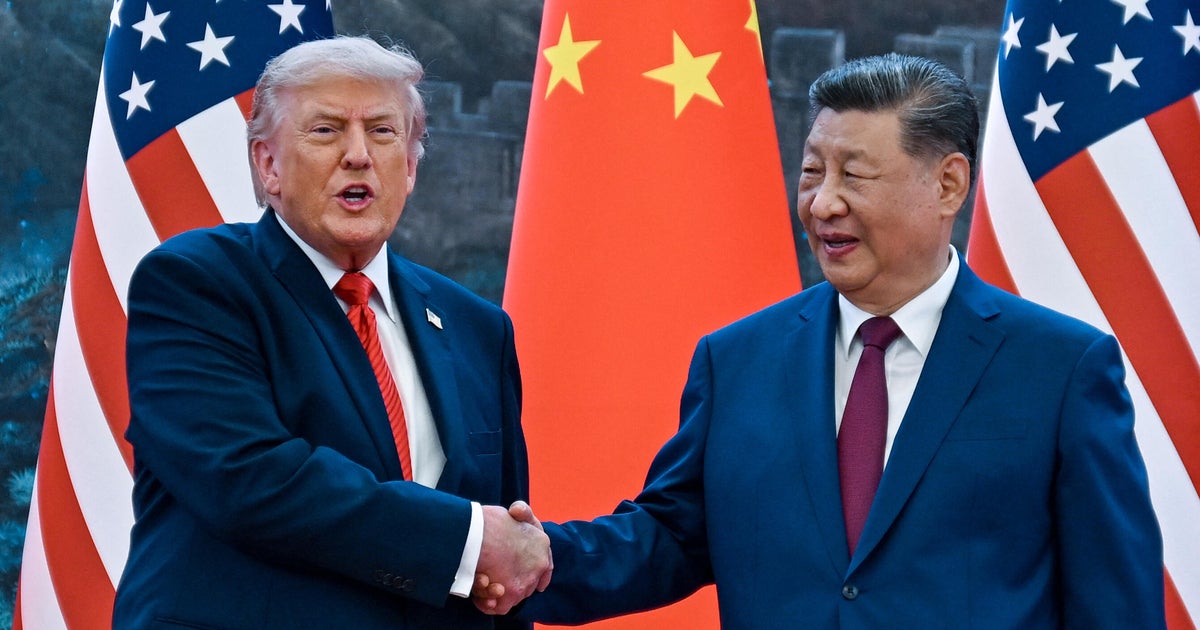
Musk, despite bringing the lawsuit, ditched attending closing statements Thursday in favor of joining President Donald Trump for a state visit to China, and Molo apologized to the jury. He left the country even though he was still subject to recall as a witness during the trial’s final week.
U.S. District Judge Yvonne Gonzalez Rogers summed up the trial in three words during a hearing last year: “Billionaires versus billionaires.” And before the trial began, she pledged not to allow the concentration of wealth to influence the court’s operations.
“That some of the parties and witnesses may have high profiles does not warrant special privileges,” she wrote in an order in March.
And with some exceptions — most notably for the security of attendees — she held to that pledge. Both Altman and Musk have faced threats against their lives, and the judge allowed them to enter the building through a back door, sparing them having to walk through throngs of cameras. She still required them to pass through the same security checks as everyone else, though, and they were photographed doing so.

Gonzalez Rogers rejected at least one request for a change in procedure. Audio from the trial was broadcast live on YouTube, and during the trial’s second week, lawyers for Musk asked to have the audio turned off during the testimony of Shivon Zilis, a longtime Musk adviser who is also the mother of four of his children and a romantic partner of Musk. Musk’s lawyers said the audio broadcast was a security concern, while OpenAI lawyers said the live feed wouldn’t matter from a security standpoint. The judge ruled against cutting off the live feed, and Zilis’ testimony went ahead.
Richard Marcus, a law professor at the University of California College of the Law in San Francisco, who listened to the YouTube audio feed of the trial, said he was impressed with the judge’s firm handling of the trial — including her rulings on exhibits and objections — despite a courtroom filled with wealthy litigants used to getting their way.
“She was definitely running that courtroom,” he said.
Gonzalez Rogers heaped praise on the jurors during the trial and alluded to the contrast between them and the billionaire witnesses and litigants.
“We have regular people judge the credibility of witnesses,” she told the jurors Tuesday, noting that it was Juror Appreciation Week in California.

The idea that people are entitled to be judged by a jury of their peers traces back to the Magna Carta of 1215, although the definition of peer has changed over time. The nine-person jury includes a nursing assistant and someone who runs a small painting company.
“It does give you some faith in the judicial system — that it maybe is the one place left in the country that is equalizing on some level,” Bracy, from TechEquity, said.
Her organization is part of a broader coalition, Eyes on OpenAI, that last year urged California Attorney General Rob Bonta to investigate OpenAI’s restructuring for its compliance with laws governing nonprofit organizations. Bonta in October said that he had investigated and secured concessions from OpenAI, including a pledge that it will remain in California, before signing off on the restructuring.
But now, the jury could find that the restructuring was a breach of charitable obligations.
“If I were them, I’d be feeling extremely powerful,” Bracy said. “They’re being treated like kings and queens in the presence of, you know, who the rest of the world treats like kings and queens.”
It’s not clear what would happen if the jury finds that OpenAI and Microsoft acted wrongly in the restructuring and if the judge accepts their verdict. Gonzalez Rogers has scheduled a hearing Monday to begin considering options for remedies while the jury deliberates on questions of liability. Musk has asked for a permanent injunction to “honor the original charter commitments on which the charity was founded,” as well as an order removing Altman and Brockman from OpenAI.



Leave a Reply