
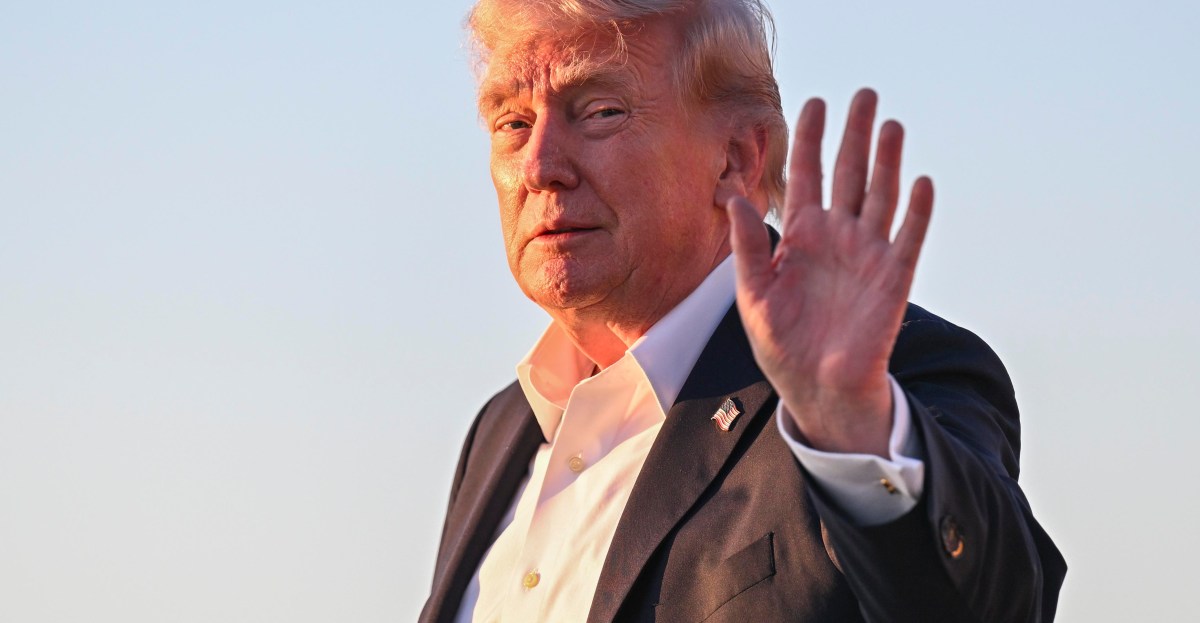
This story appeared in The Logoff, a daily newsletter that helps you stay informed about the Trump administration without letting political news take over your life. Subscribe here.
Welcome to The Logoff: President Donald Trump hopes to suspend the federal gas tax as his war with Iran drives prices ever higher.
Can he do that? Not by himself, though it’s not clear Trump knows that: He unequivocally told a reporter this morning that “we’re going to take off the gas tax for a period of time.”
Instead, he’ll need Congress to pass a bill — which it might. Democratic lawmakers have previously introduced legislation to do so, and multiple Republican members signaled their support on Monday (it’s also already becoming a campaign issue).
It’s by no means a sure thing, though: Congress has never passed a gas tax holiday, including when President Joe Biden called for one in 2022. On Monday, Senate Majority Leader John Thune told reporters that “I’ve not in the past obviously been a fan of that idea,” but that he would hear out senators who supported it.
How much would it help? The federal gas tax is 18.4 cents per gallon, so suspending it would make a difference at the margin. It would do little to truly normalize prices, however; gas is $4.52/gallon on average, up 38.5 cents from just a month ago and more than $1.50 from the start of the war.
Suspending the gas tax would also cost the Highway Trust Fund billions in revenue. And there’s the problem of making sure the tax break actually benefits consumers: As the Washington Post points out, the gas tax isn’t collected directly at the pump, so some savings could flow to oil companies instead.
What about the war? The most direct way to ease gas prices would be to end the war in Iran (though it wouldn’t fix the problem immediately, or even quickly). On Sunday, however, Trump rejected an Iranian response to the latest US peace proposal as “TOTALLY UNACCEPTABLE.”
And with that, it’s time to log off…
Here’s some unalloyed, grade-A good news: Coffee, it turns out, is not merely okay for us, but affirmatively good for us. My colleague Bryan Walsh breaks down what it does for us and the long scientific journey to figuring it out — you can read his full article here with a gift link.
Have a great evening, and we’ll see you back here tomorrow!



Leave a Reply