
If you’ve been following the coverage of the hantavirus outbreak aboard the cruise ship MV Hondius, these are the questions you’ve seen posed in headlines. And a small tip from inside the media: If a question is posed in a headline, the answer is almost always “no.” (It’s such a common trope that there’s even an informal law about it.)
So, unless you’re a passenger or close contact of someone on the Hondius, you shouldn’t really worry about the hantavirus outbreak. You shouldn’t really fear it. You definitely shouldn’t panic. And do I really need to tell you that freaking out generally stops being acceptable behavior after the age of 15?
As my colleague Dylan Scott has reported, by far the most likely outcome is that the hantavirus outbreak will ultimately be controlled and won’t become something that will disturb the general public. As of May 12, there were 11 confirmed or probable cases and three deaths. While a hantavirus outbreak in a tightly packed cruise ship is new and certainly suboptimal — not to mention bringing back unsettling memories of early Covid — experience with the deadly virus strongly suggests it probably doesn’t have the transmissibility required to become a larger pandemic threat.
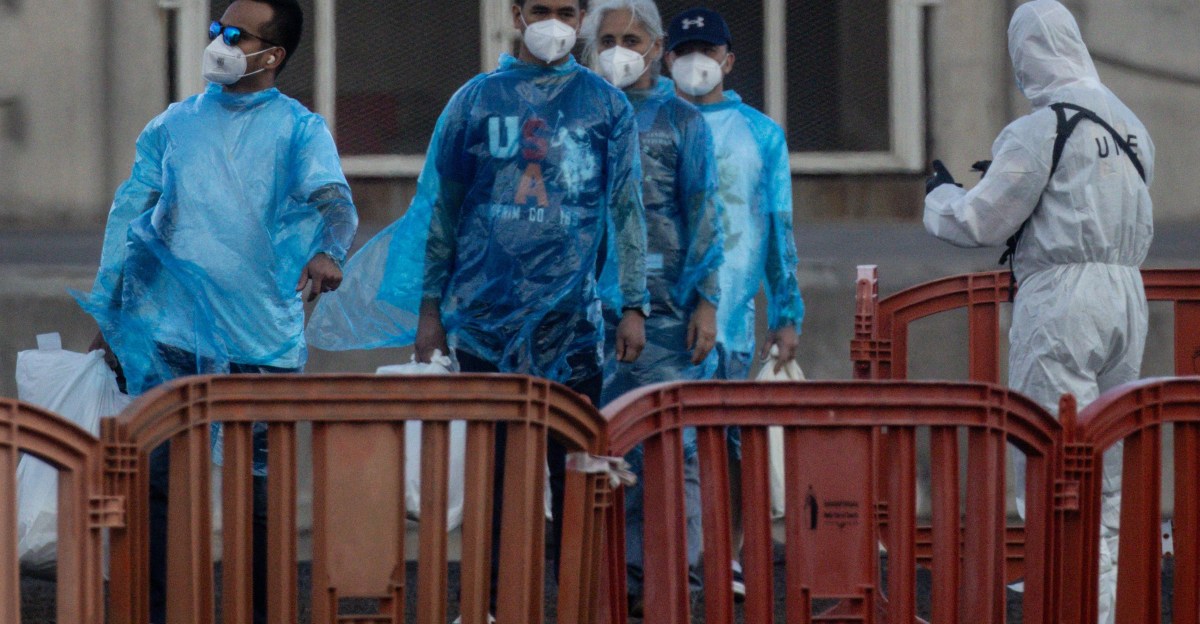
After some initial dysfunction that was itself partially explainable by just how unusual a seaborne hantavirus outbreak was, the response system appears to be working relatively well. Citing moral and legal obligations, Spain accepted the passengers at Tenerife in the Canary Islands over the objections of some officials there; they were met on the dock by hazmat suited workers. Eighteen US-bound passengers from the cruise are being kept in quarantine units where they can be safely monitored for symptoms; even the planes they flew out on had special biocontainment equipment. Other passengers and contacts around the world are being isolated and watched.
So, yes, without outright telling you what you should feel, you have reason to feel reassured.
But framing emerging disease coverage around how the audience feels — should you worry, should you panic — is exactly the problem.
For one thing, the personal fear framing has a single, predictable response. The only answer a responsible public health official can give to “should the public panic?” is “no,” which is precisely why every senior figure taking part in hantavirus response has been singing in this key for two weeks. World Health Organization (WHO) Director-General Tedros Adhanom Ghebreyesus specifically told Tenerife residents that “this is not another Covid.” WHO epidemic and pandemic chief Maria Van Kerkhove told the media: “This is not SARS-CoV-2. This is not the start of a Covid pandemic.” Acting Centers for Disease Control Director Jay Bhattacharya said on CNN that “we don’t want to cause a public panic over this.”
The reassurance is technically accurate, but because of the way the media asks the question, it’s the only thing anyone can say. That framing flattens out the actual, complicated response to an actual, complicated emerging disease outbreak. The implicit tone of the coverage is that the only reason that you, the audience, should care about a disease outbreak is whether it is coming for you personally.
That’s a problem, because it can cede the ground to precisely the kind of hysteria these statements are meant to counteract. Just because the audience doesn’t have anything to directly worry about now does not mean this situation is normal or okay. An outbreak with some person-to-person transmission of a respiratory disease with no vaccine or cure that has a fatality rate of around 40 percent is not normal. And in the current media hellscape environment, the gap between what reporters are pressing public health officials to say and what people can see on their TVs is filled by TikTok influencers predicting the virus could wipe out the whole human race.
What you don’t know can hurt you
I can say with the highest confidence that hantavirus will not, in fact, wipe out the human race. (Hope that makes you feel better.) But there is a more reasonable argument that the current messaging may be overconfident on the underlying science.
We know hantavirus, but we don’t know it that well. The total scientific record on person-to-person transmission of this strain of the hantavirus is maybe 300 cases in all, while one outbreak in 2018 featured three super-spreader events before it was suppressed. While the WHO says that person-to-person hantavirus transmissions generally only occur with “close prolonged contact,” that’s the median case, not the potential outliers. And, as we learned with Covid, assurances about how a virus behaves early in a new outbreak can sometimes turn out to be wrong in a big way.
The fundamental fact that Covid taught us is that a pandemic can be so catastrophic that it can be worth doing almost anything to prevent one. That’s why some experts, like Harvard’s Joseph Allen and former White House Covid coordinator Ashish Jha, have argued for a much fuller quarantine of Hondius passengers, rather than the self-monitoring approach that has been allowed for some returnees viewed as lower risk. Even the 2003 SARS outbreak, which ultimately killed fewer than 800 people, cost the global economy at least $40 billion and led to worldwide disruptions. The cost of caution is small; the price of being wrong the other way could be immeasurable. And the calculation of how we should respond should not be driven by feeling.
If you need something to be worried about, worry about this: The global public health system that is meant to be driving this response is being dismantled. The CDC has lost about a quarter of its staff since January 2025, leaving the remainder stretched thin. That includes the acting director, who was already running the National Institutes of Health. Georgetown’s Lawrence Gostin told the AP that “the CDC is not even a player” in the global response, which has been further hampered by the fact that Argentina — likely where the outbreak began — followed in America’s footsteps by withdrawing from the WHO just two weeks before the Hondius left the country.
A pandemic is the ultimate low-probability, high-consequence event. I can easily count off the outbreaks that appeared scary at the moment but ultimately fell well short of a pandemic — Nipah virus, MERS, SARS — both because of the characteristics of the pathogens and because of the response. That’s almost always the way it goes, and most signs indicate that the same will be true for hantavirus. But we also have very fresh memories of just how horrible a true pandemic can be.
It’s a hard ask to keep both possibilities in mind, but the way the media covers these events doesn’t help. “Should we panic about hantavirus?” asks the wrong question. The right one is whether an increasingly fractured global health system still has the capacity — and the political and public support — to go beyond reassurance. The best way to keep people from panicking about hantavirus is to do everything possible to ensure there is nothing to panic about.
A version of this story originally appeared in the Future Perfect newsletter. Sign up here!


Leave a Reply