
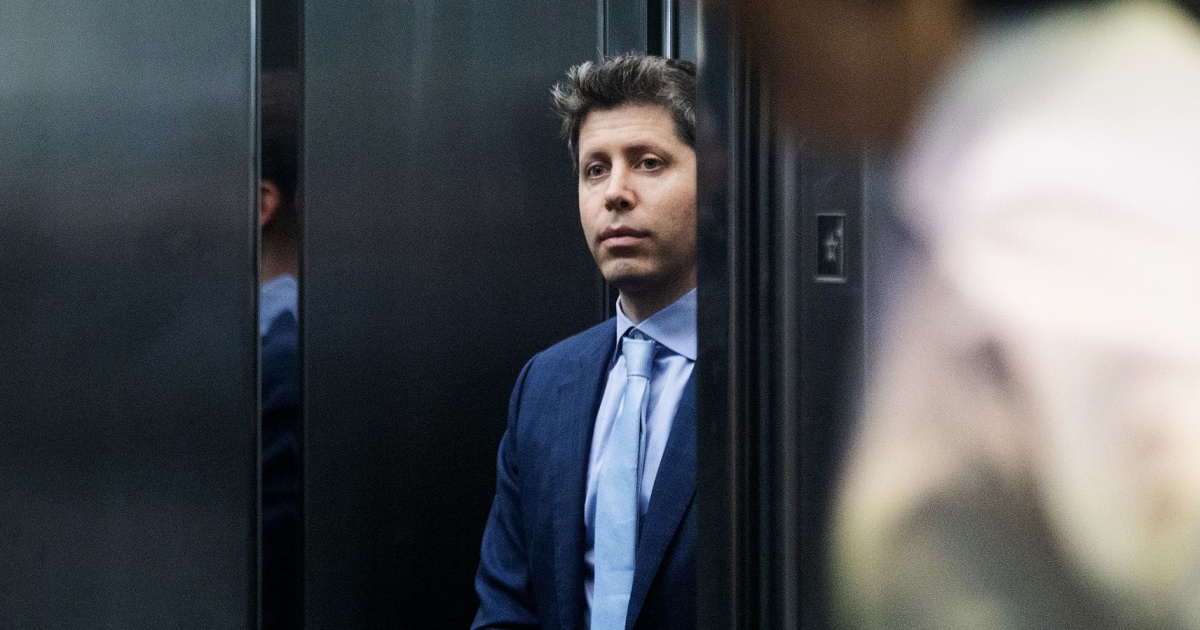
OAKLAND, Calif. — OpenAI CEO Sam Altman took the witness stand Tuesday in a trial that pits him against Elon Musk over the future of the organization they co-founded more than a decade ago.
Subscribe to read this story ad-free
Get unlimited access to ad-free articles and exclusive content.

Altman and Musk created OpenAI together as a nonprofit research center in 2015 and years later had a falling out over control and the creation of a for-profit arm that’s behind ChatGPT.
Altman told the jury that he did not understand Musk’s allegation that he and other OpenAI executives were stealing from a charity.
“It feels difficult to even wrap my head around that framing,” he testified. He acknowledged that the OpenAI board had used “creative ways to keep it going,” by taking outside investment and creating the for-profit arm, but he said the result has been “one of the largest charities in the world.”

Altman, a 41-year-old St. Louis native and Stanford dropout, is a longtime tech investor who led YCombinator, a startup incubator, before becoming OpenAI CEO in 2019. He burst onto the national business spotlight after the release of ChatGPT in 2022, signaling a new boom era for artificial intelligence.
Altman began testifying on the ninth day of the billionaire-filled trial. The jury is scheduled to hear closing statements Thursday.
Musk sued Altman and a third co-founder, OpenAI President Greg Brockman, in 2024, alleging that they are enriching themselves at the expense of what he says was supposed to be a charity.
Altman and Brockman have countered that the lawsuit is harassment of a competitor after Musk created his own artificial intelligence startup, xAI, in 2023. They say OpenAI is still controlled by a nonprofit foundation board and that Musk agreed with them about the need to establish a for-profit arm to raise money from outside investors.
Altman could only watch from the courtroom audience for the first two weeks of the trial as lawyers for Musk, the plaintiff, put on his case.
But under questioning on the stand Tuesday, Altman gave his version of OpenAI’s history and how he and Musk came to have a falling out.
Altman credited Musk, the celebrity CEO of Tesla and SpaceX, with having “a lot of brand value,” but he said Musk did not fully appreciate the contributions of other people who were involved in OpenAI’s early days.
Altman said that during negotiations on the OpenAI board in 2017, he opposed the idea that Musk should become the CEO of the organization or the majority stakeholder in any for-profit arm.
“I was extremely uncomfortable with it,” Altman said. He said that he believed that if Musk had gotten control of the organization, he never would have relinquished it.
Altman described what he called a “particularly hair-raising moment” when other OpenAI co-founders asked Musk what would happen if he had majority control of OpenAI and then died. Musk responded, according to Altman, “I haven’t thought about it a ton, but maybe control would pass to my children.”
The result, Altman said, was that OpenAI didn’t create a for-profit arm while Musk was still involved with the organization. Musk left the OpenAI board in 2018.
“It’s burned into my memory when he told us that we had a 0%, not 1% chance of success,” Altman said.
Altman at one point said that Musk “tried to kill” OpenAI twice, a comment that U.S. District Judge Yvonne Gonzalez Rogers later struck from the record.
Altman said that, after Musk stopped giving money to OpenAI, he redoubled efforts to find charitable contributions from other sources, including tech billionaires Reid Hoffman and Dustin Moskovitz. He said that no donors besides Musk have ever complained that OpenAI was deviating from its mission.
But Altman has received some personal criticism, including from Moskovitz, a Facebook co-founder. Last month, in response to a critical New Yorker magazine profile of Altman, Moskovitz wrote on the social media app Bluesky, “Nobody who truly knows sam trusts him.”
OpenAI eventually created a for-profit arm in 2018 and announced it in 2019. Last year, it announced a further restructuring that kept a nonprofit foundation as the umbrella for the organization and put most of the operations under a public-benefit corporation.
It’s not only Musk who has complained about OpenAI’s restructuring. Last year, various nonprofit organizations and foundations sent letters to the state’s attorney general expressing concern that OpenAI wasn’t prioritizing the public’s interest as a nonprofit group should.
Several nonprofit organizations also said last year that OpenAI was using intimidation tactics to silence them over their concerns. Seven groups said they had received overly broad subpoenas from OpenAI suggesting they were connected to Musk.
Altman’s testimony got testy when a lawyer for Musk, Steven Molo, began cross examination. Molo repeatedly pressed Altman on whether he was an honest person and whether he was aware that some past associates had testified about a pattern of Altman lying. Altman said he considered himself to be an honest person but said he had had misunderstanding with some past OpenAI board members.
“Have you misled people with whom you do business?” Molo asked.
“I believe I am an honest and trustworthy businessperson,” Altman responded.
The questions got so hostile during cross examination that the judge stepped in to give the nine-member jury some context.
“I’m going to remind the jury at this point that lawyers’ questions are not evidence. They’re not evidence,” she said.

Leave a Reply